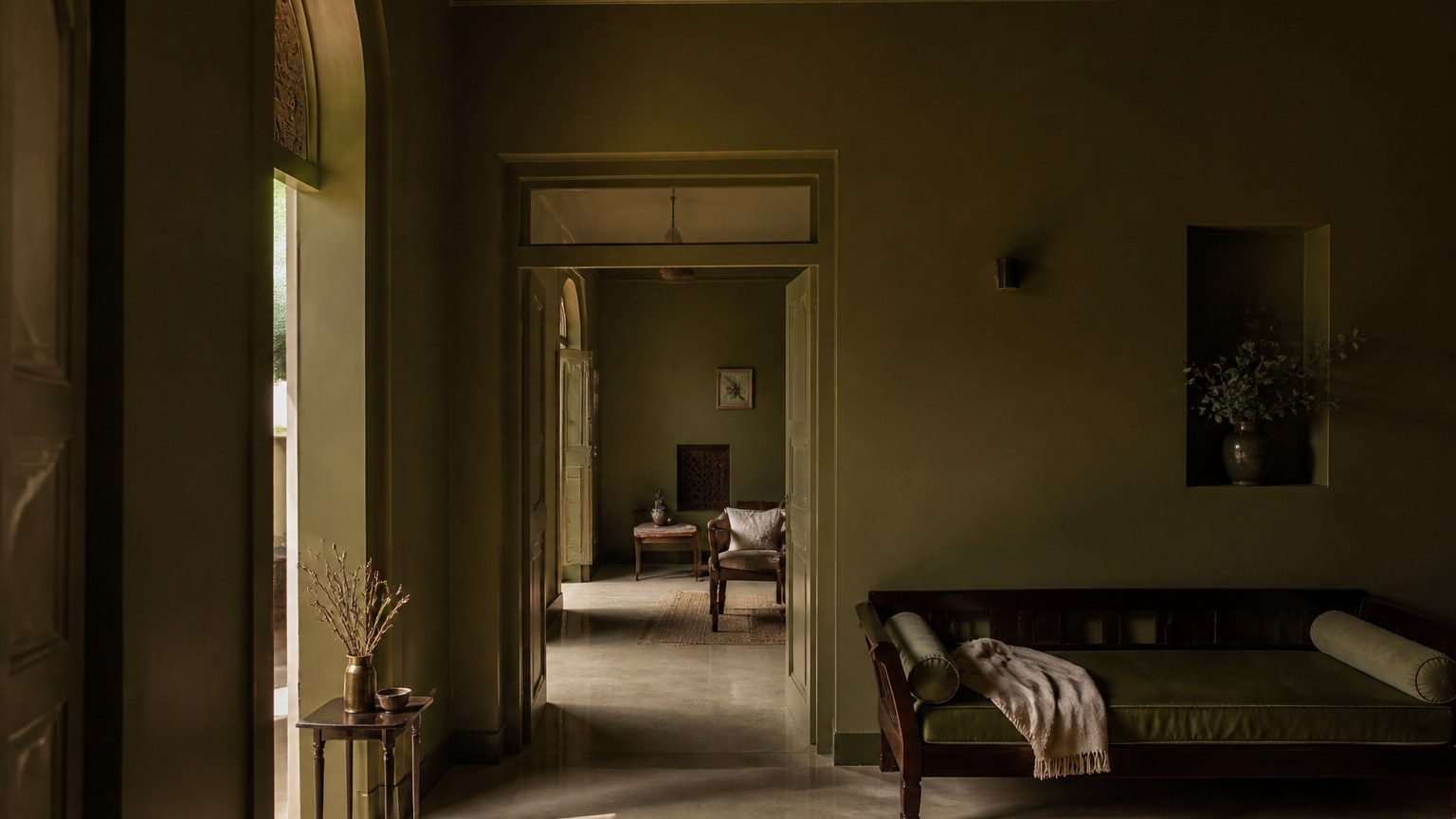
One colour, used everywhere, does not simplify a room. It exposes the undertone.
Colour-drenching — walls, ceiling, sometimes the joinery in a single hue — is often sold as drama. In practice it is a test. Indian daylight will pull warmth or chalk out of that hue by mid-afternoon. Evening light will pull it somewhere else again.
A monochrome room has nowhere to hide a bad undertone.
Try the colour in the actual light
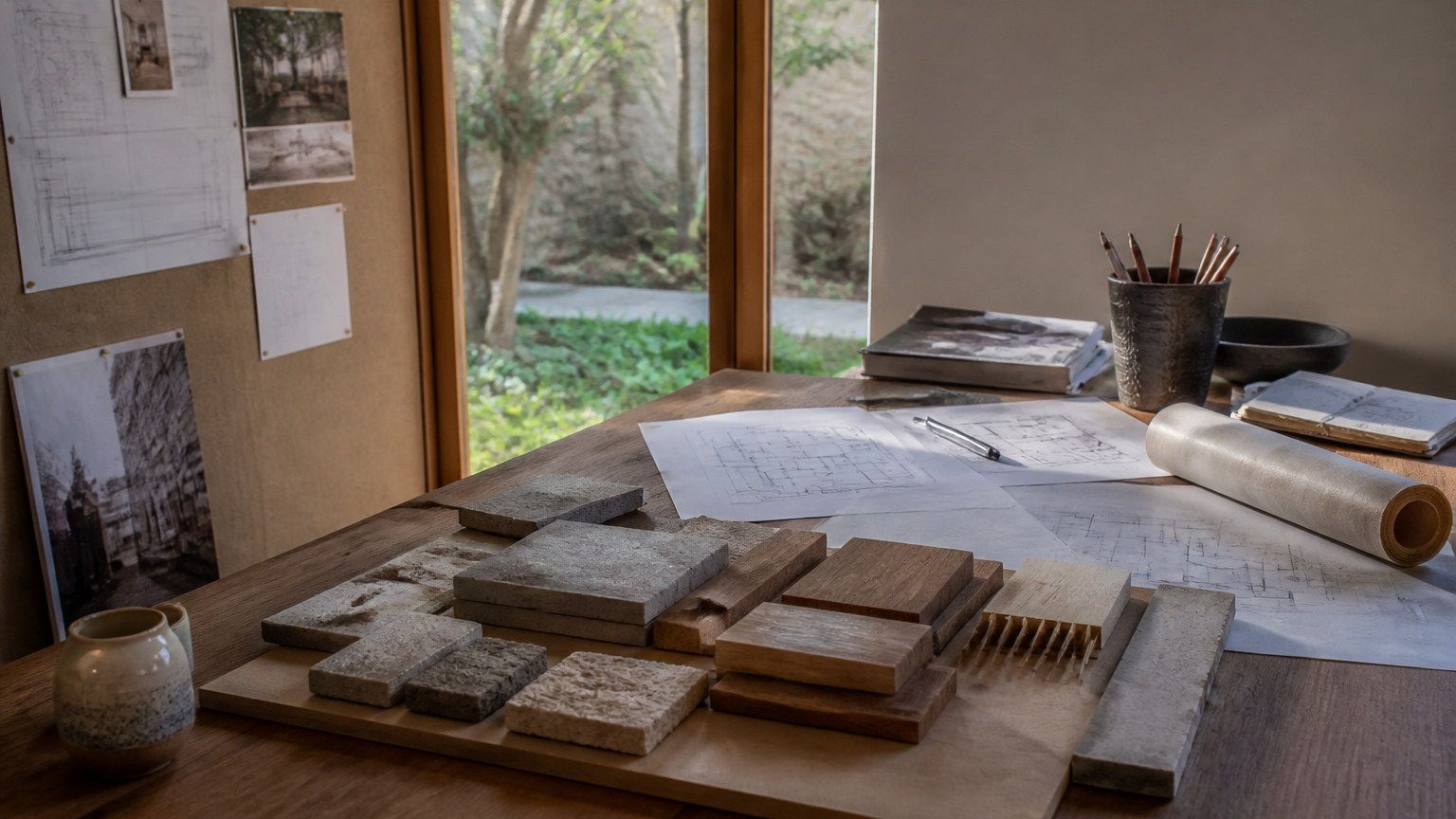
A sample on a board is not the room. A drench multiplies the sample until it is the climate. If the green goes khaki at four o’clock, you will live with khaki. The only honest method is to see the colour on a large surface, in the opening, at more than one hour.

Closing thought
Drenching is not a trend to apply. It is a commitment to live inside one decision while the sun moves.
If you cannot stay with the undertone, do not drench the house in it.