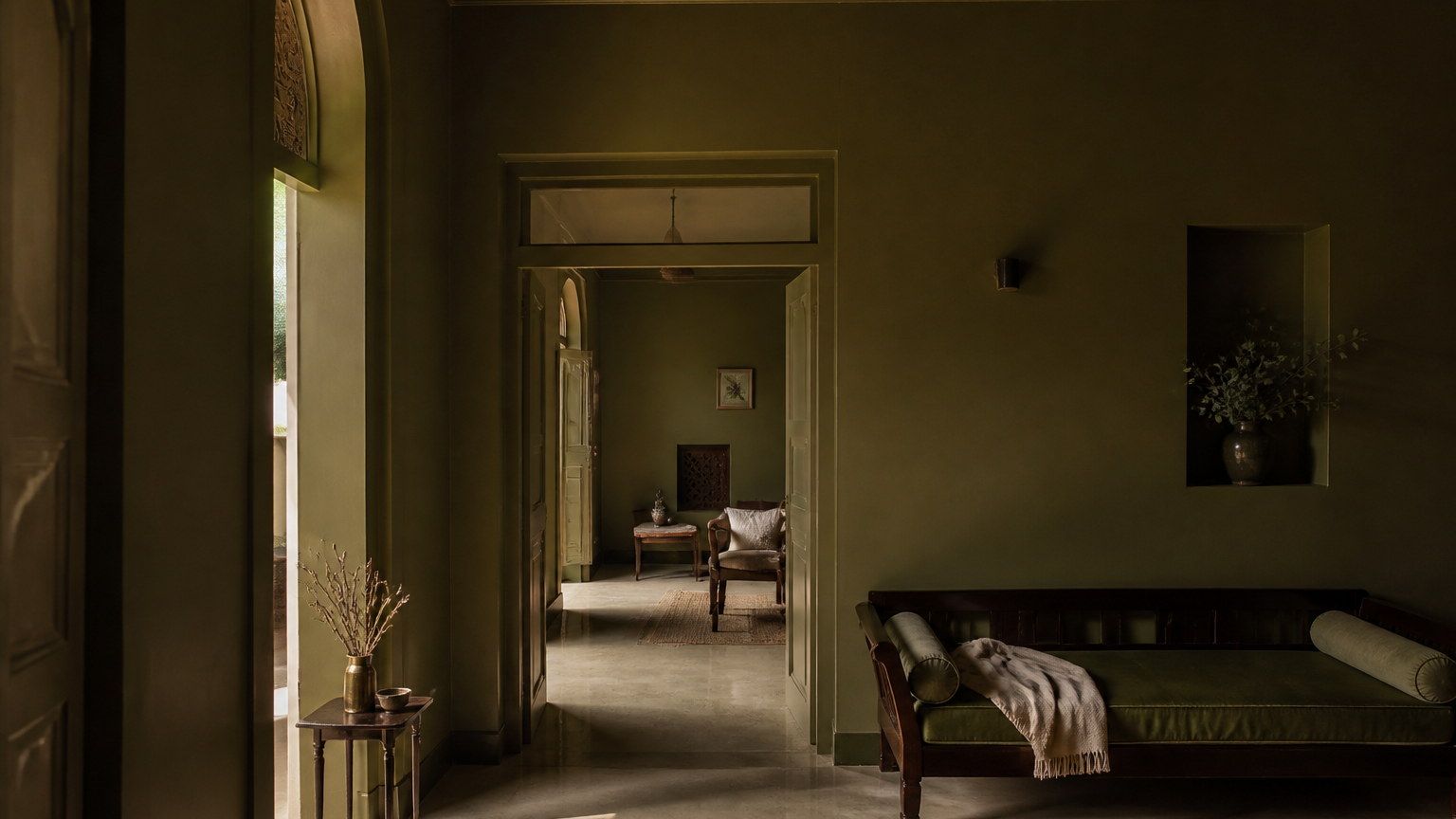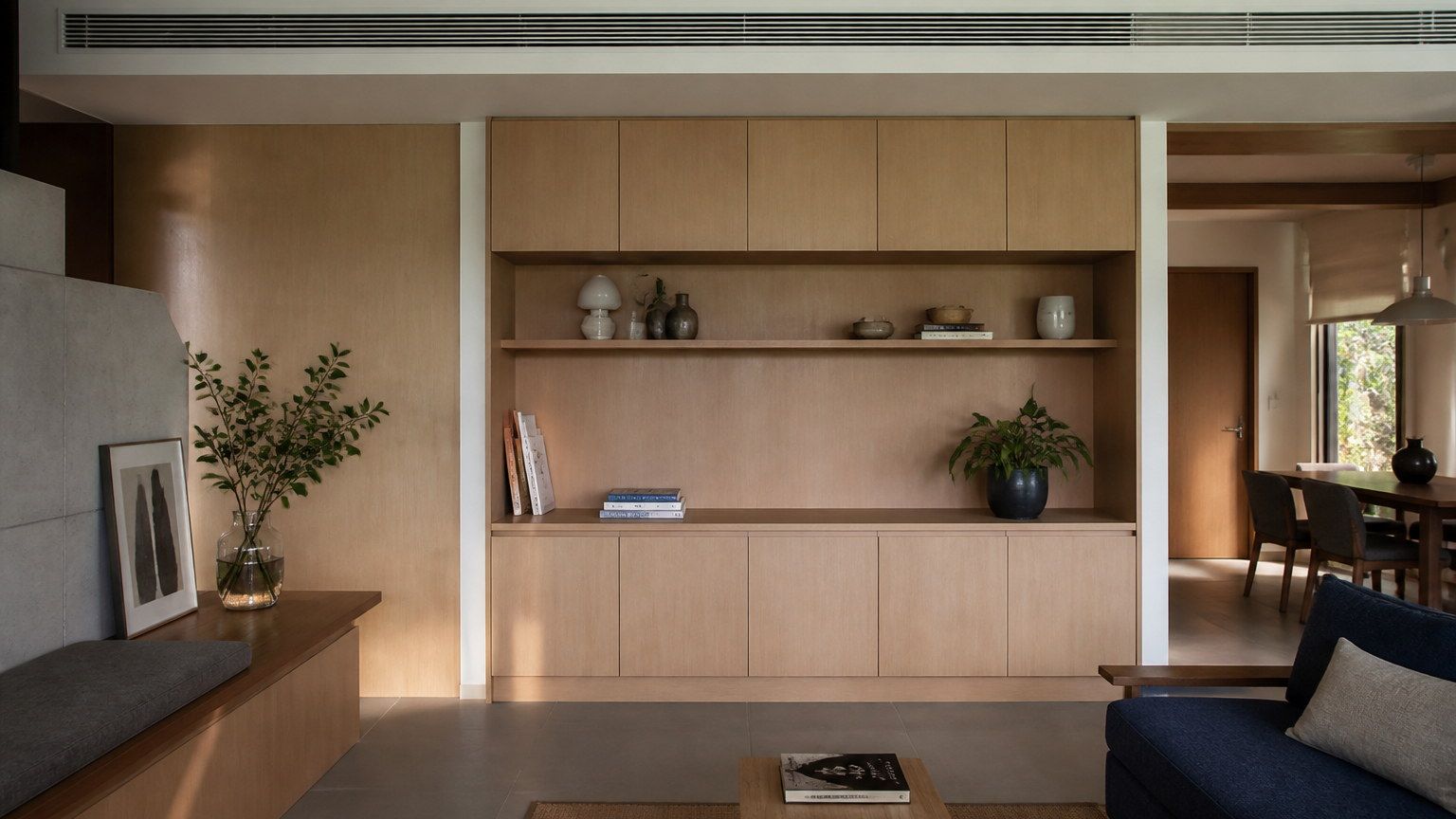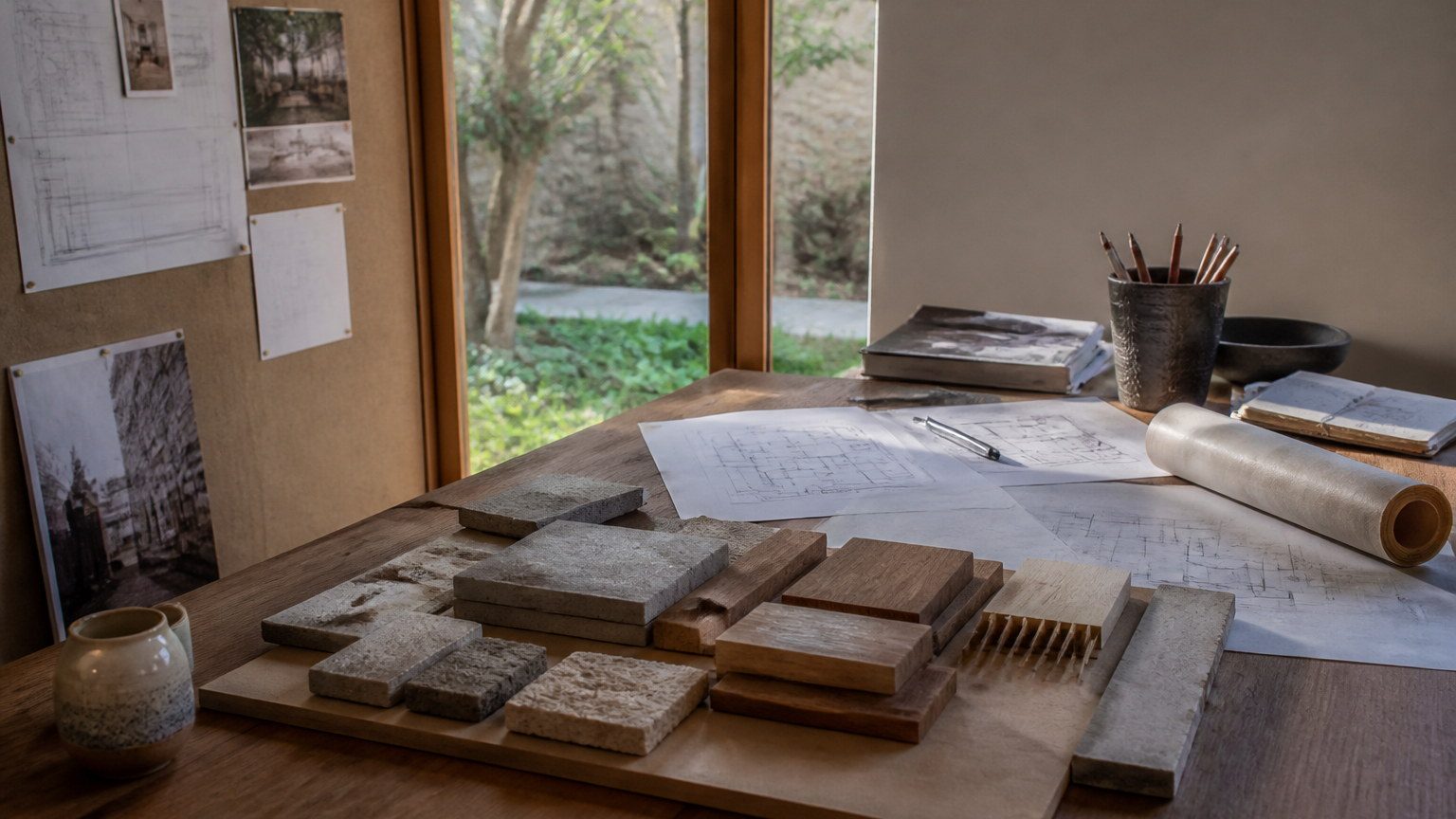
If the client cannot walk the site every week, the samples have to tell the truth.
Many Indian homes are commissioned by people who will not be in the city for the build. That is not a marketing niche. It is a process condition.
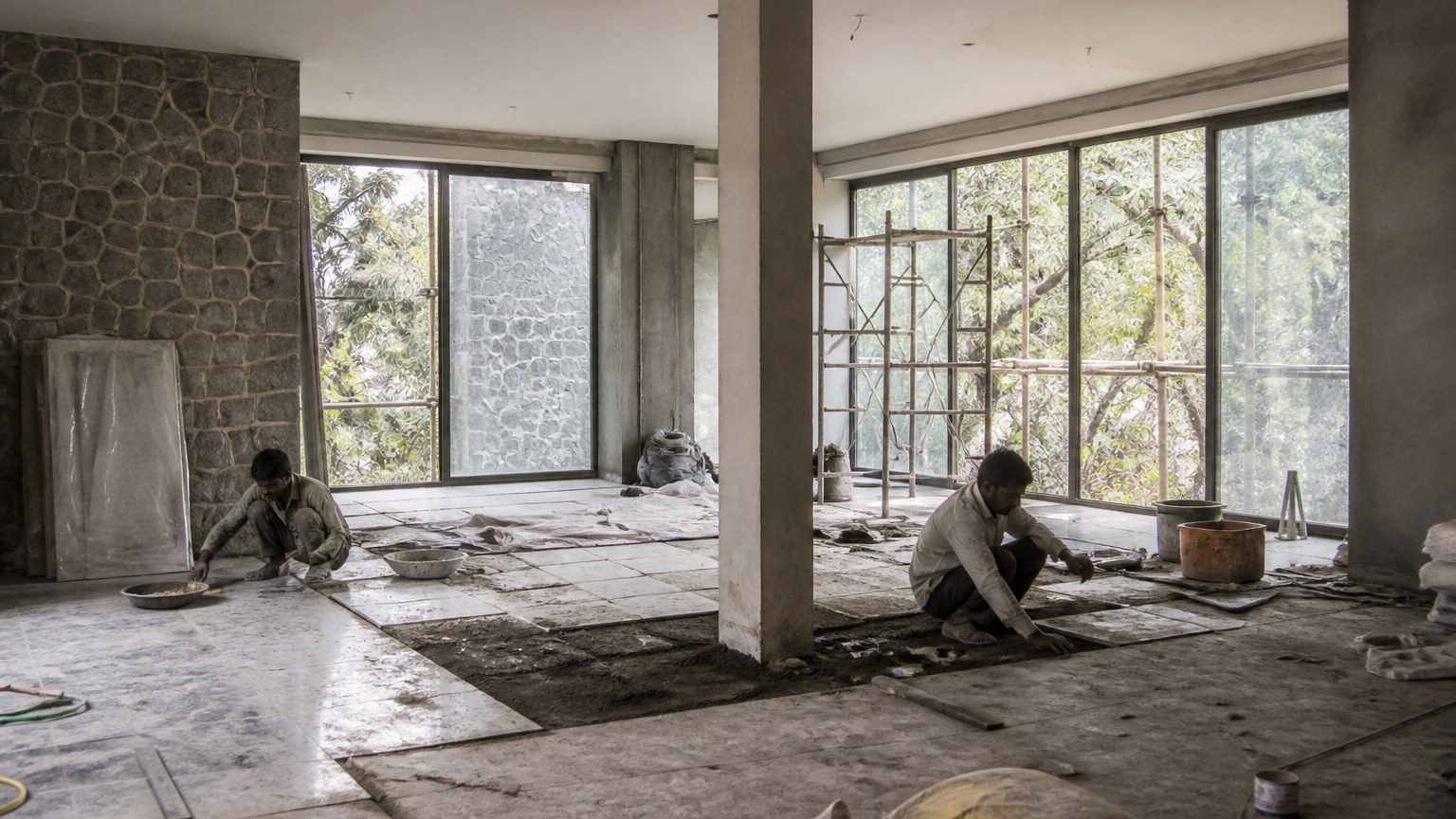
The work then depends on decisions that can travel: a specification that does not hide behind adjectives, samples that match what will be installed, photographs of the site that show problems rather than only progress, and a rhythm of approval that does not wait for a flight.
Distance punishes vagueness. It rewards records.
What has to be decided before the walls close
Joinery sizes, stone lots, lighting positions, wet-area details — these cannot be “seen on site” if the person who will live with them is on another continent. The drawing has to carry the decision. The sample has to carry the colour. The site photograph has to carry the junction, not only the atmosphere.
Trust is a sequence of small confirmations
Trust is not a personality trait of the designer. It is whether last week’s sample is this week’s installation, and whether a problem is named while it can still be corrected. International and expat clients do not need a different aesthetic. They need the same house, specified hard enough to survive absence.
Closing thought
A home can be directed from elsewhere. It cannot be guessed from elsewhere.
If it is not written down, it will not survive the distance.