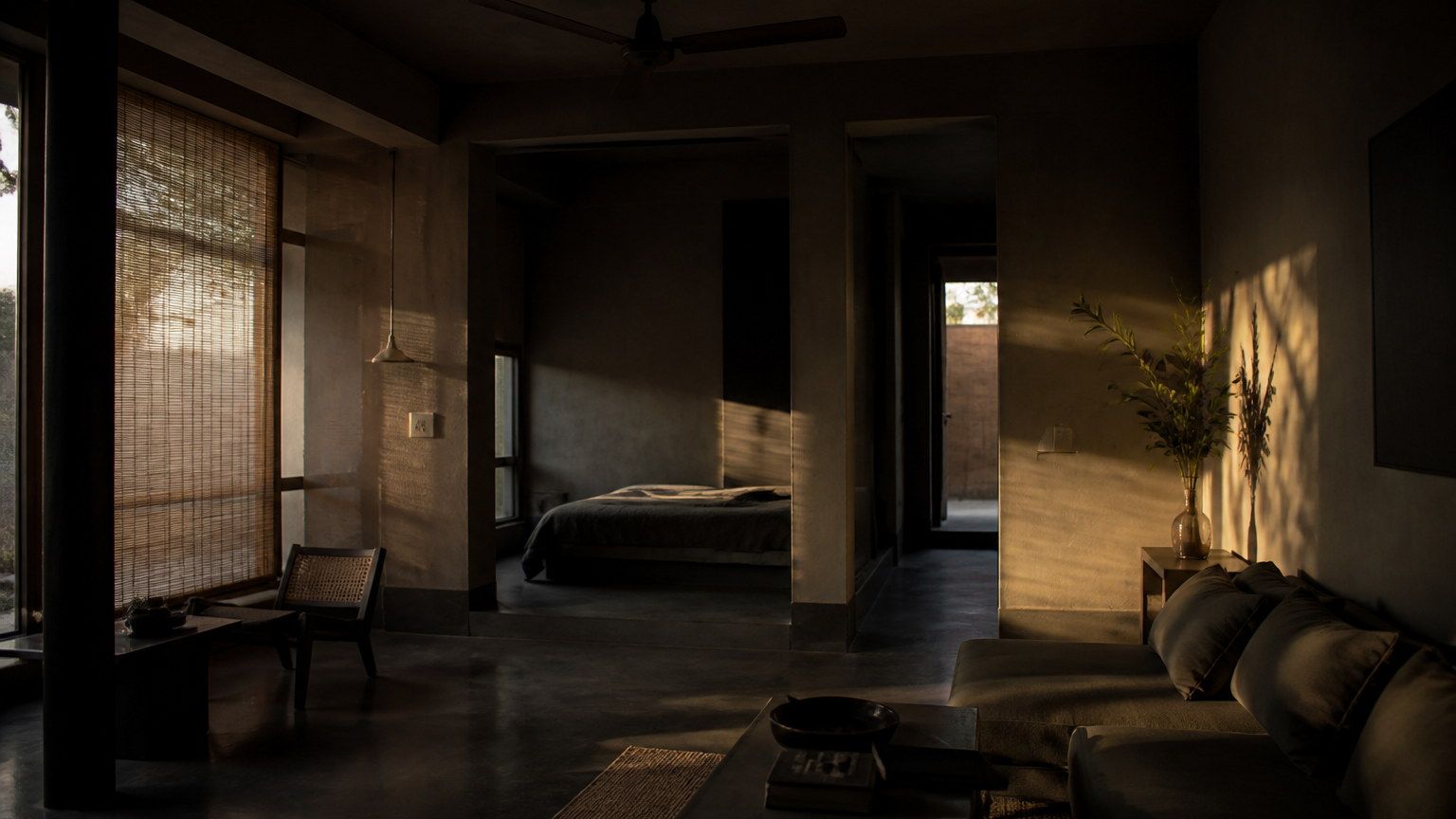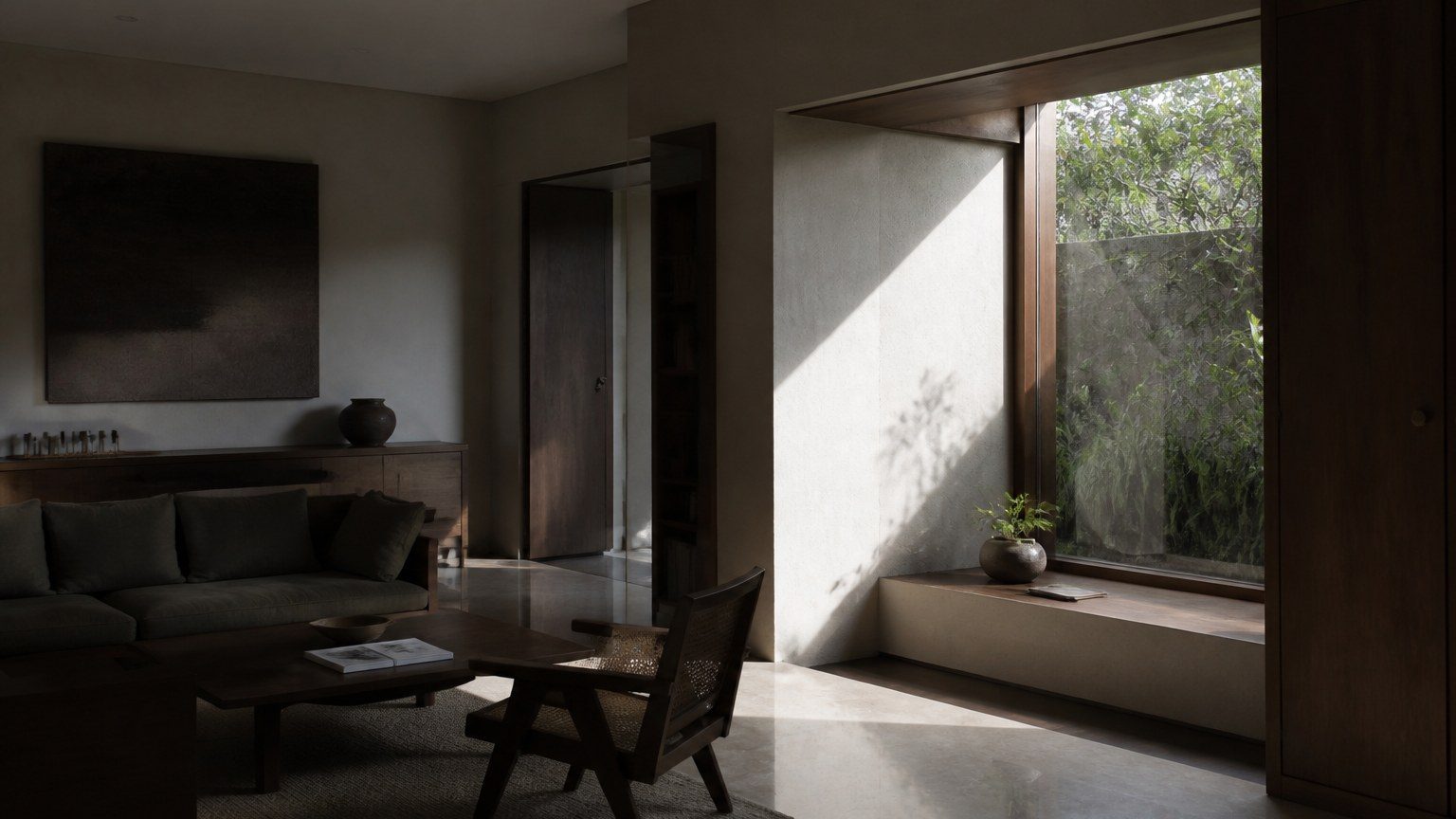
Daylight is already in the room before any finish is chosen. It decides what the materials will become.
Daylight is a material
A home is never experienced under one kind of light.
Morning light can reveal the warmth in a stone surface. By midday, the same surface can feel sharper, brighter or considerably more reflective. By evening, when daylight begins to disappear, artificial light changes it again.
In India, this variation can be particularly pronounced. Strong daylight, deep shadows and changing sun angles can transform the way colours, finishes and textures are perceived throughout the day.
For an interior designer, therefore, daylight isn't simply something to accommodate.
It is one of the materials the space is designed with.
The starting point is not just where a window is placed or how much glass a room has. It is understanding what the light does once it enters the room — where it lands, what it reflects from, what it makes warmer, what it makes cooler and where it creates contrast.
A successful interior works with these changes rather than trying to make the room look identical at every hour.
Light changes the material
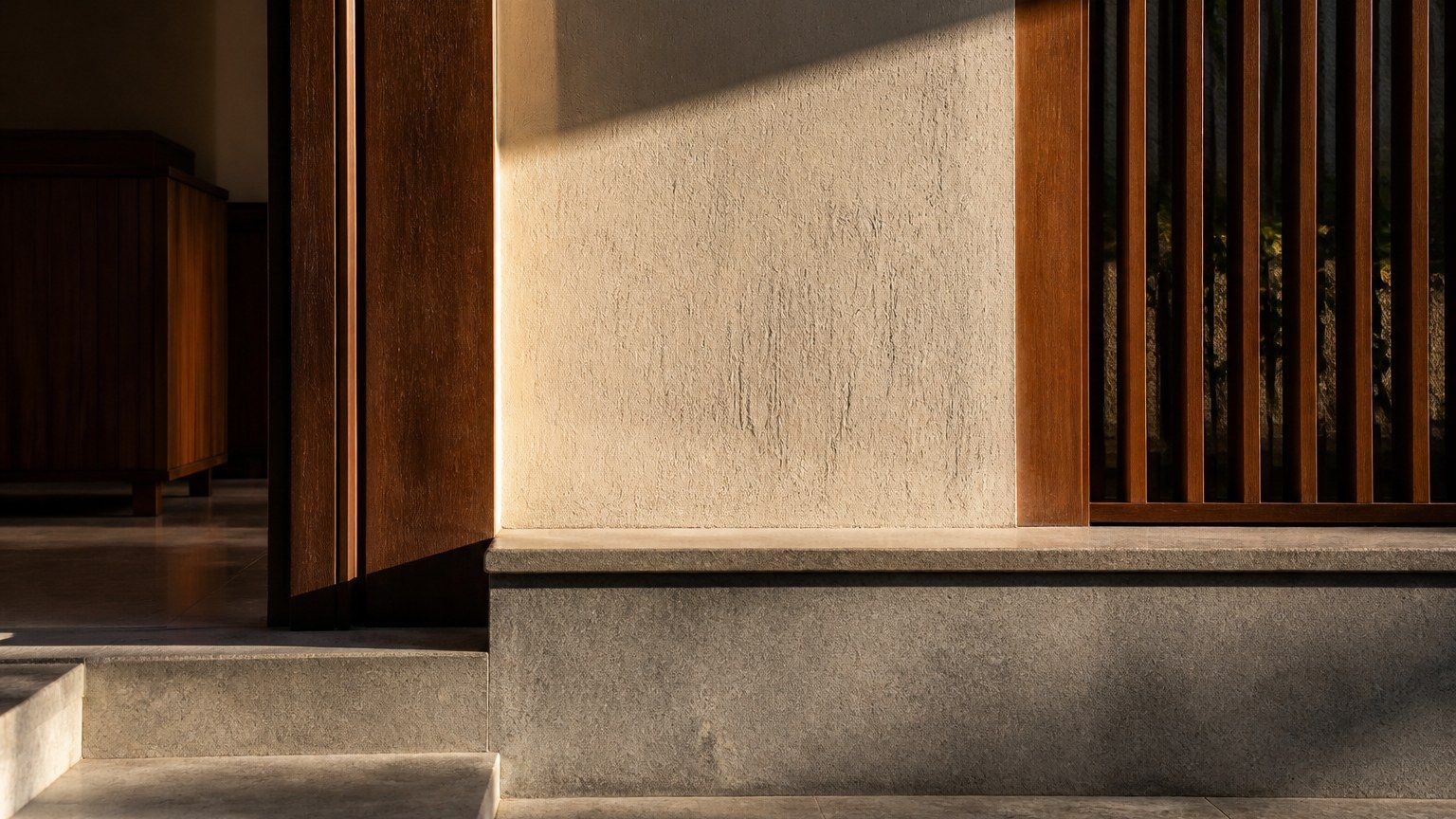
A finish is never quite what it looks like in a sample book.
The surrounding light, the surface beneath it and the materials around it all influence what we eventually see.
A polished stone may appear elegant under controlled showroom lighting but become highly reflective when strong sunlight reaches it. A warm neutral may feel balanced in the evening yet noticeably warmer during the afternoon. A matte surface that feels soft in one room can appear flat in another.
This is why material selection cannot be separated from the space itself.
At Blucap, we look at how light moves through a home and how that movement changes the experience of its surfaces. The question isn't simply whether a material is beautiful.
The question is whether it will remain beautiful in the light it will actually live in.
This is particularly important when several reflective materials are used together. Stone, glass, lacquer, metal and polished timber can each respond strongly to daylight. Used thoughtfully, they create depth and movement. Used without considering the light, they can compete with one another.
The material palette should therefore be considered as a relationship rather than a collection of individual samples.
Undertones matter
Colour names can be misleading.
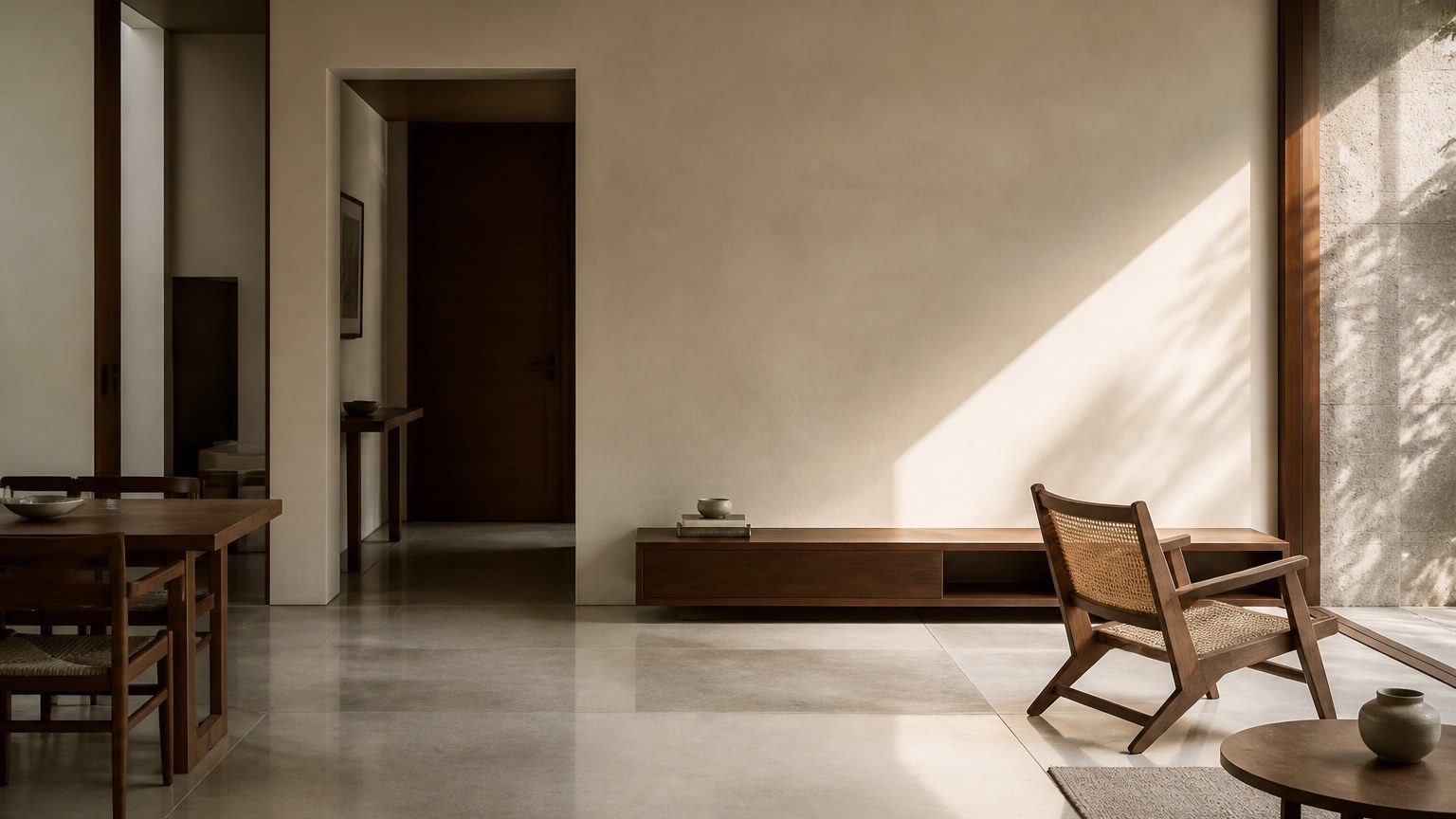
Grey, beige, white and taupe are not single colours. Each contains underlying tones that become more or less visible depending on the surrounding light.
A neutral with a warm undertone can become considerably warmer in strong sunlight. A cooler grey can feel harder beside a bright opening. White can shift from crisp to creamy depending on the direction and temperature of the light falling across it.
This is why colours should be considered in the actual space whenever possible.
A finish that looks right in a showroom may behave very differently against the stone floor, timber, curtains and walls of a real home.
The strongest palettes are rarely made by choosing individually attractive finishes. They are built from materials that relate to one another as the light changes.
The direction of light changes the room
The same room can feel like a different space depending on where the light comes from.
Morning light tends to enter at a lower angle, creating longer shadows and bringing texture to surfaces. Stronger afternoon light can flatten some details while making reflective materials more pronounced. As the sun moves, the balance between illuminated and shaded surfaces shifts again.
These changes can be used deliberately.
A textured wall may become a feature when grazing light passes across it. Timber can gain warmth when illuminated from the side. A stone surface can reveal subtle variation that is almost invisible under even lighting.
The designer's role is not necessarily to eliminate these variations.
They are part of what gives a room its character.
Curtains, screens, deep reveals, overhangs and carefully positioned furniture can all influence how daylight is experienced. They allow the intensity of the light to be moderated without making the room dependent on artificial illumination.
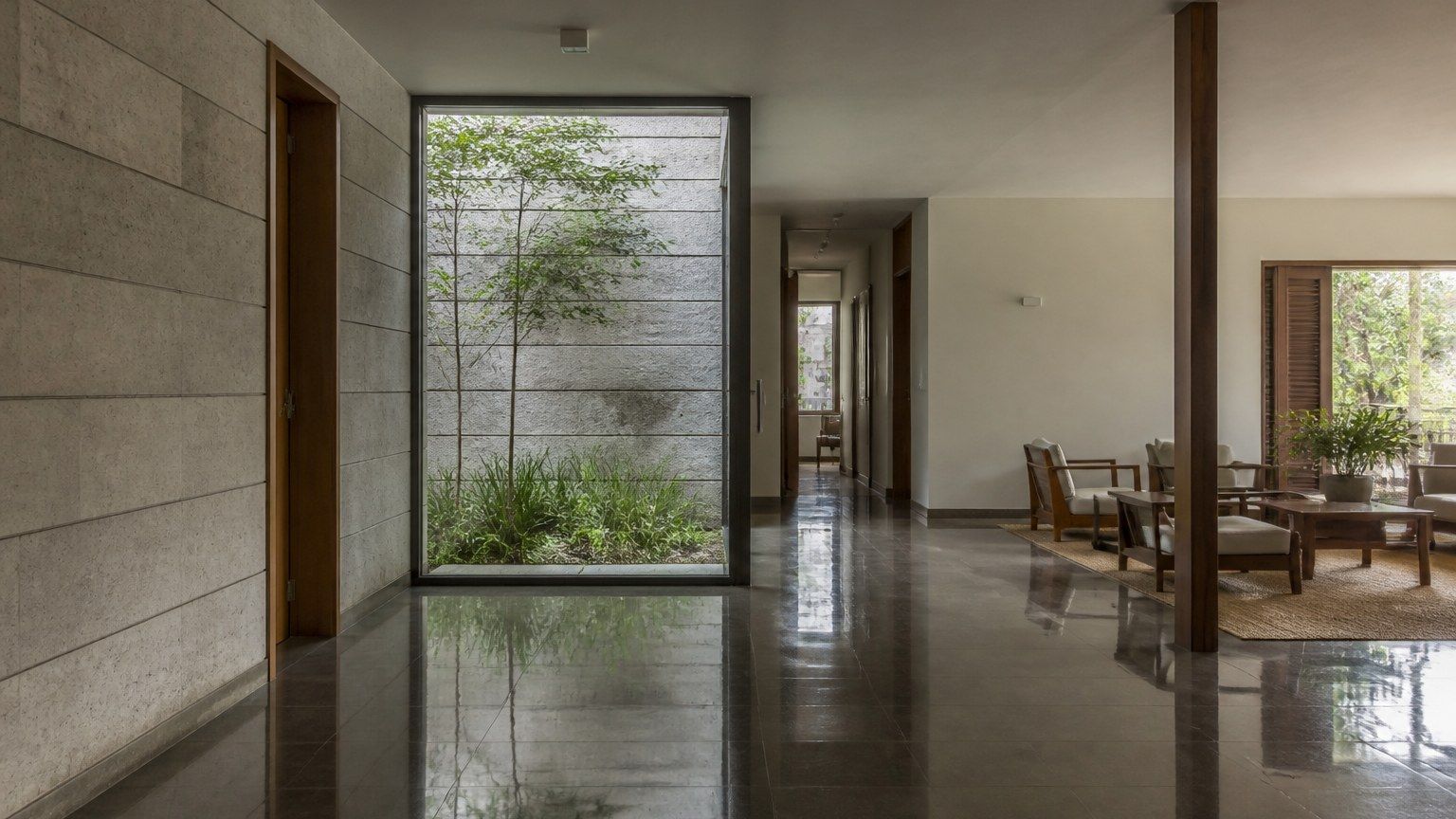
Reflection needs to be controlled
More reflection does not necessarily mean more brightness.
In fact, too much reflection can make a room uncomfortable.
Large areas of polished stone, glossy cabinetry, glass and lacquer can bounce strong daylight across walls and ceilings. Instead of creating openness, the result can be glare and visual fatigue.
This is where contrast becomes important.
A highly reflective surface can be balanced with something absorbent: a textured wall beside polished stone, a matte fabric against glass, timber alongside metal, or a softer finish where the daylight is strongest.
Surface selection is therefore also a question of visual comfort.
This doesn't mean avoiding reflective materials. They can be extremely effective when placed deliberately. A polished floor can extend the perception of daylight through a room. Glass can connect interior and landscape. Metal can catch a small amount of light and turn it into a detail.
The key is knowing where reflection should happen — and where it shouldn't.
Design around the changing day
A well-designed home should not depend on a single perfect photograph.
It needs to work at eight in the morning, at three in the afternoon and again after sunset.
That means thinking about daylight alongside artificial lighting from the beginning.
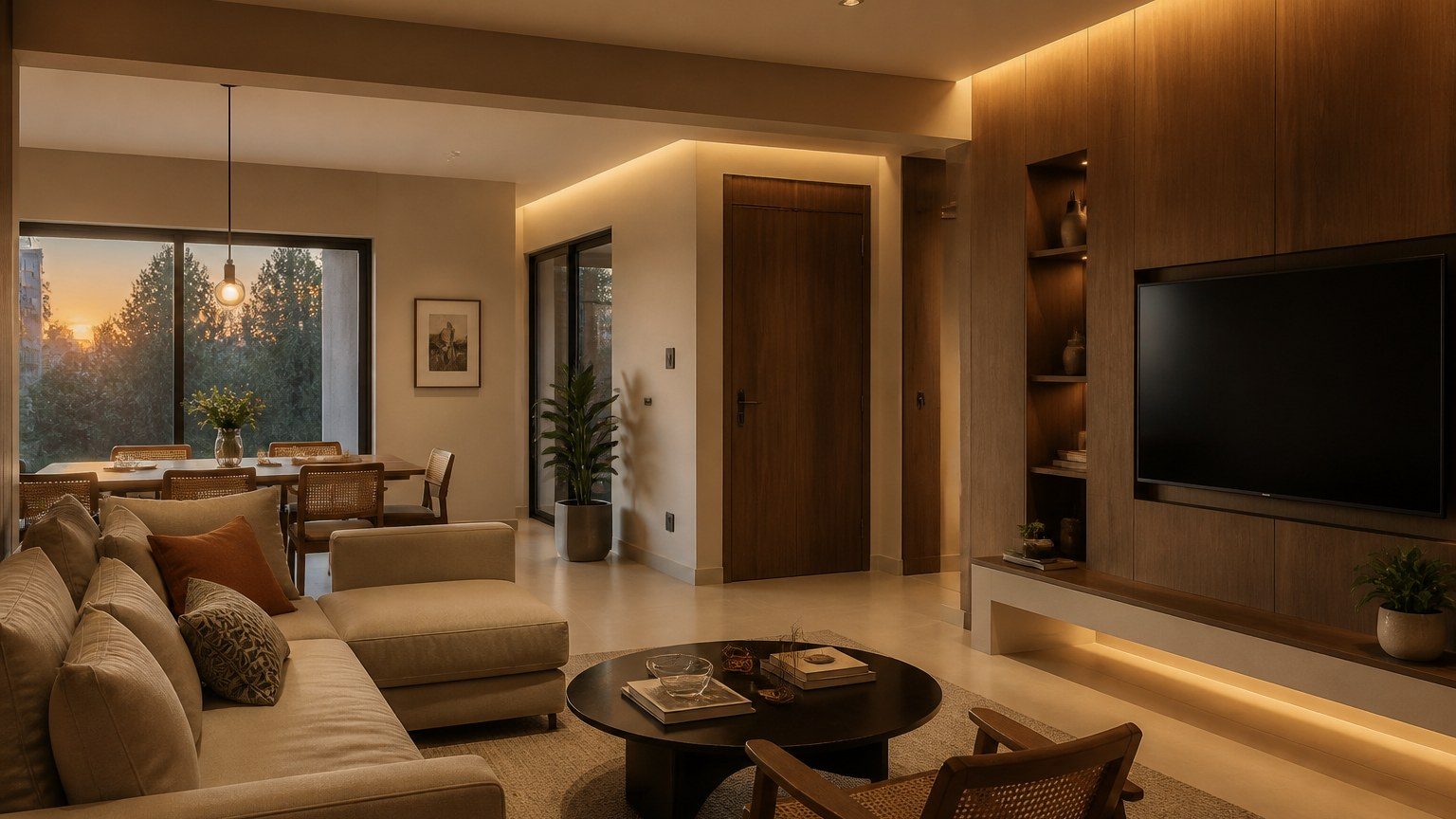
The two should complement each other rather than operate as separate systems. Warm evening lighting can restore the depth that disappears when daylight fades. Concealed sources can emphasise texture without competing with the architecture. Task lighting can provide function while keeping the overall atmosphere calm.
The best result is often one where the transition between daylight and artificial light feels almost effortless.
You notice the room changing, but you don't necessarily notice why.
Let the light do some of the work
There is a temptation in interior design to fill every surface, add another layer or introduce another decorative element.
Sometimes the better decision is to leave space for light.
A quiet wall receiving afternoon sun can be more powerful than a wall covered with decoration. A stone surface with natural variation may need little embellishment. A framed view can become part of the composition simply because the light changes around it.
This is where restraint becomes useful.
The objective isn't to create a room that looks dramatic in one moment. It is to create one that continues to reveal itself as the day moves through it.
Good interiors don't simply contain light. They give light something to work with.
Closing thought
Indian homes have an unusually rich relationship with daylight — from intense summer sun to softer monsoon skies, from deep verandahs and shaded thresholds to large contemporary openings.
Designing for that light means accepting that a space will never look exactly the same twice.
And that is precisely the point.
The most successful interiors are not frozen compositions. They change with the day.