Shadow is not the failure of lighting. It is one of the materials lighting is for.
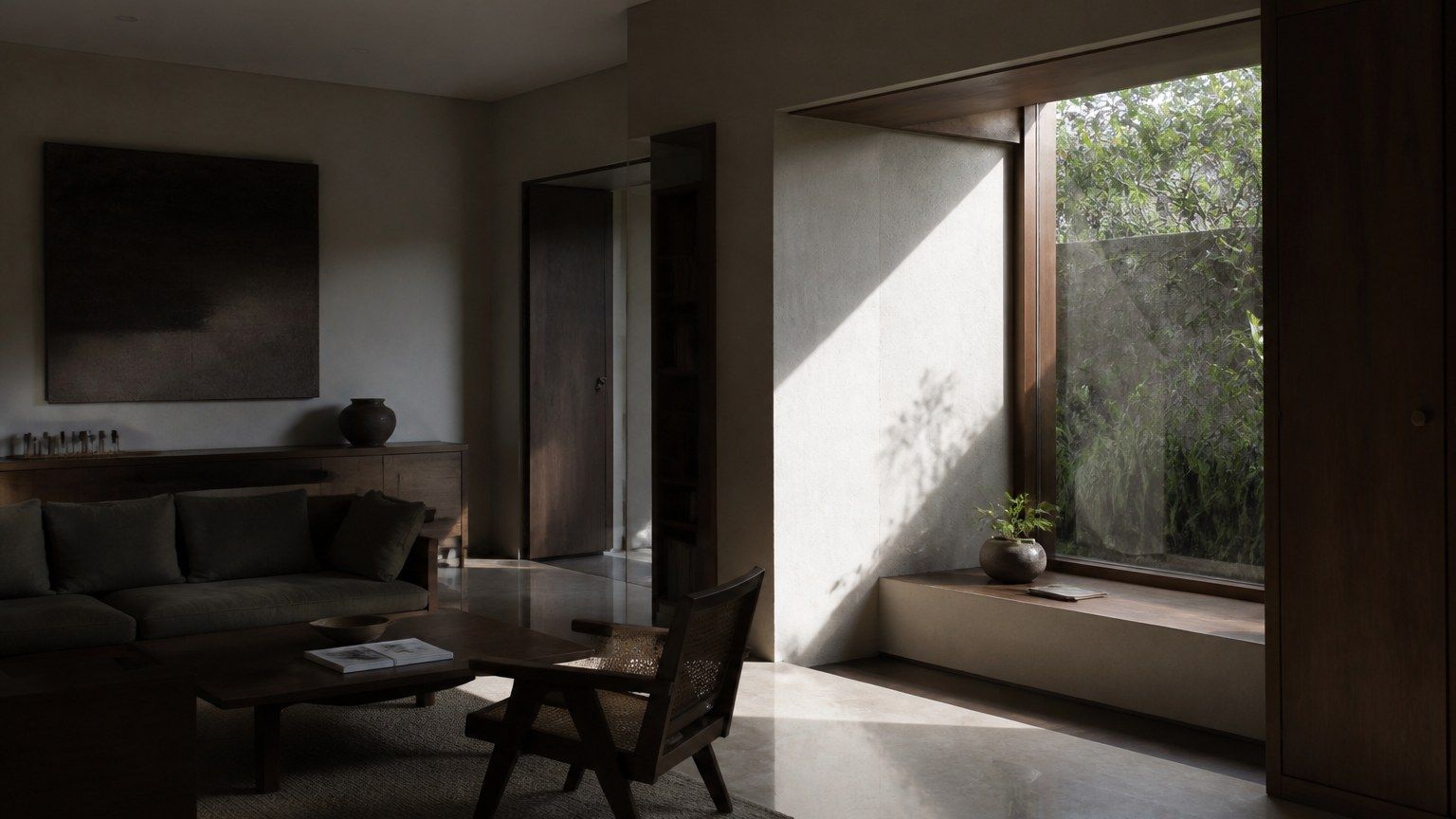
Daylight gets the essays. Shadow does the modelling. A wall is not understood only by how much light it receives, but by how that light is allowed to stop.
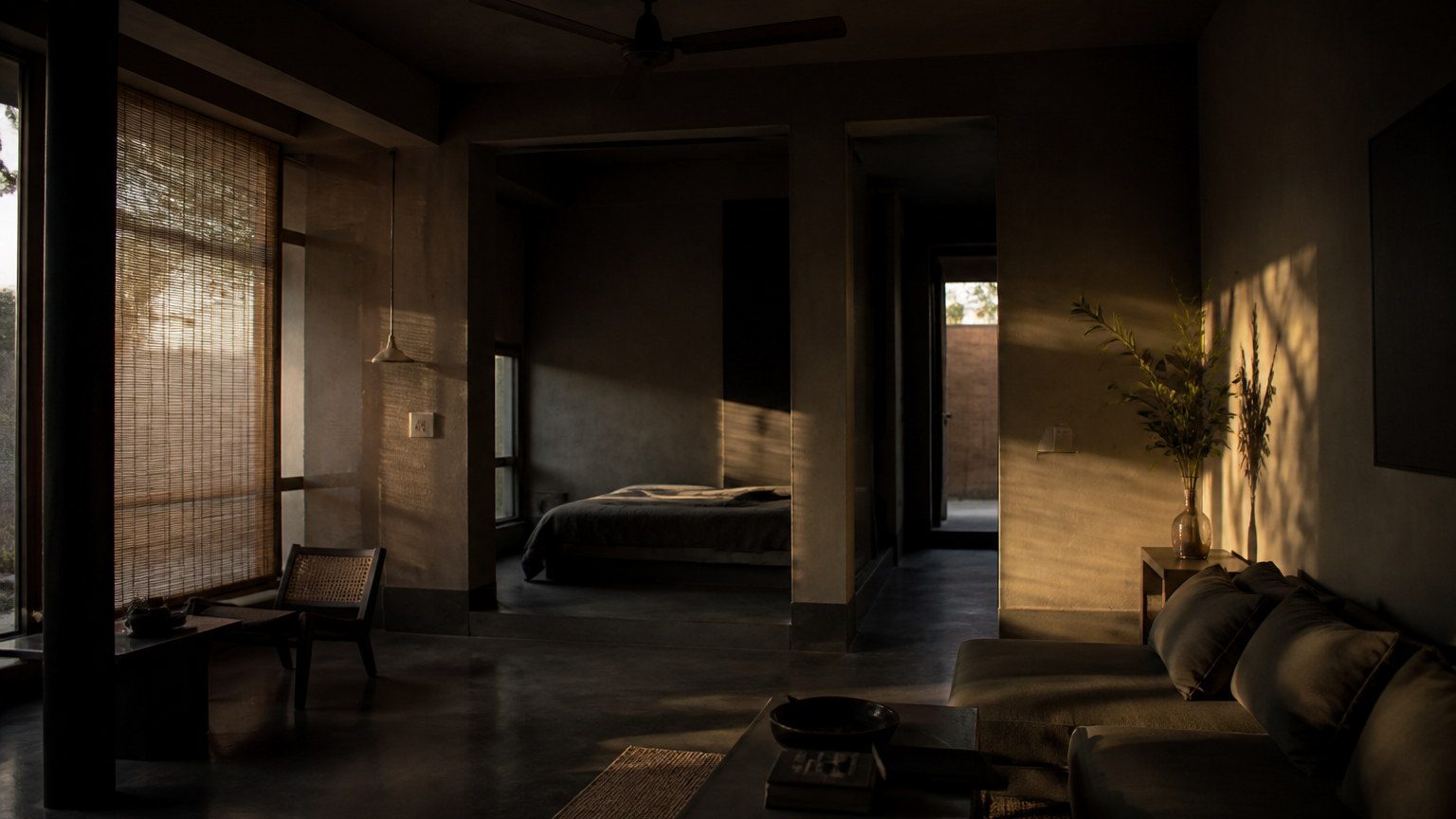
This is not a second version of designing for Indian sun. That problem is intensity, glare and colour shift. This one is shade, contrast, grazing texture, and the evening hour when the house has to make its own darkness.
A room without shadow is bright, and it is thin.
Grazing is a way of drawing
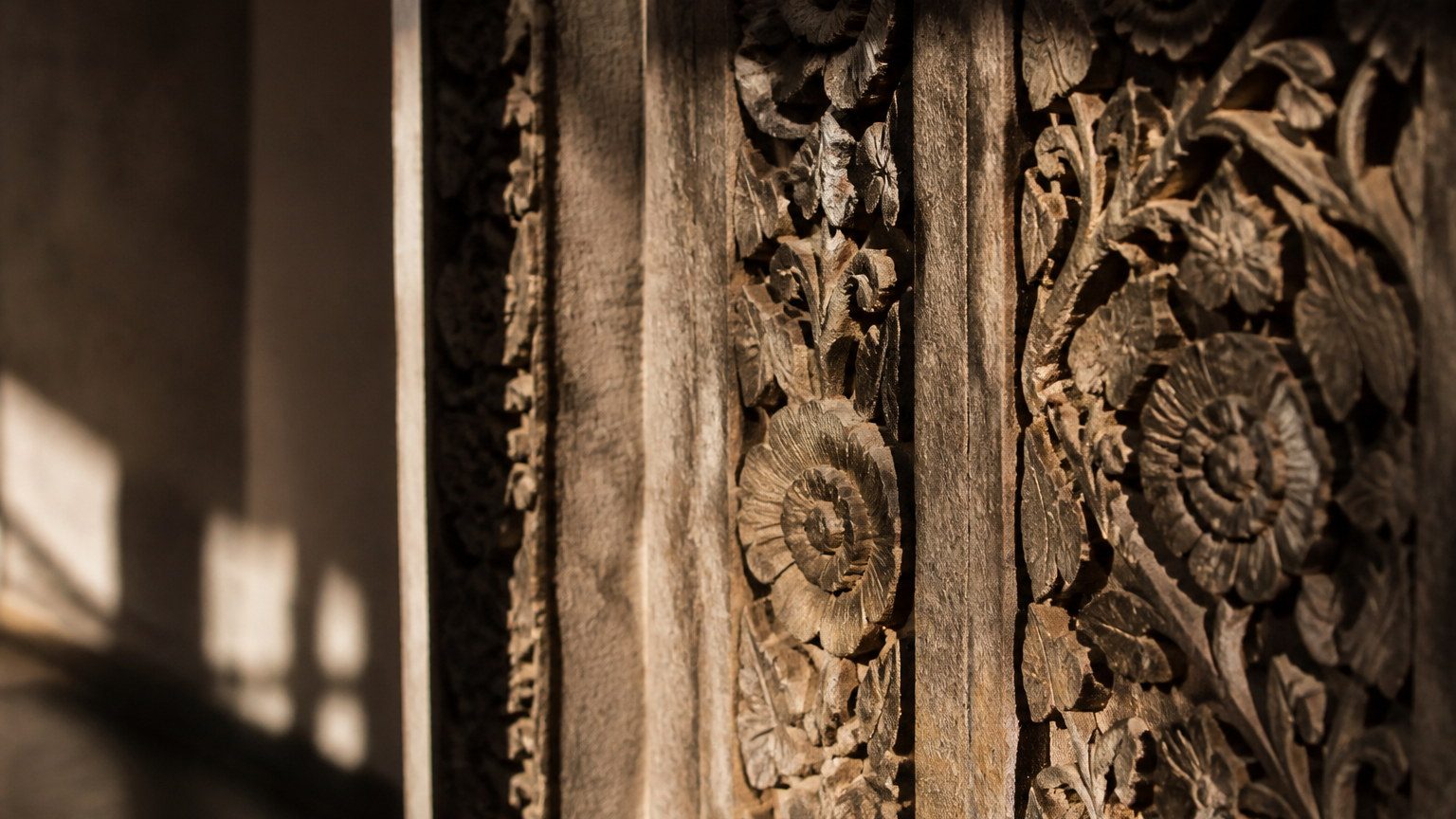
A textured plaster, a timber screen, a stone with a slight relief — none of these exist fully under a flat wash. They need light that arrives from the side and is allowed to fail across the surface. That failure is the drawing.
Contrast at the edge of the room
Indian daylight beyond a threshold can be severe. The interior that meets it does not have to compete. A deep shade just inside the opening makes the brightness readable. It also gives the eye a place to rest.
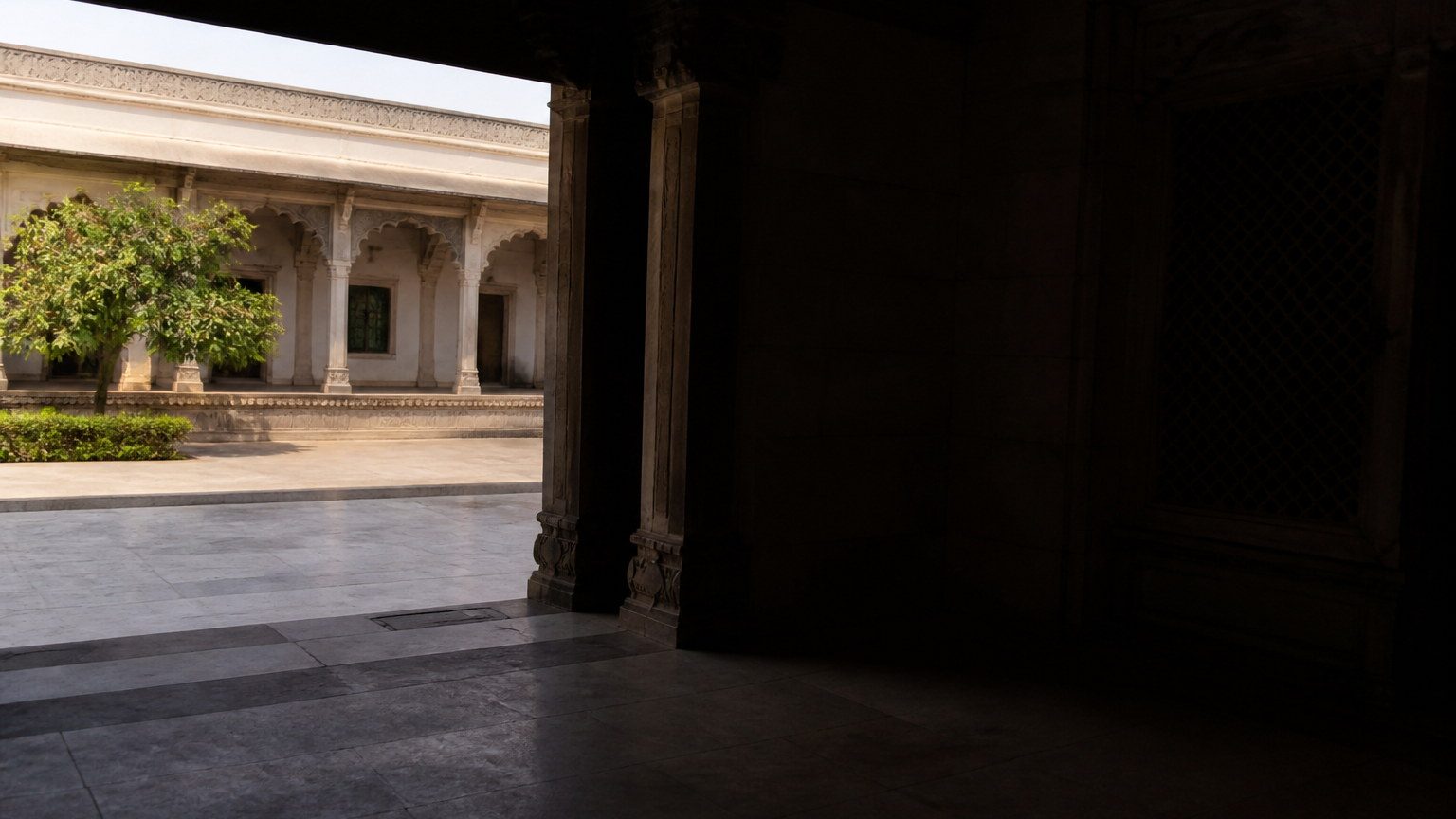
Evening is designed darkness
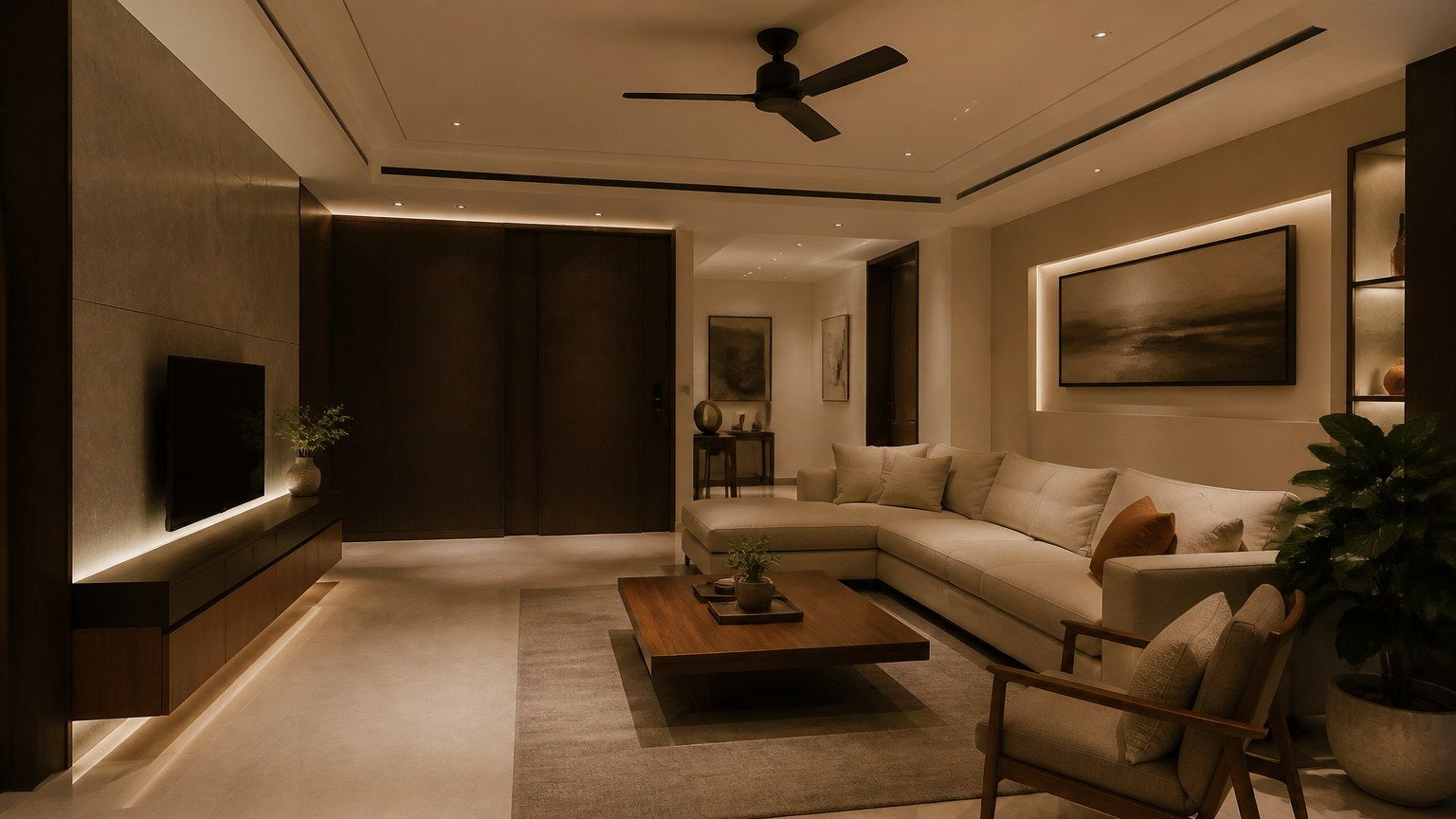
After sunset, shadow is no longer a gift of the sun. It has to be left in the room on purpose: unlit walls, pools rather than a blanket, a refusal to turn every surface on. Houses that fear darkness tend to look anxious after nine.
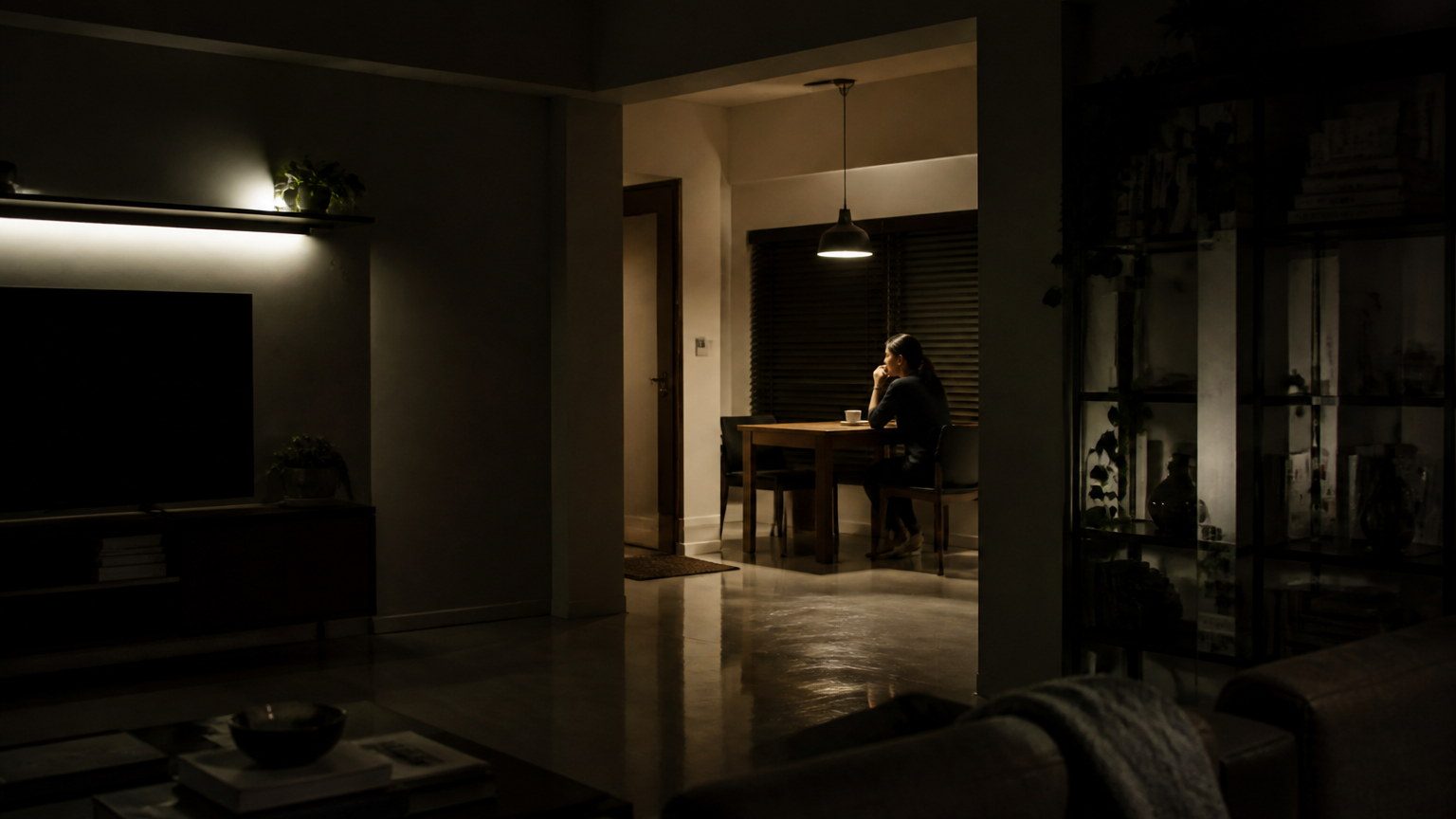
Closing thought
To design shadow is not to make a house gloomy. It is to give light somewhere to land, and somewhere to stop.
Shade is how a room keeps its depth.