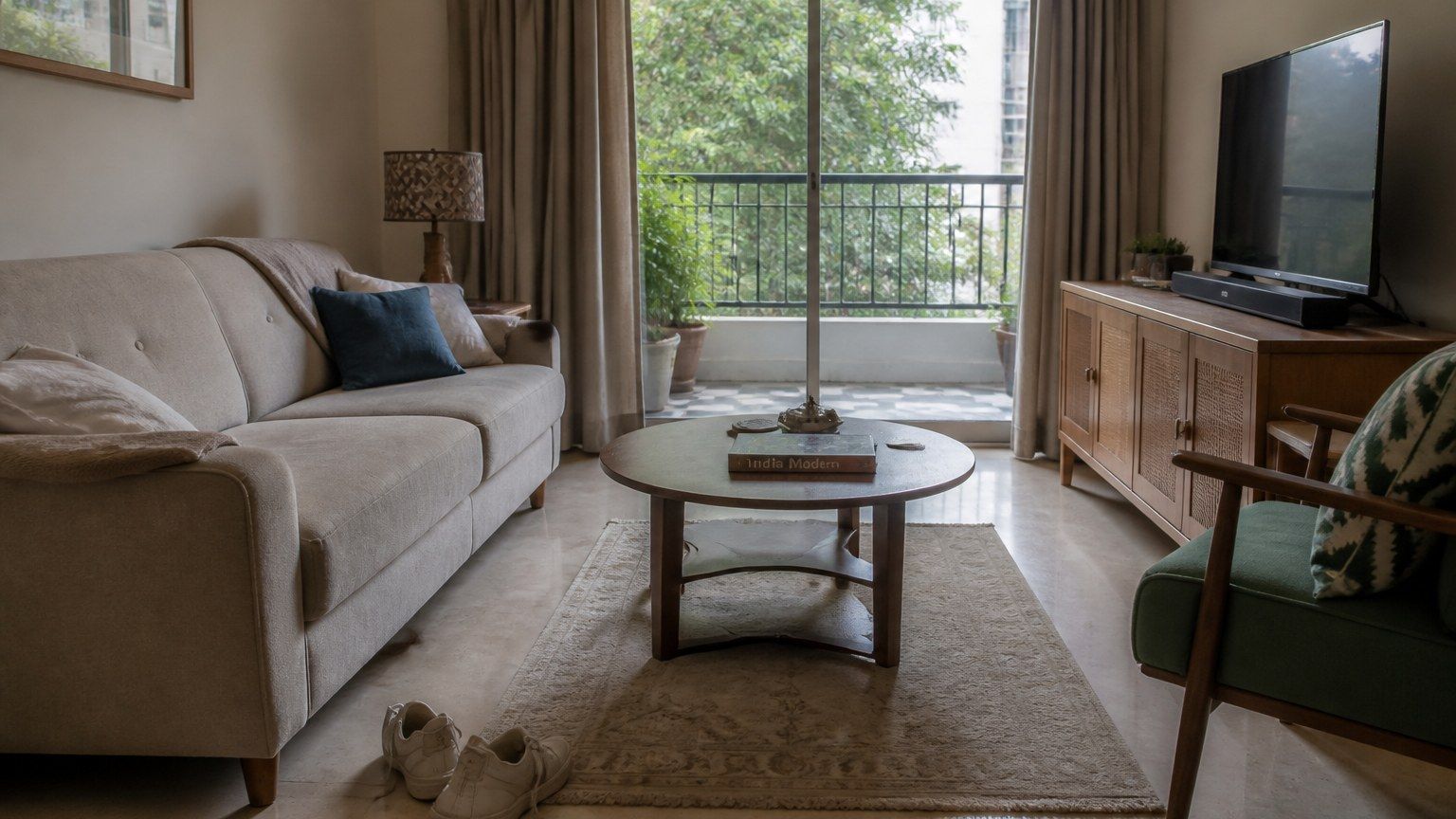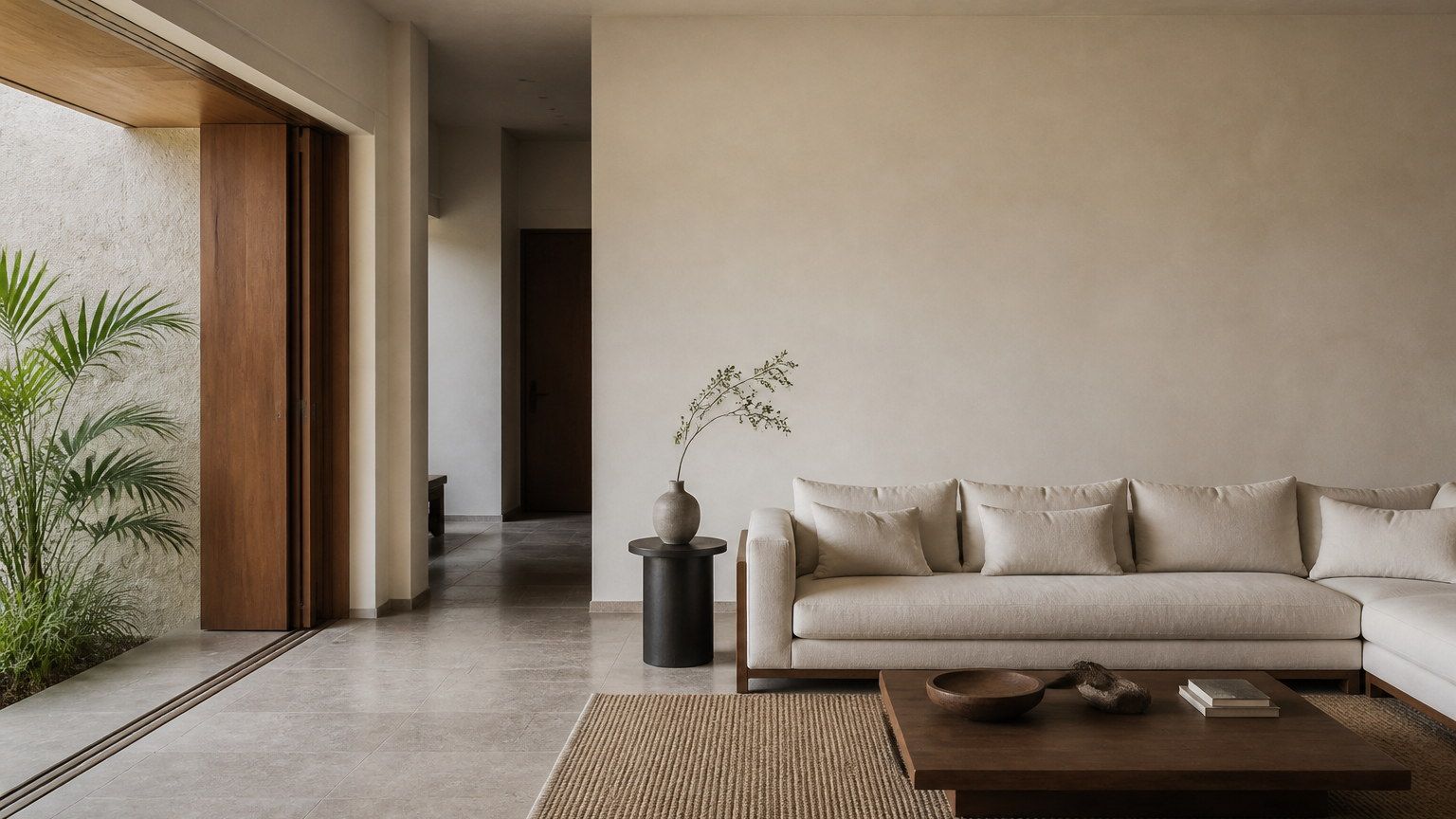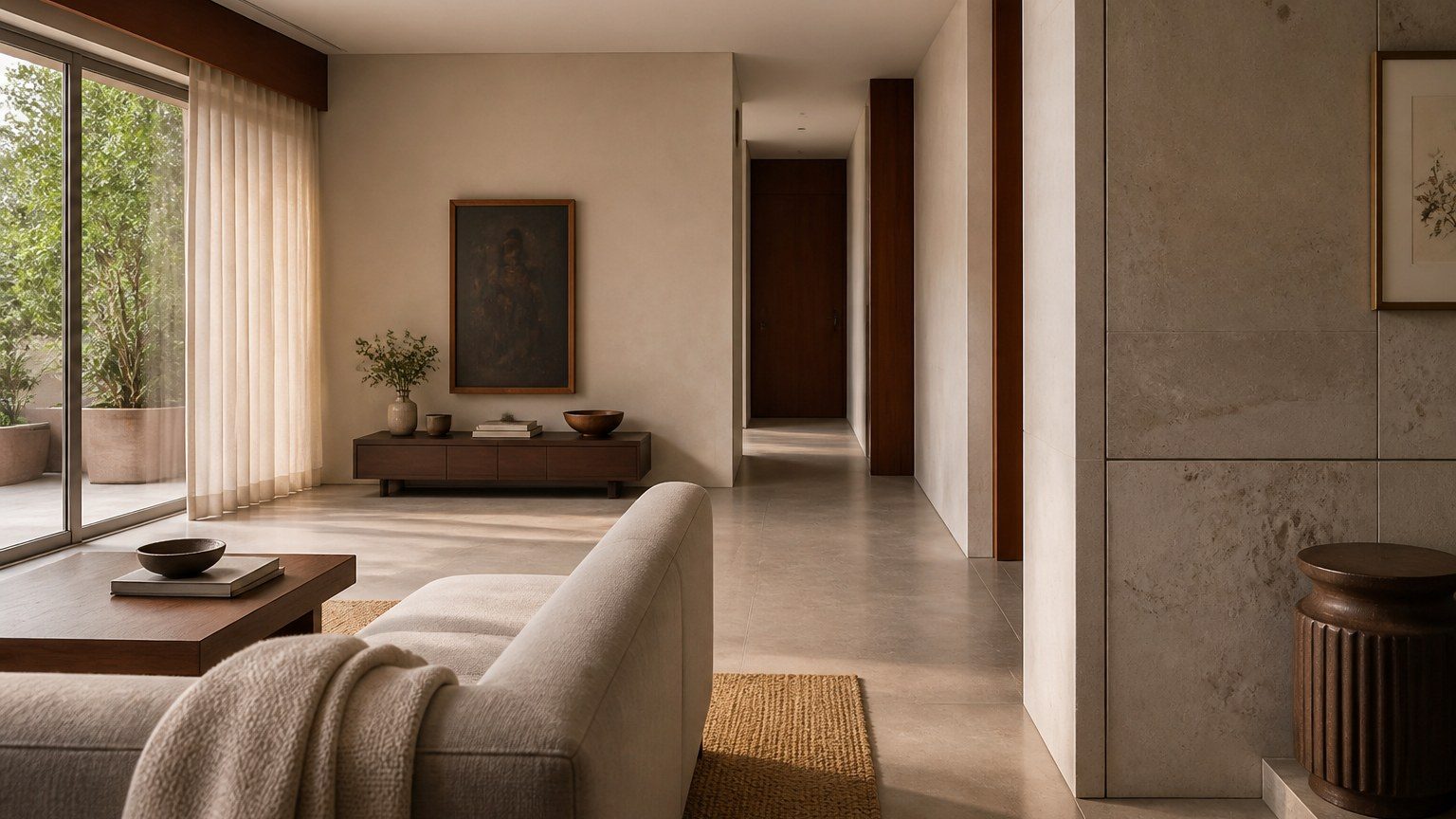
A layered room has distance in it. You can look through it, not only at it.
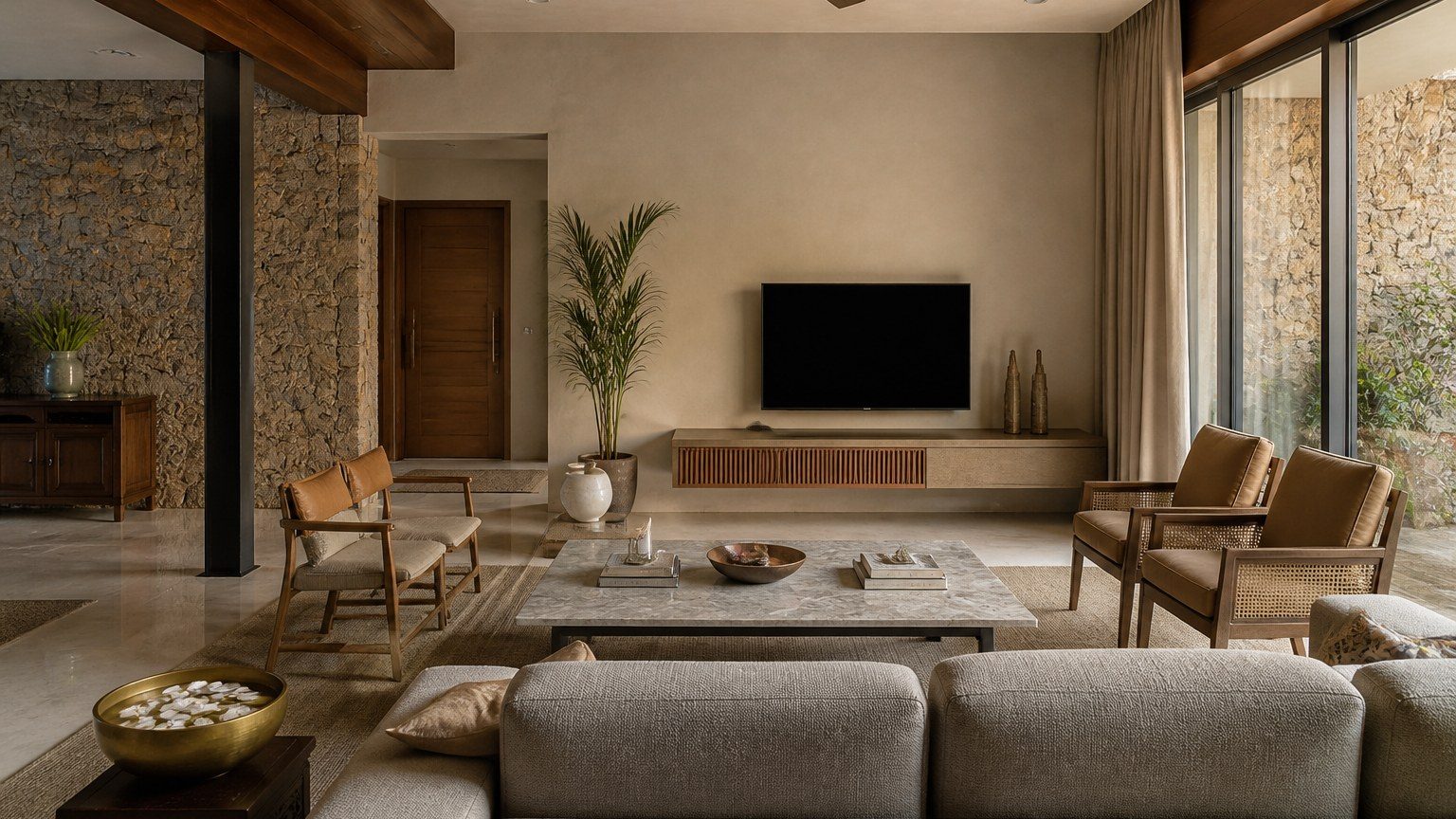
Layering is often taught as a shopping sequence: rug, then sofa, then cushions, then art. That produces a styled photograph and a tired room. Real layering is spatial. Something in the foreground, something that holds the middle, a wall that is allowed to recede, light that does not flatten all three into one plane.
If everything is equally important, nothing has depth.
Leave a plane empty
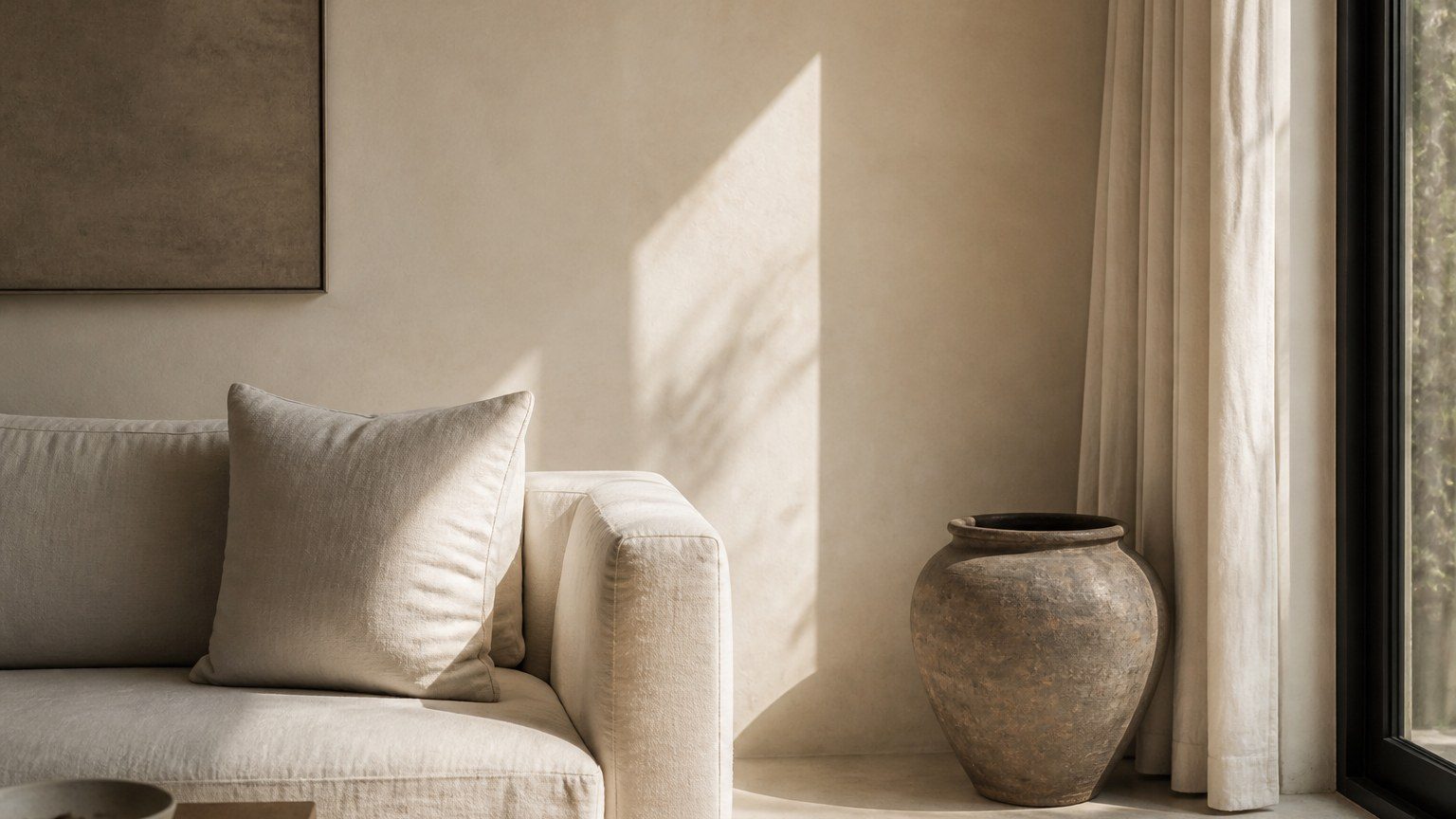
A room needs at least one surface that is not performing: a wall without a gallery, a floor that is not a pattern, a window that is not dressed to death. The other layers then have somewhere to sit. Without that rest, “depth” is only clutter seen from an angle.
Closing thought
Layering is not an advanced technique. It is the ordinary work of deciding what should come forward and what should wait.
Depth is an edit, not an addition.