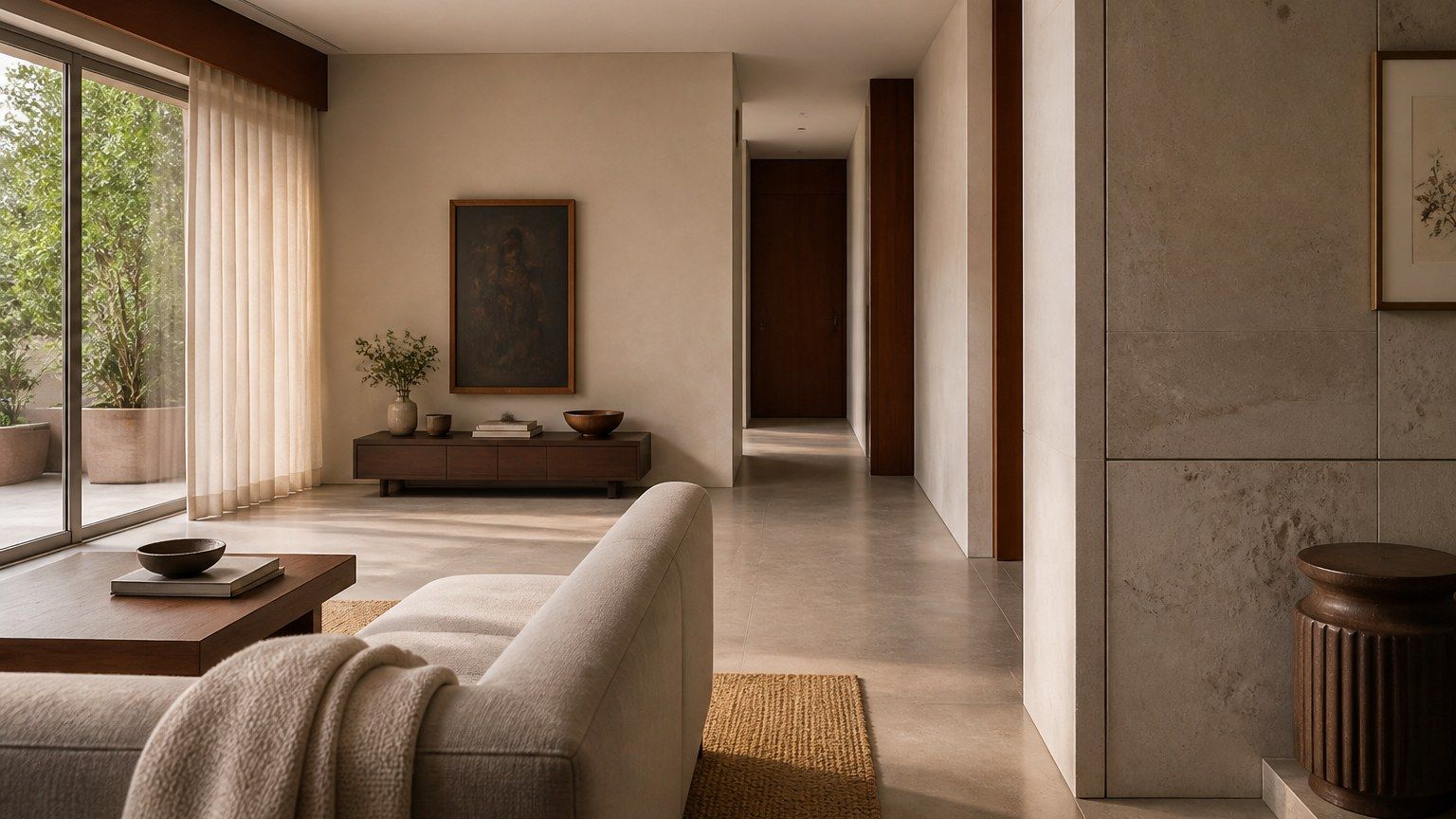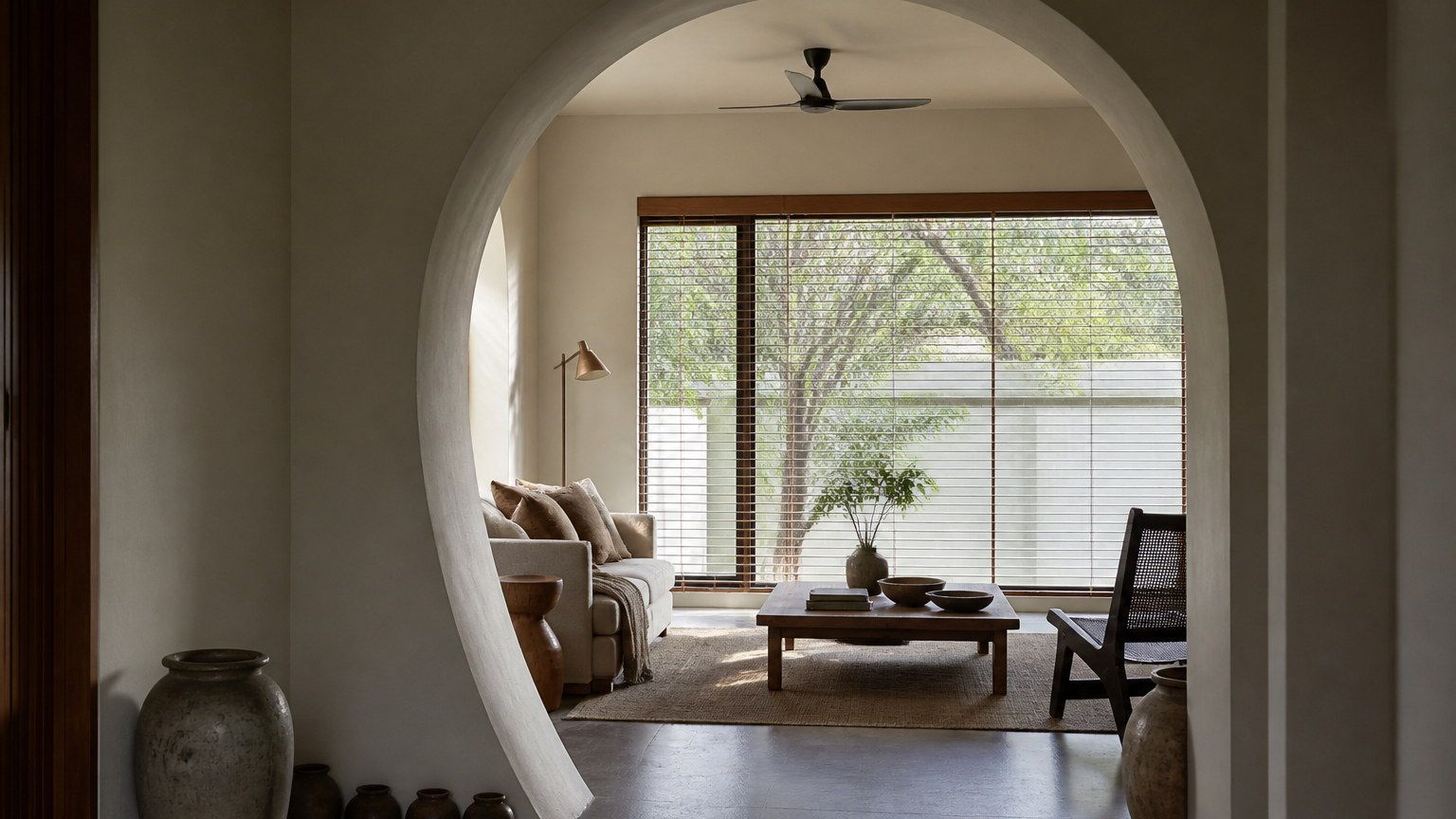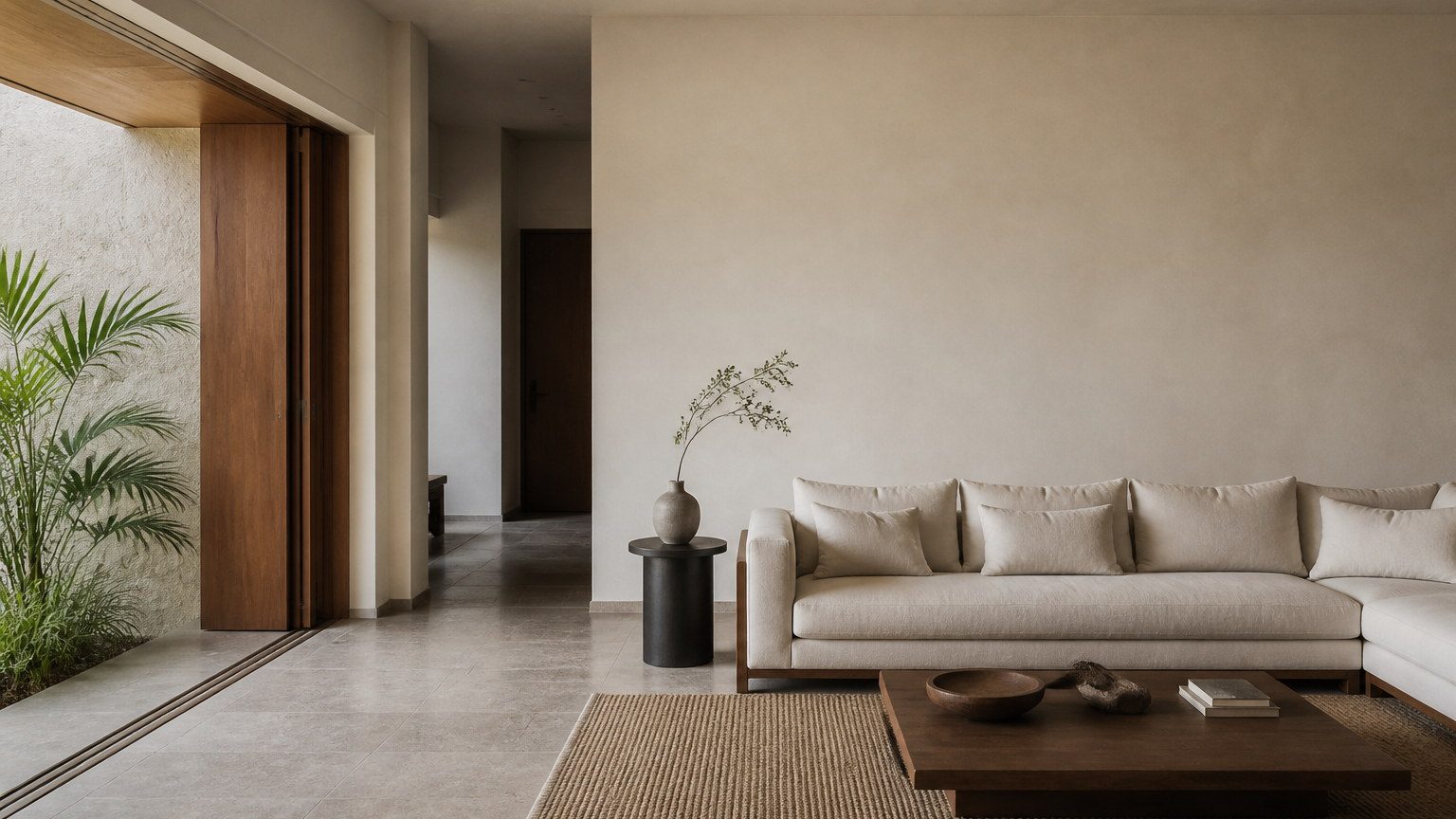
The unused wall is not an unfinished thought. It is part of how the room breathes.
Overdesign is often mistaken for generosity.
More furniture, more finish, more objects, more gesture — as if a home became luxurious by accumulation. The rooms that last rarely work that way. They are edited. They leave wall. They let daylight do some of the furnishing.
This is not an argument for emptiness as a style. It is an argument for composure.
Luxury that needs to announce itself is usually already uncertain.
What restraint is actually doing
Restraint protects the things that are worth noticing: a stone floor that will still be beautiful in ten years, a window that frames a tree, a piece of furniture that can sit without competing.
When every surface is asked to perform, nothing can rest. The eye has nowhere to go, and the room begins to feel expensive without feeling calm.
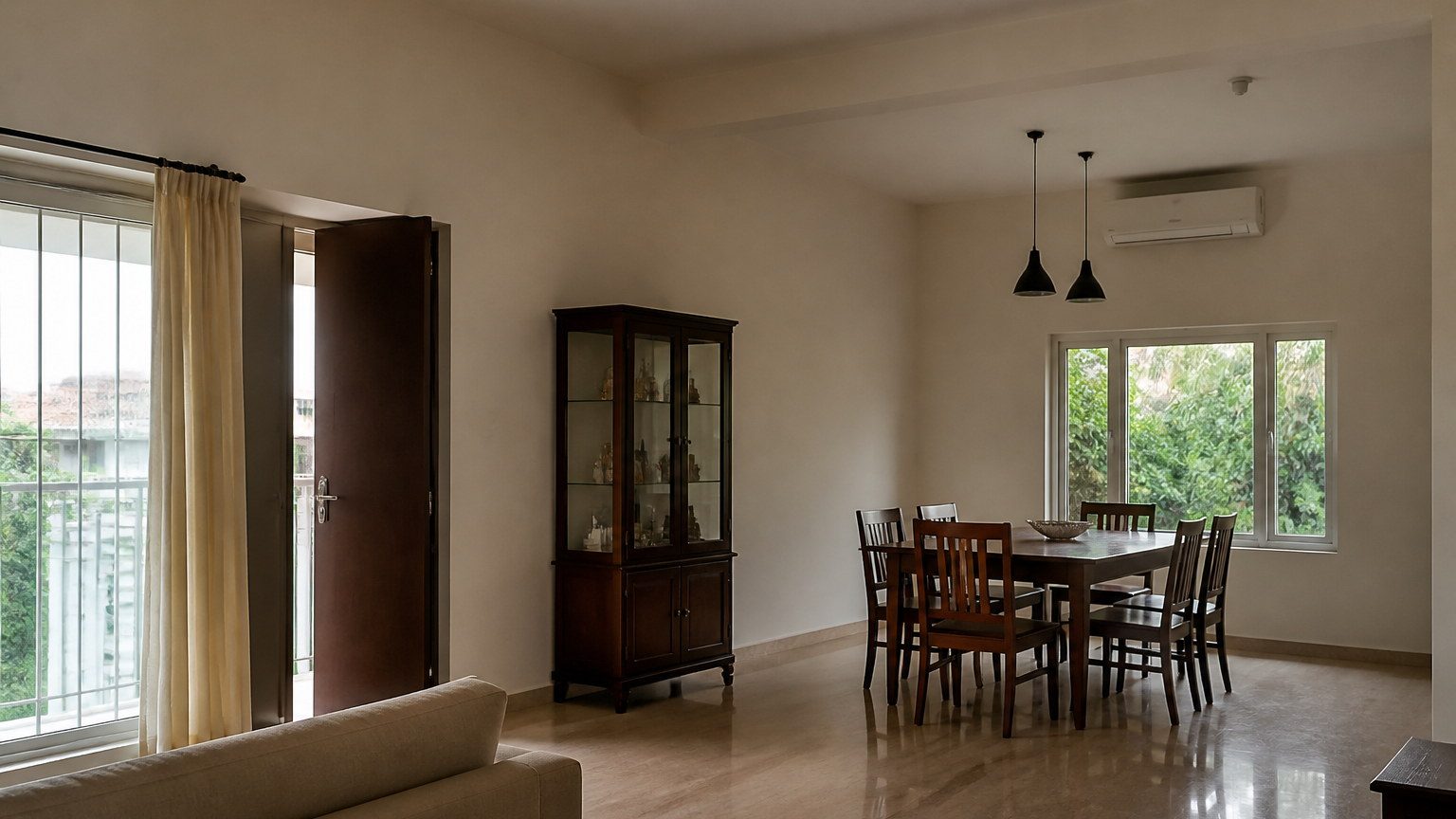
Making as luxury
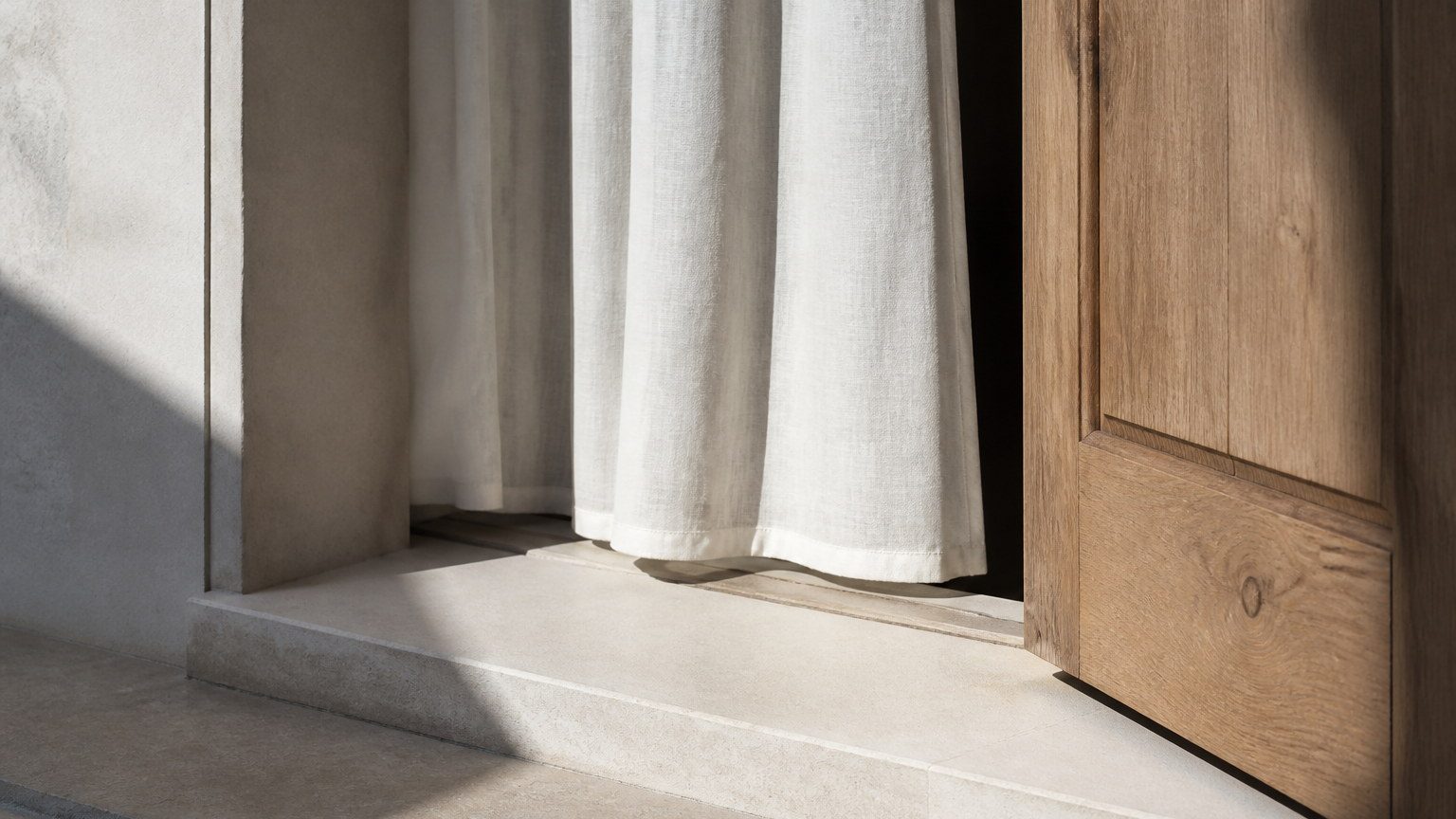
The quieter homes tend to spend their attention on junctions, alignments and the way a door meets a floor. That work does not photograph as “feature”. It is felt when a hand finds a handle, or when a shadow falls cleanly across a wall.
Visible luxury — the gilt, the crystal, the crowded shelf — dates. Making that is exact does not.
Evening is the test
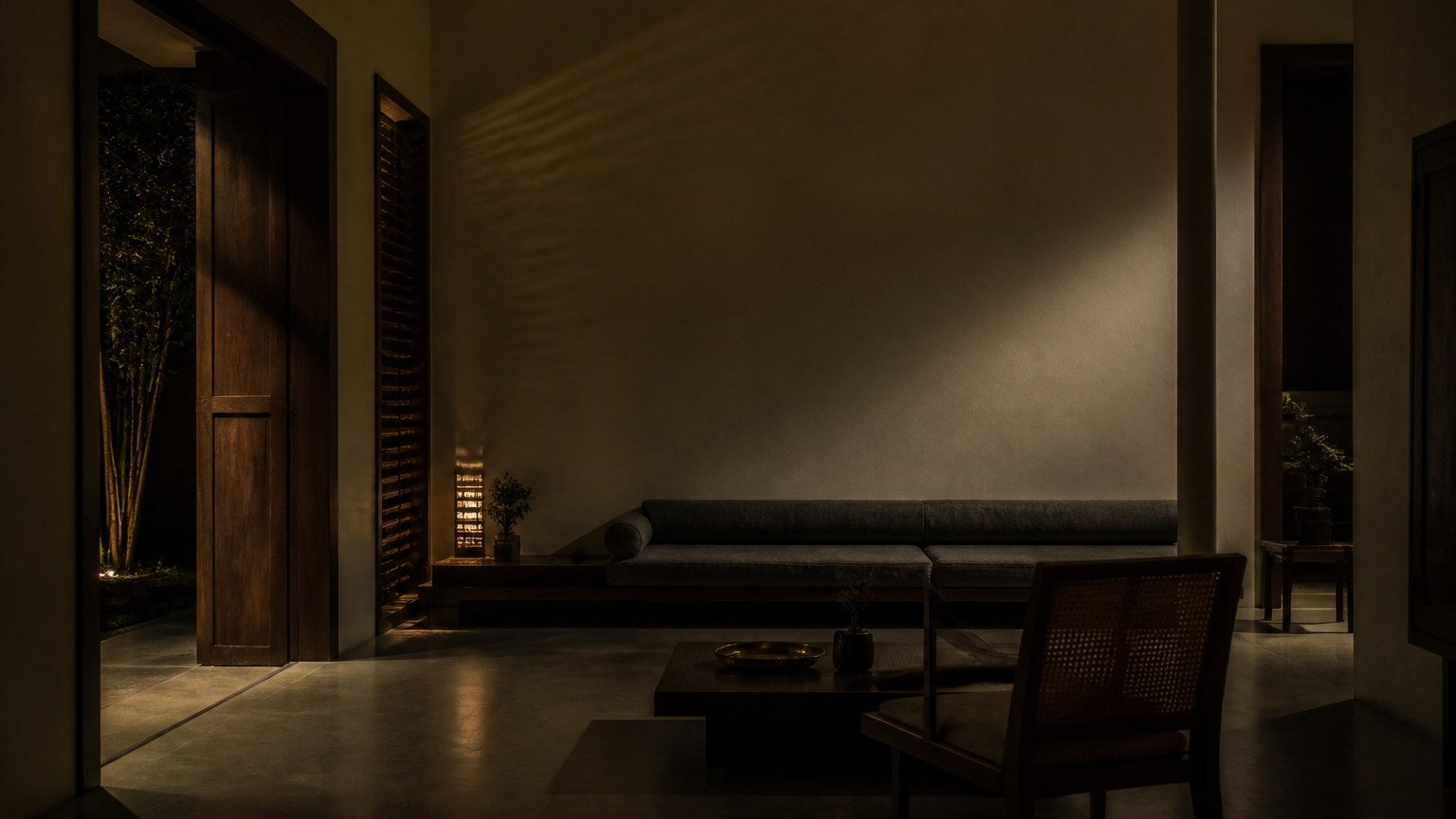
A room that is overdesigned by day often becomes noisier after dark, when every object still demands light. A restrained room can dim. It can keep one wall quiet. It can let the house feel inhabited rather than displayed.
Closing thought
The homes that feel luxurious over years are not the ones that used every opportunity. They are the ones that knew which opportunities to refuse.
Empty wall is not a lack. It is a decision.