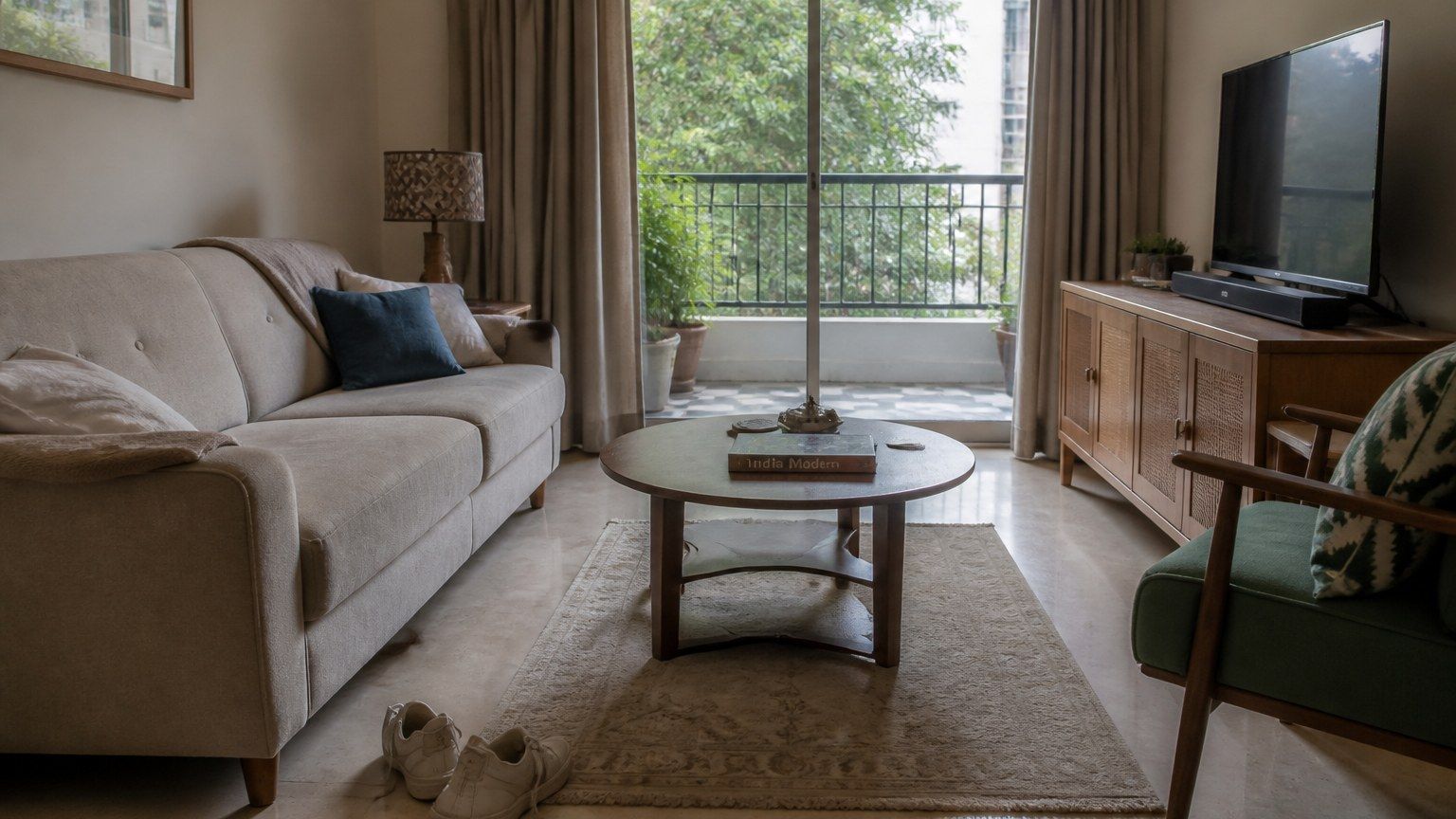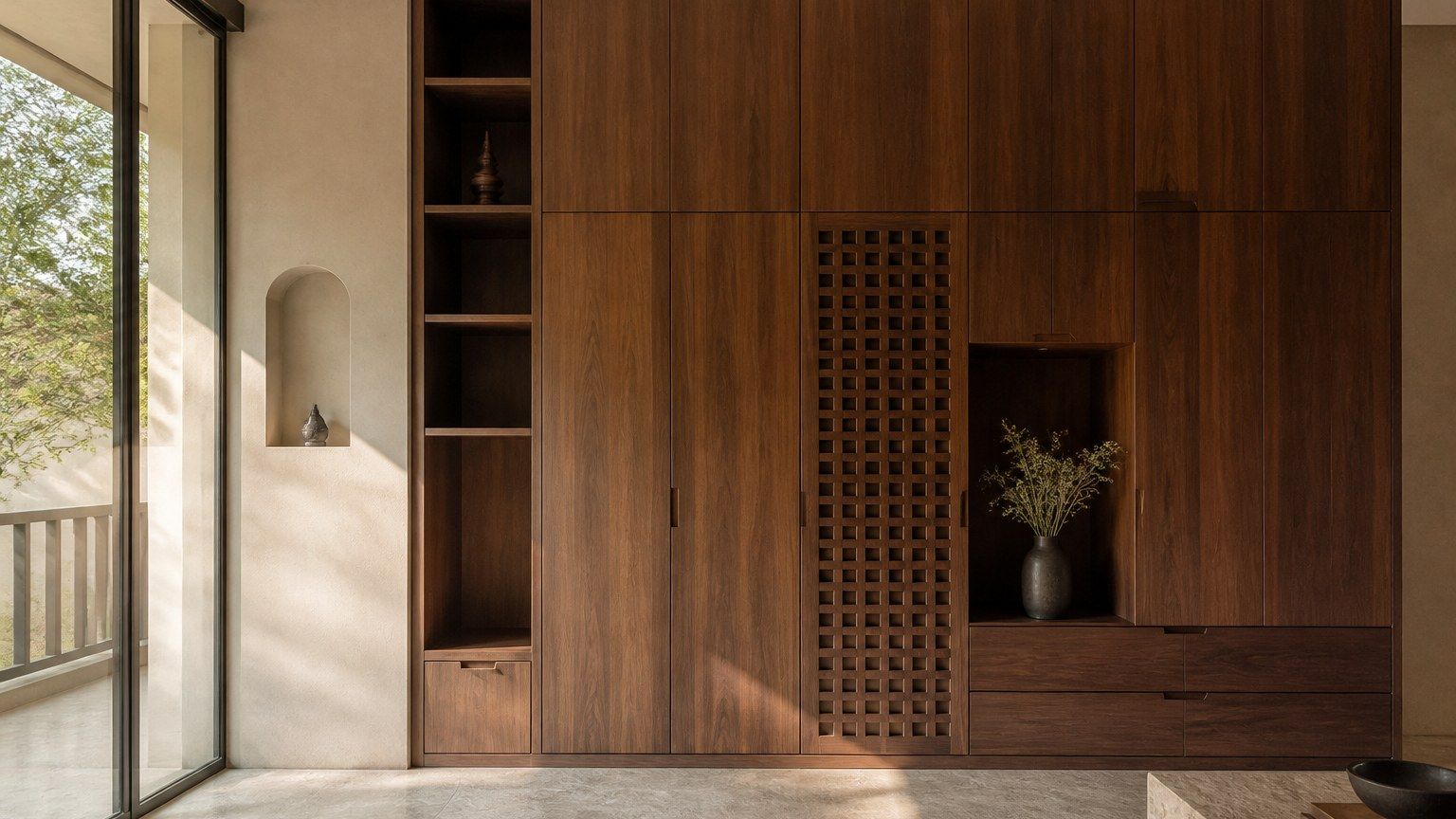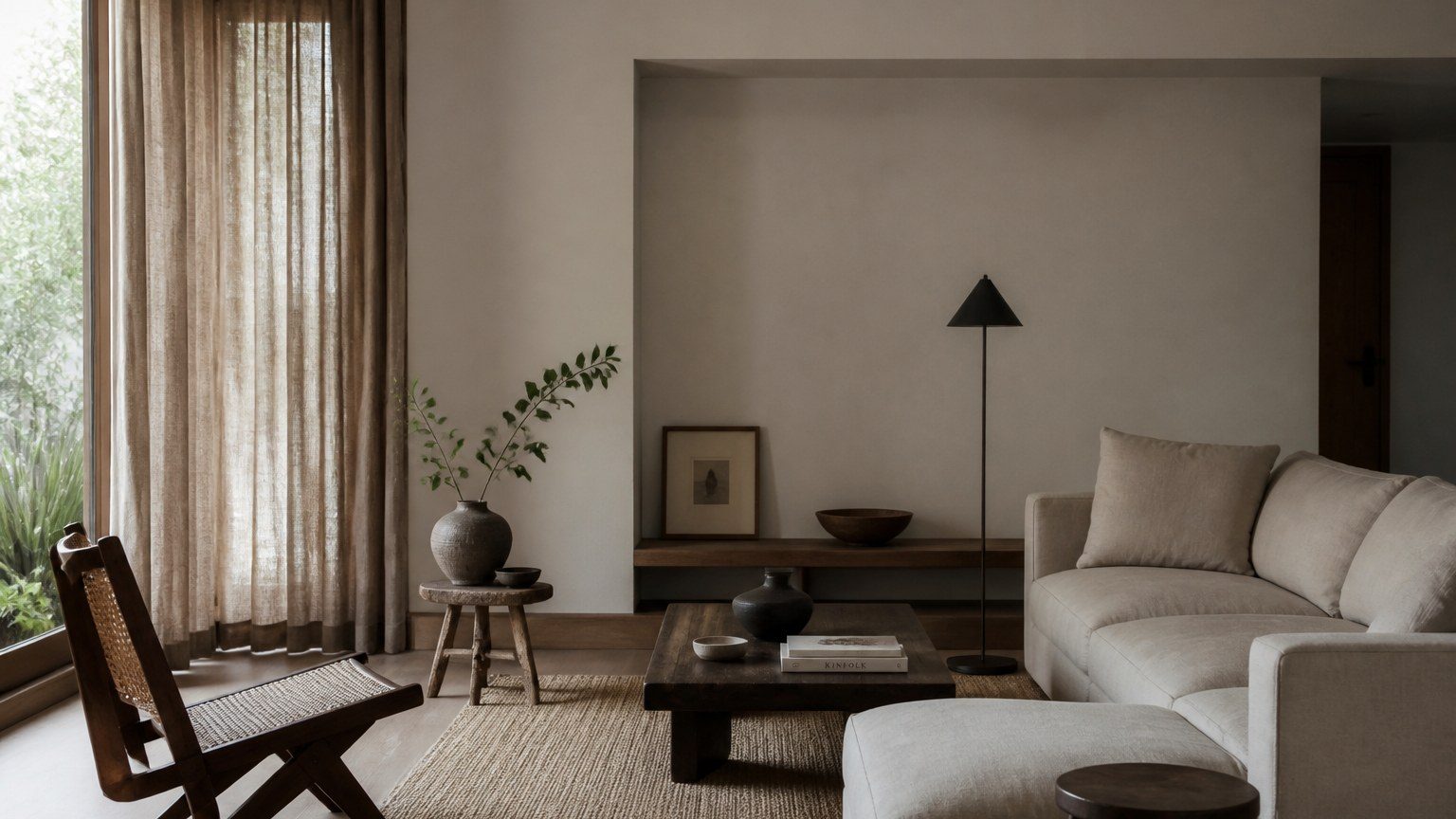
A textile is doing three jobs at once: touch, sound and the colour of the light.
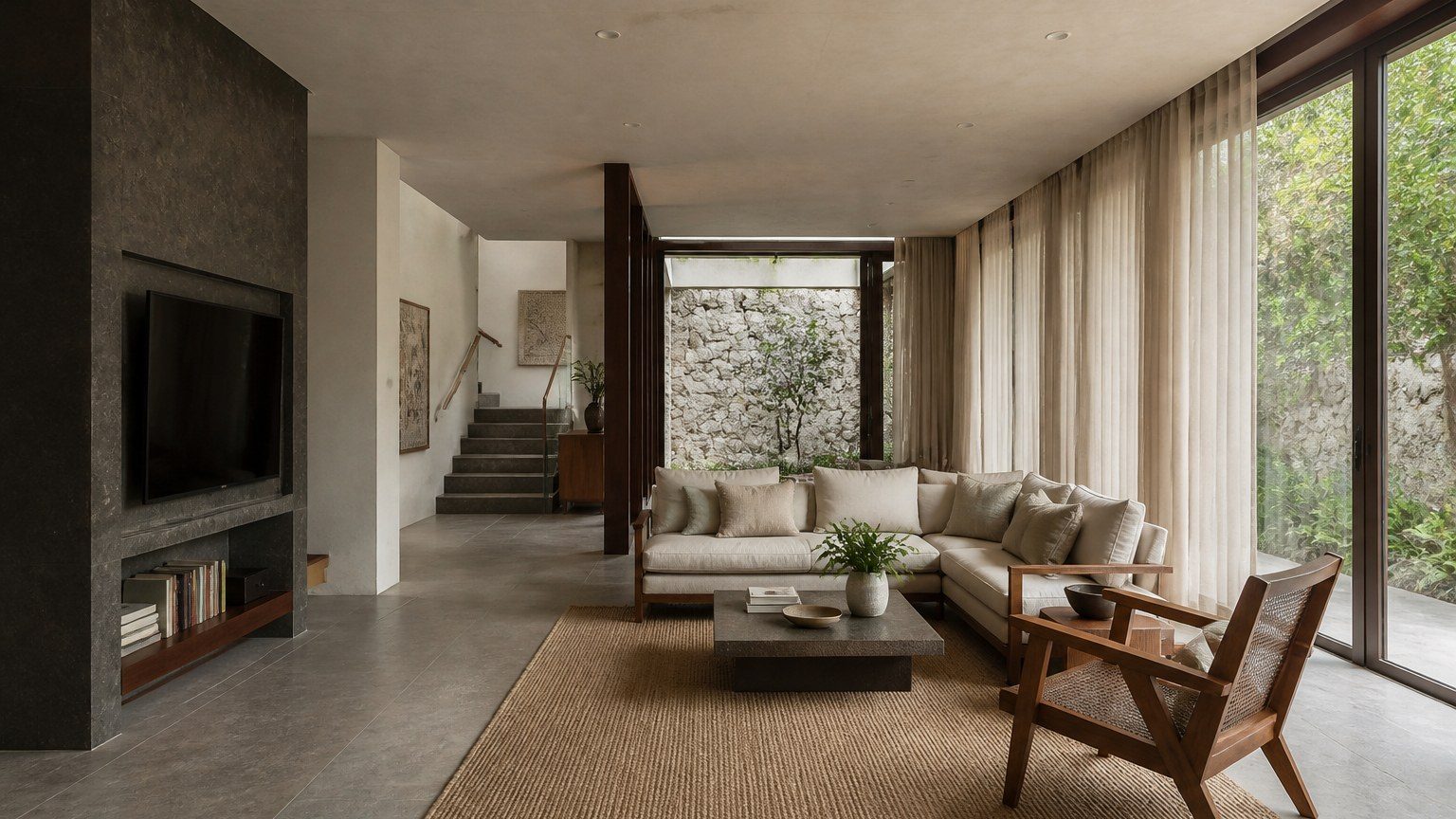
Hard rooms photograph well and live badly. Stone, glass and plaster need something that absorbs: a drape that actually closes, a seat that does not ring when you sit, a rug that is not a postage stamp in a cathedral of tile. Textiles are the cheapest way to change the climate of a room after the architecture is fixed — and the easiest thing to get wrong as decoration.
If it only looks warm, it is not yet a textile decision.
Acoustics are felt as hospitality
People describe a loud room as unfriendly long before they mention reverberation. Curtains, upholstery, even a lined panel in joinery, take the edge off voices and cutlery. In a workplace the same logic holds: a fabric screen that does real work is worth more than a feature wall that reflects every call.
Closing thought
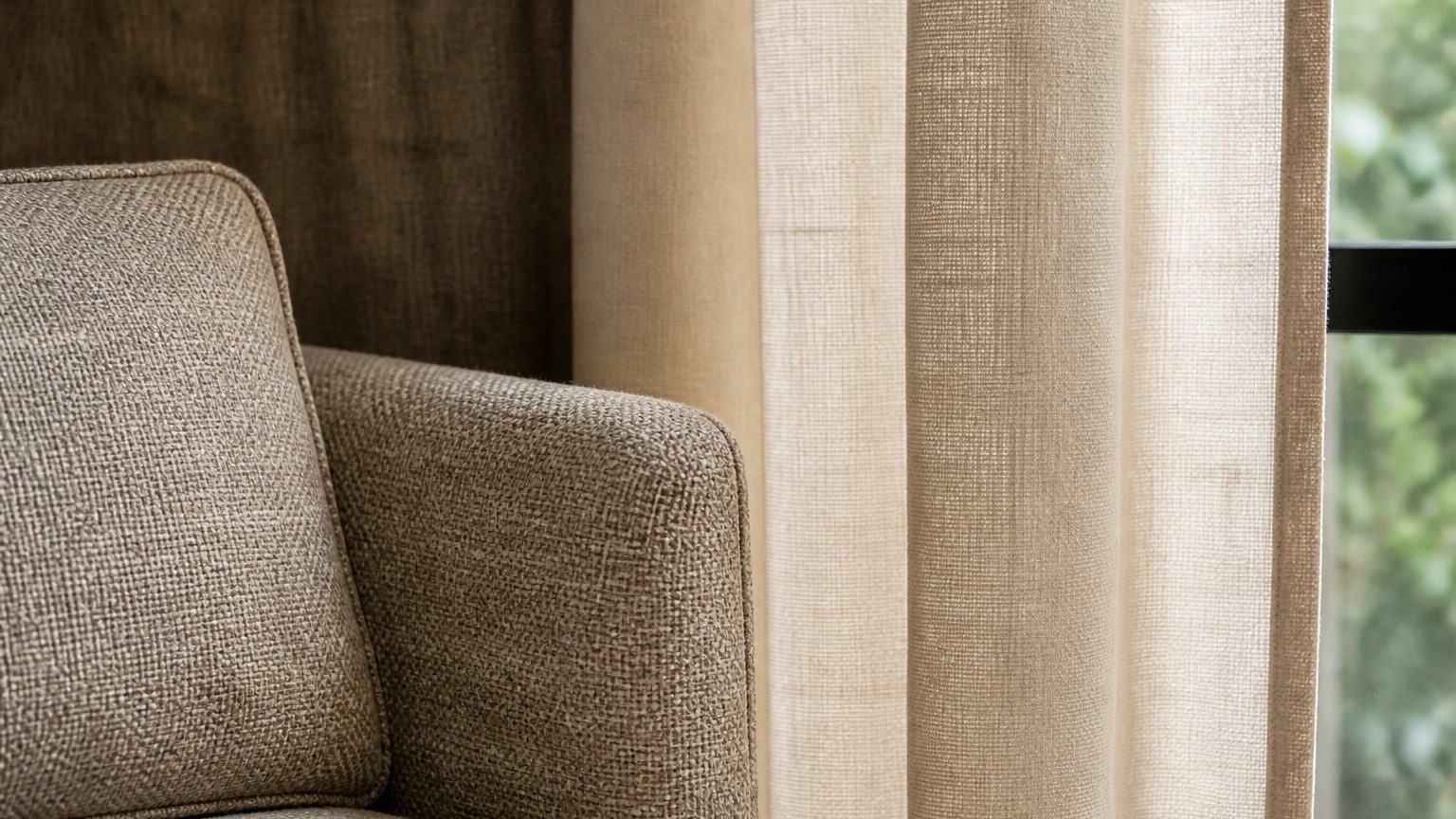
Choose textiles for what they do to sitting, speaking and evening light. The photograph will follow, or it will not — that is secondary.
Comfort is a material, not a mood.