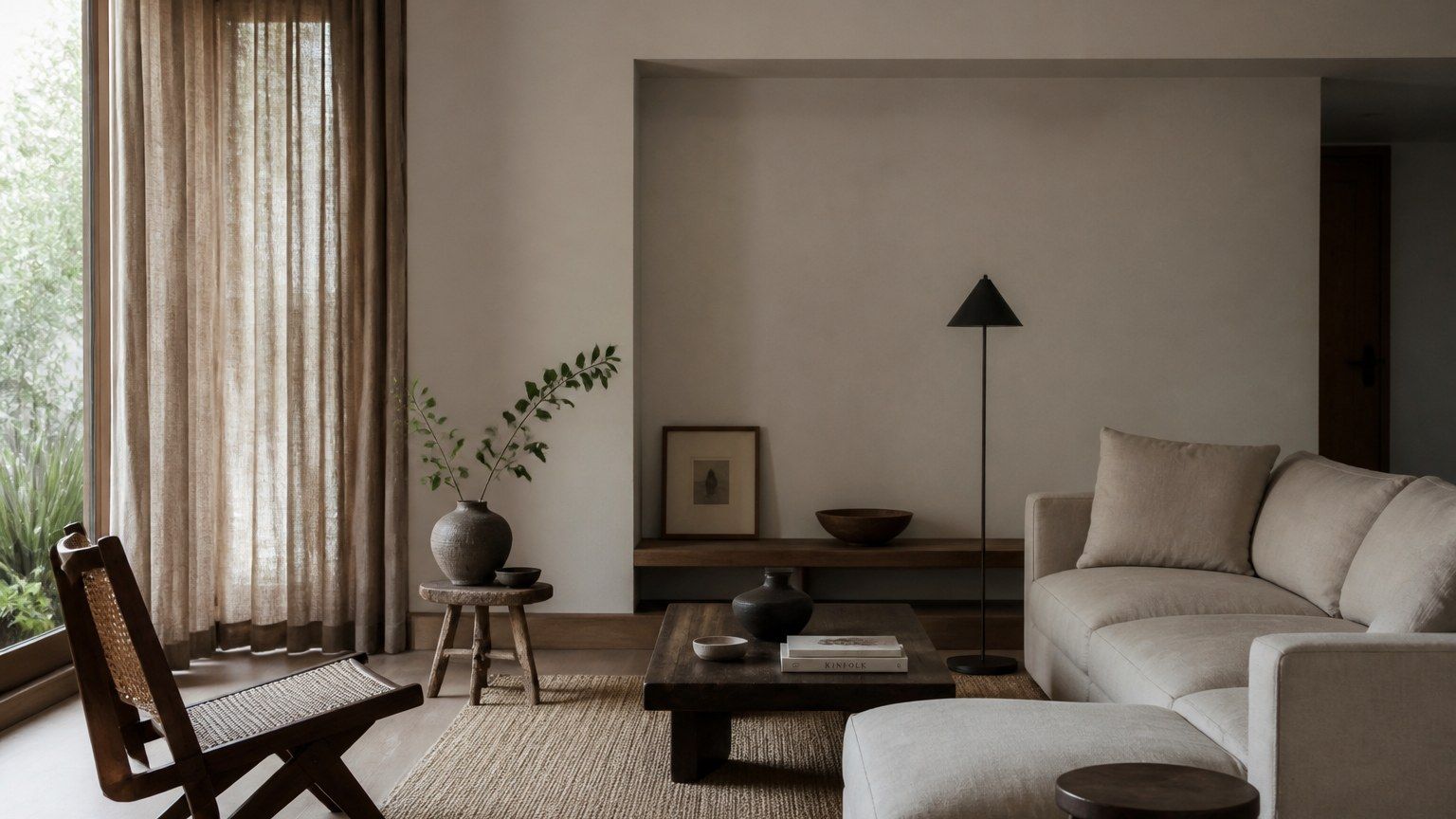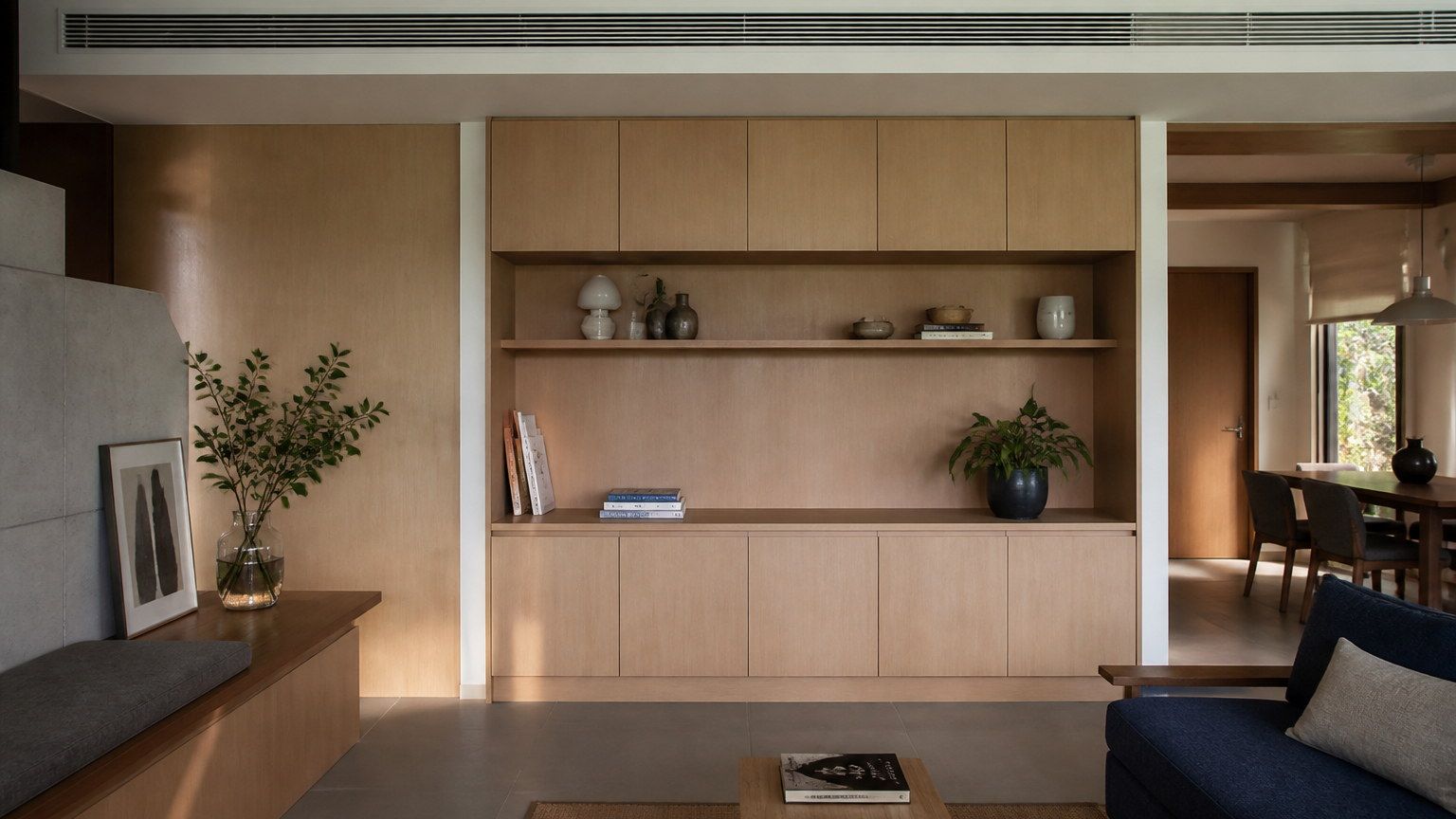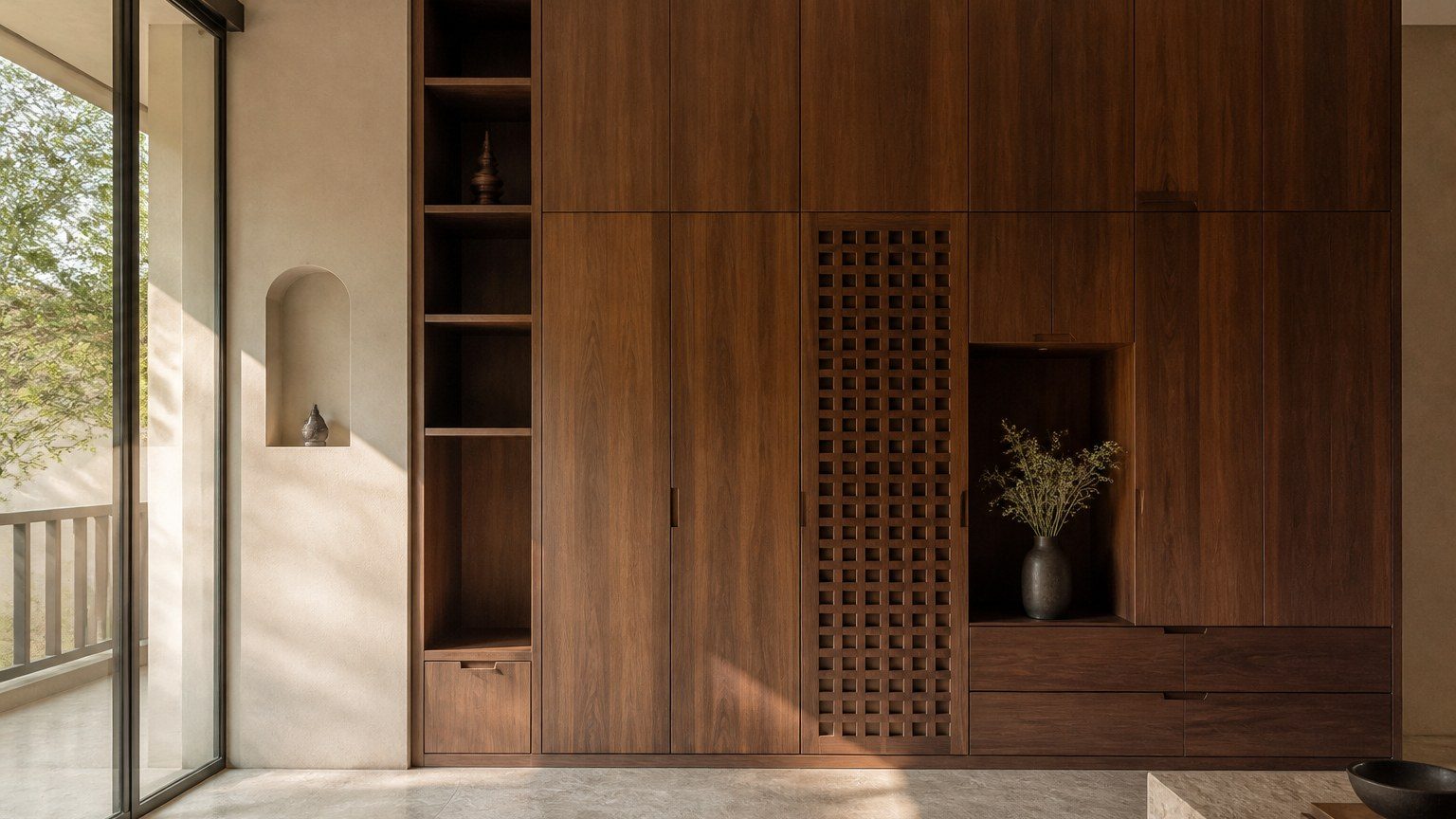
When joinery is architecture, the room no longer needs a feature wall to explain itself.
Millwork is where a design-build interior either becomes a building or remains a collection of bought objects. A run of cupboards that ignore the ceiling line, a handle that fights the grain, a shadow gap that is actually a gap — these are not details for specialists. They are how a room is read at a glance.
If the joinery is restless, the room cannot settle.
Alignment is the first craft
Doors that share a datum with a window. A plinth that meets the floor without a rubber strip doing the talking. A cornice that is not a leftover from a catalogue. These alignments are cheap to draw and expensive to fake later. They are why millwork has to be designed with the architecture, not ordered after it.
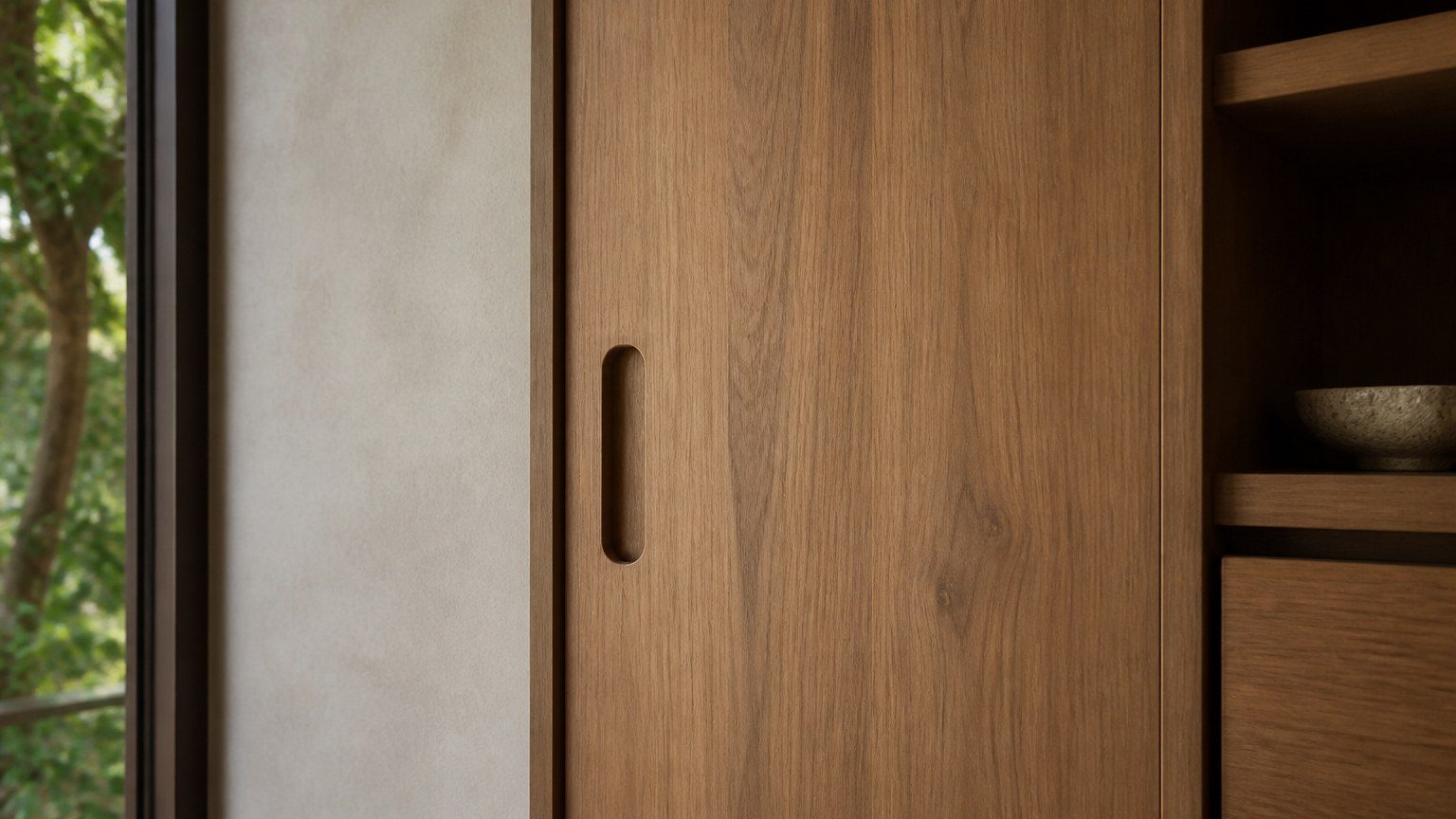
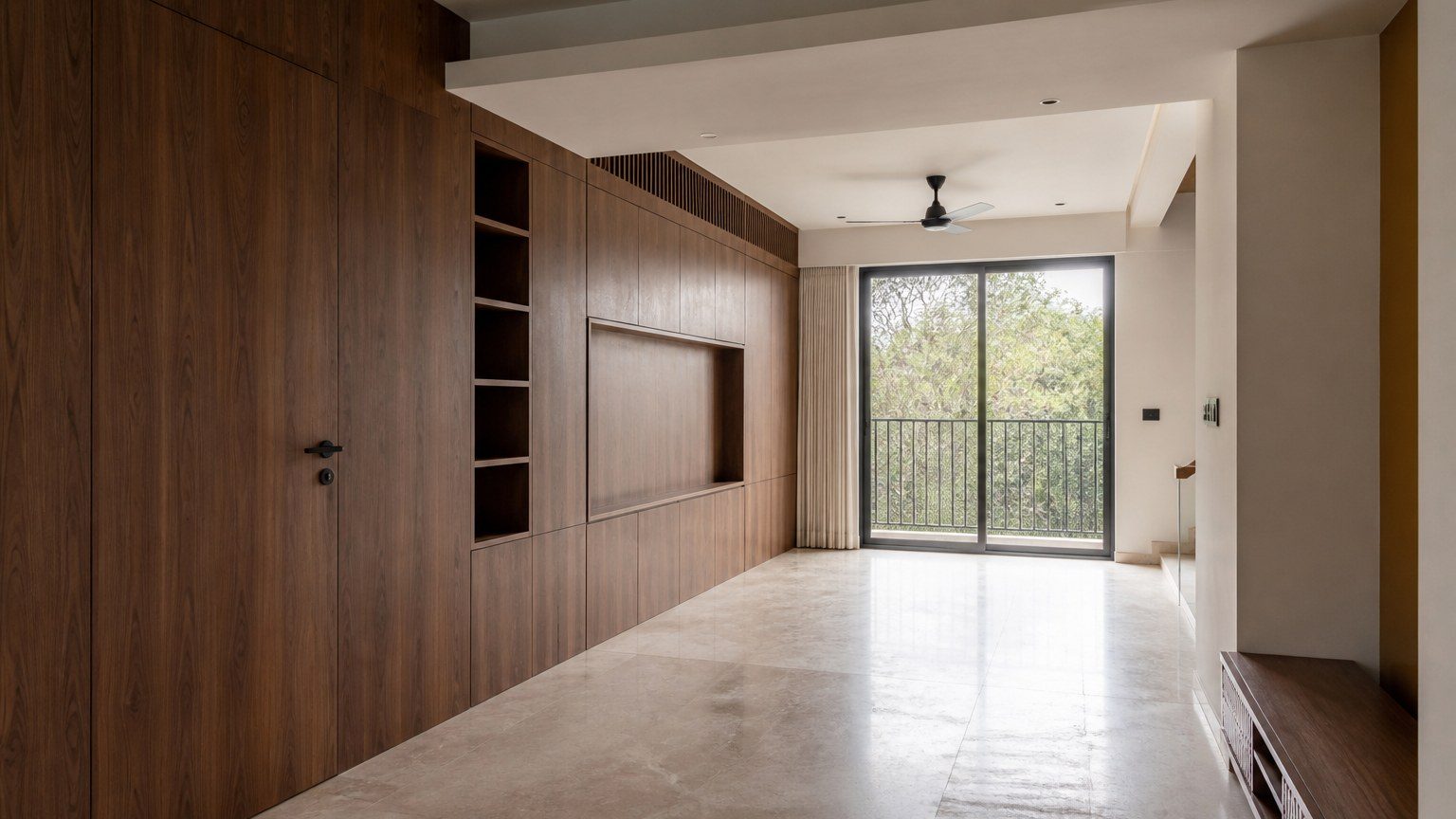
What millwork is for
It hides the life of a house: the charger, the files, the things that make a room look unfinished if they sit on a surface. That is not concealment as a trick. It is hospitality toward daily use.
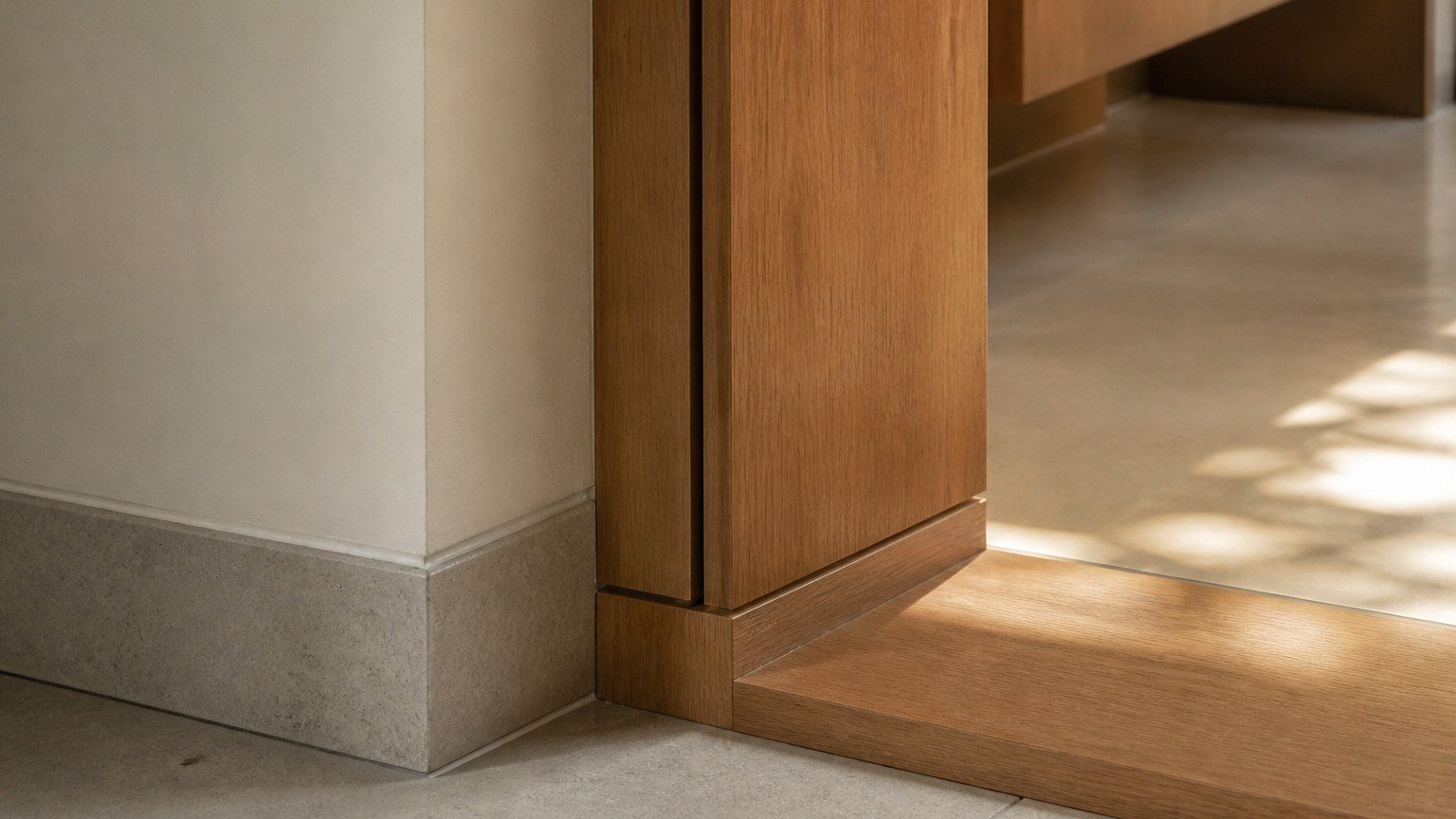
Closing thought
Bespoke millwork is not a luxury add-on. It is how an interior becomes specific enough to last.
If it could be bought as a unit, it is not yet architecture.