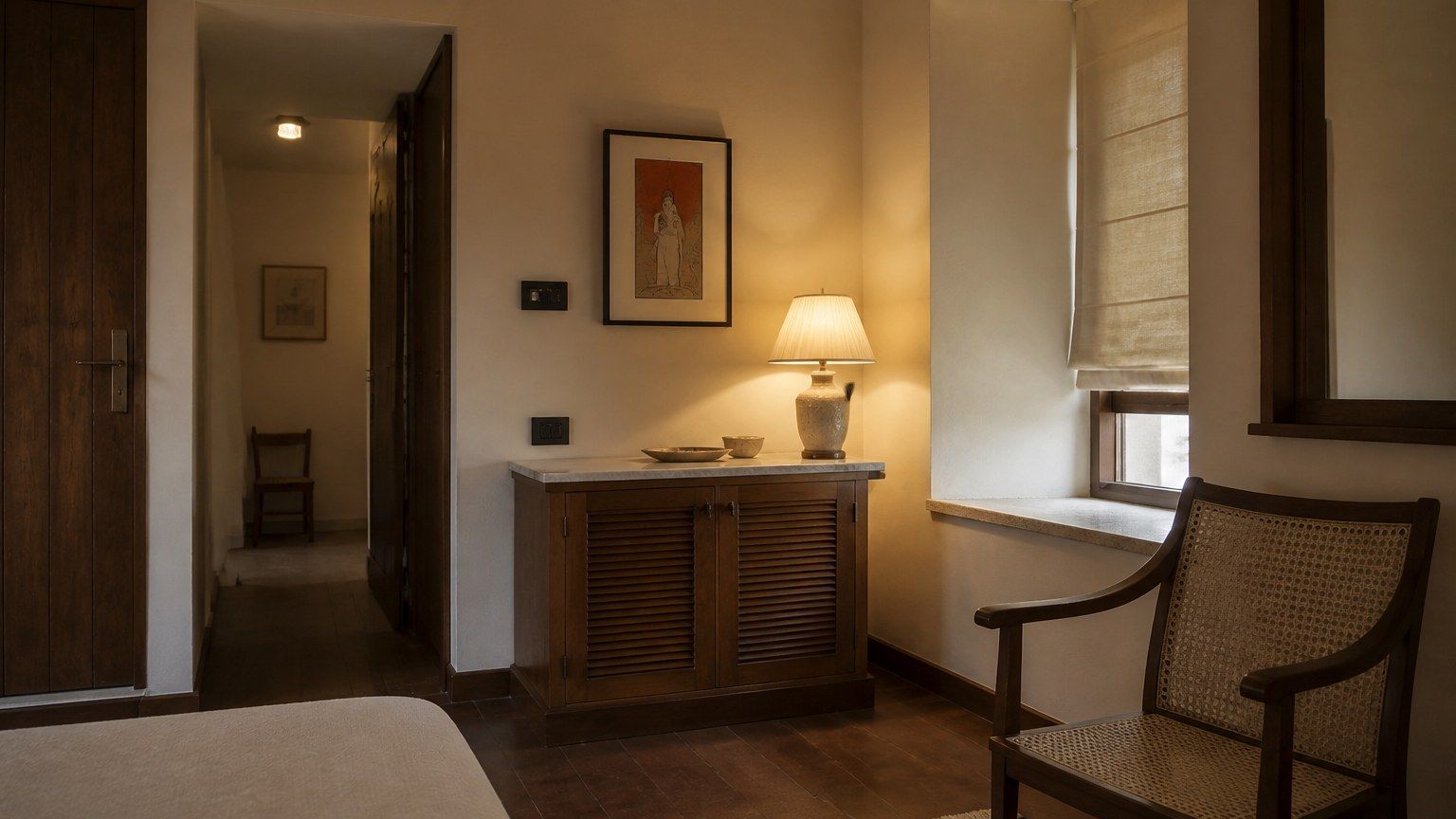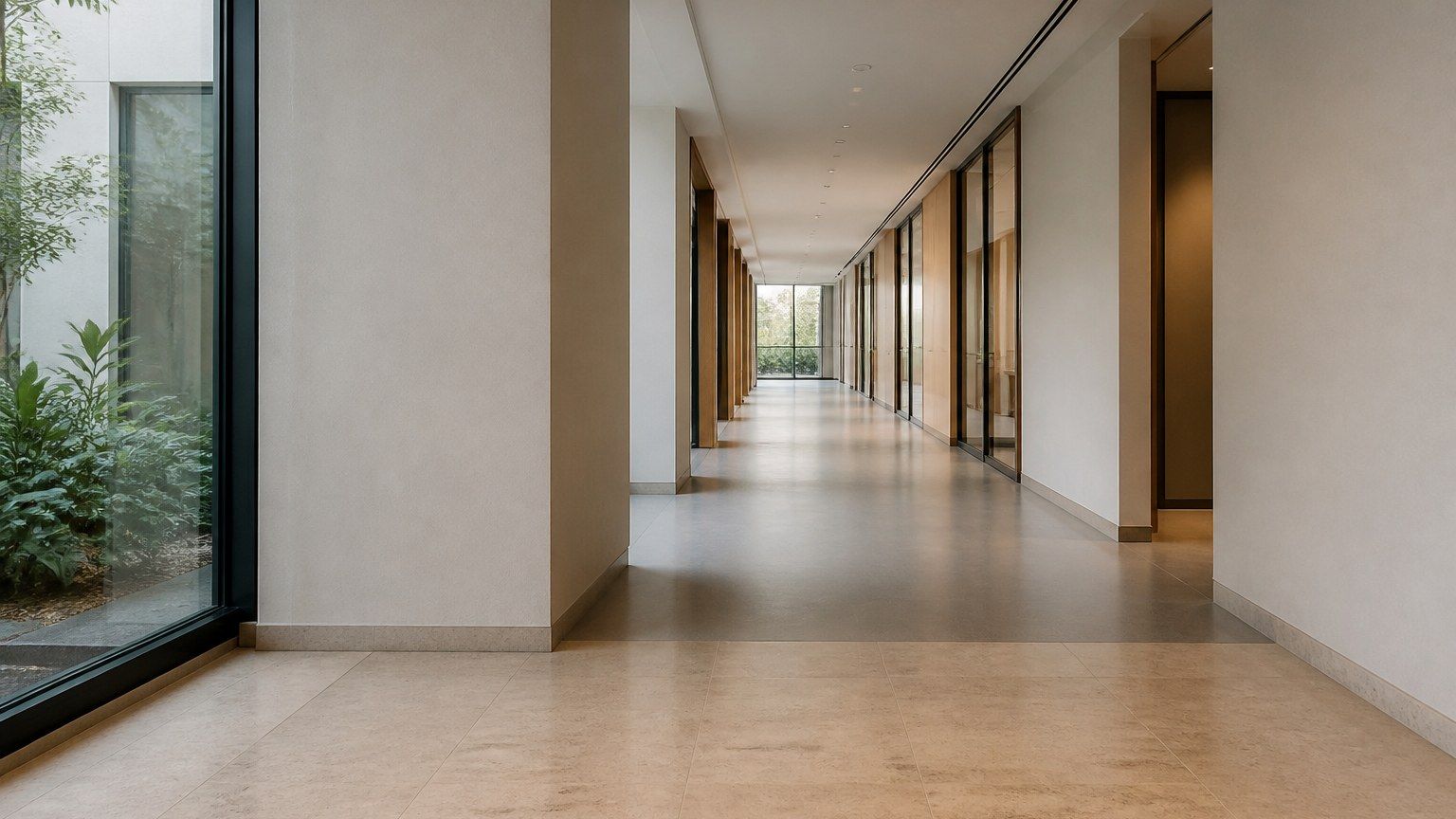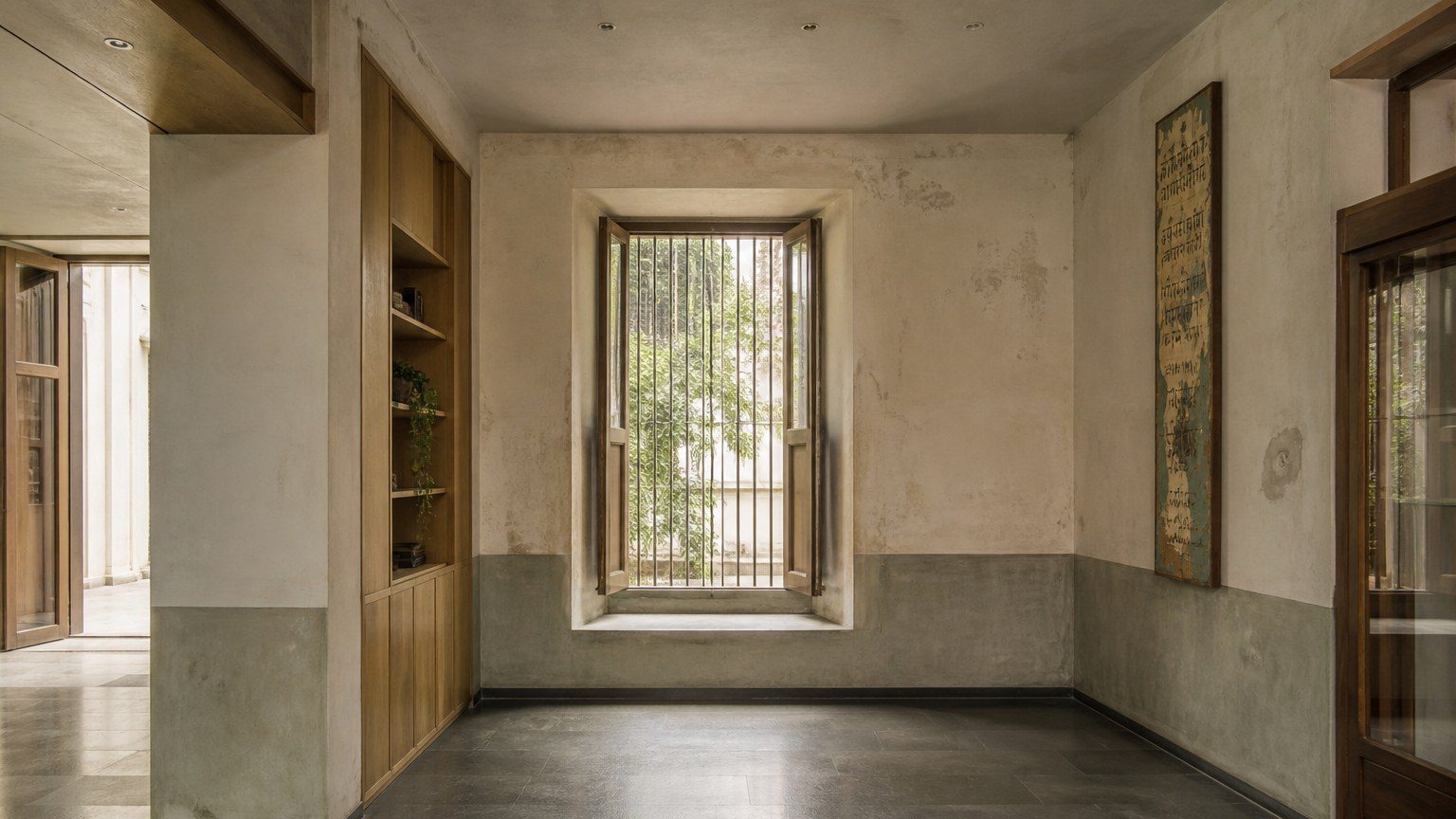
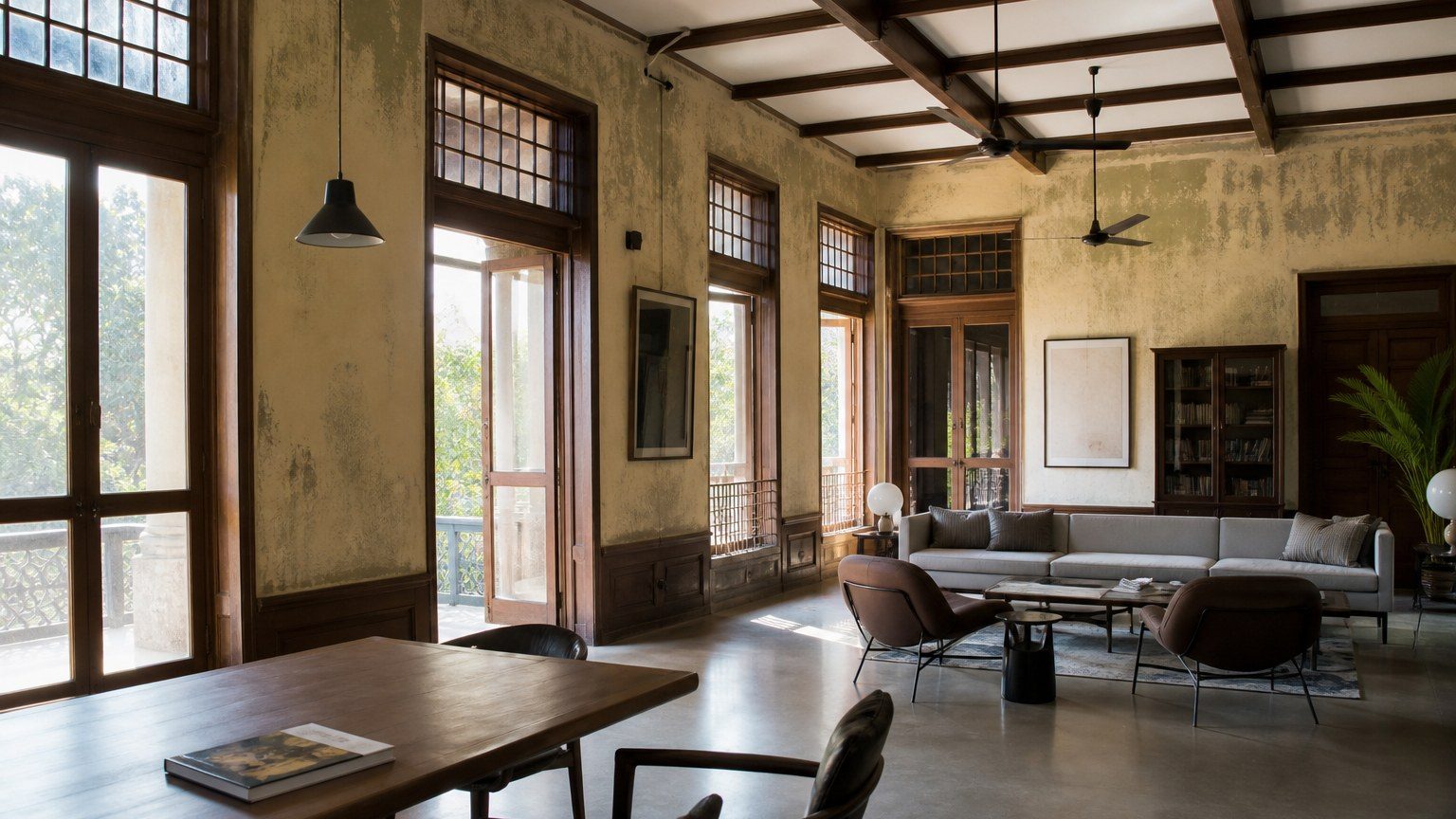
The old work should remain legible. The new work should not costume itself as history.
Adaptive reuse, in sales copy, is a marvel. On site it is damp, uneven floors, a beam that will not move, a window that must stay, services that have to find a route without cutting the one wall that still has character. The interior is a negotiation with those facts, not a transformation into a modern other building.
Do not invent a restoration. Do not erase a building to make a fit-out easier.
Let the junction tell the truth
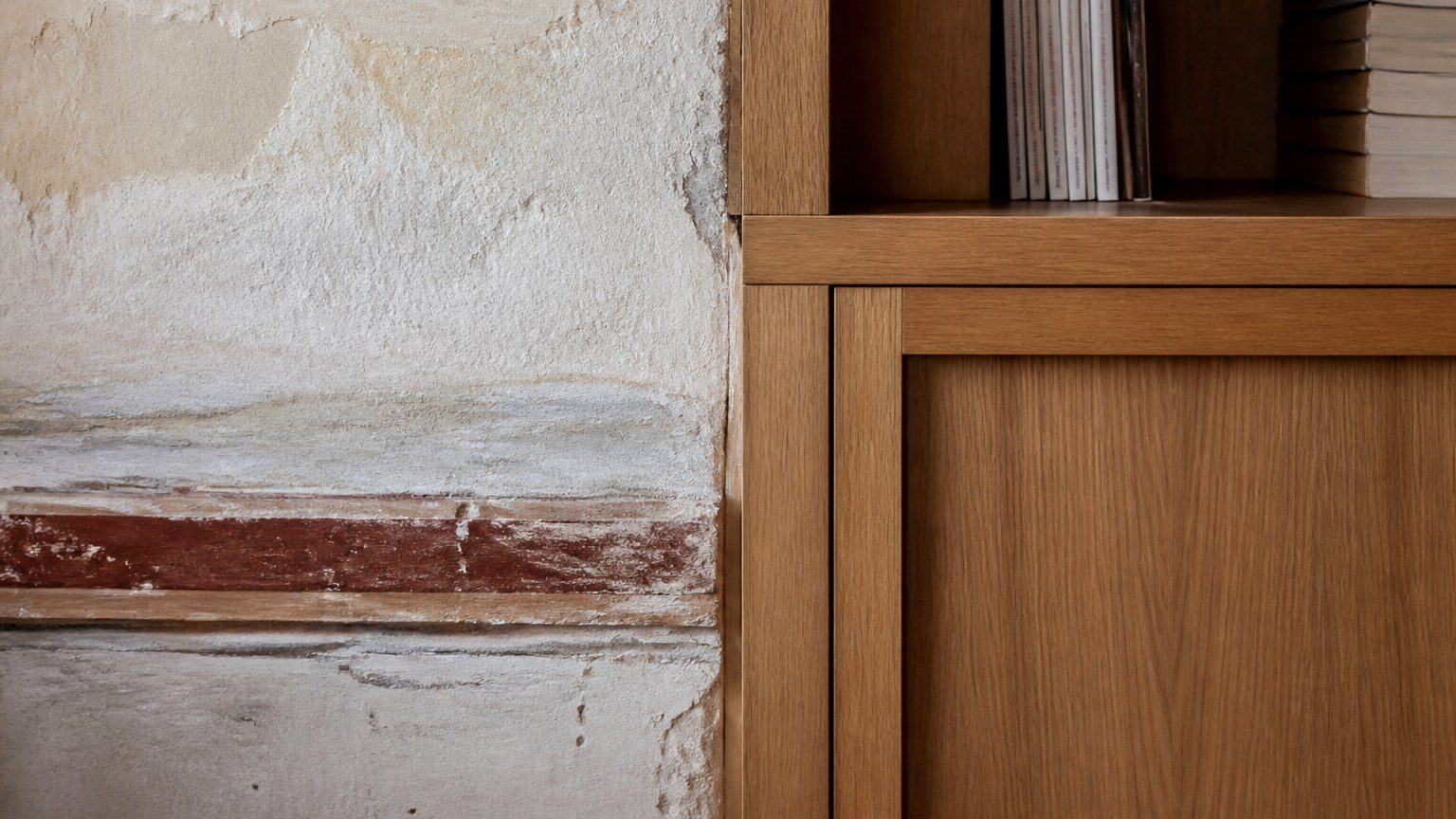
New plaster against old. A steel edge against timber that has already moved. A floor that steps because the structure steps. These junctions are the essay. Covering them in a single new skin is how older buildings lose the reason they were kept. The new pieces should be clearly new — quieter, better detailed — so the old work does not have to compete in a costume drama.
Closing thought
Working with an older building is not a marvel. It is patience, a survey, and the discipline not to make everything new.
Keep what is load-bearing, including the atmosphere.