A finished room is also a closed volume. What the joinery gives off stays in the air.
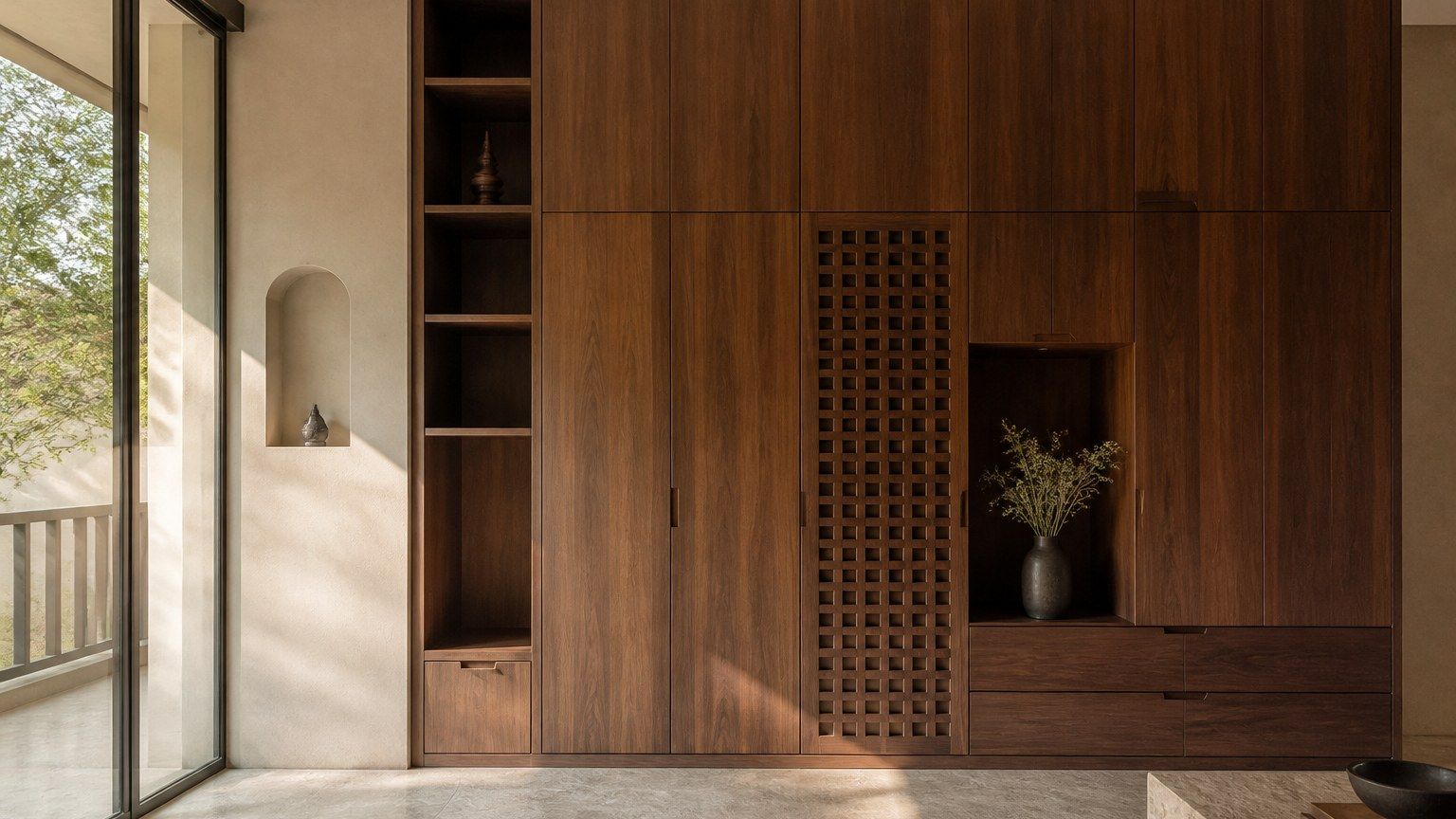
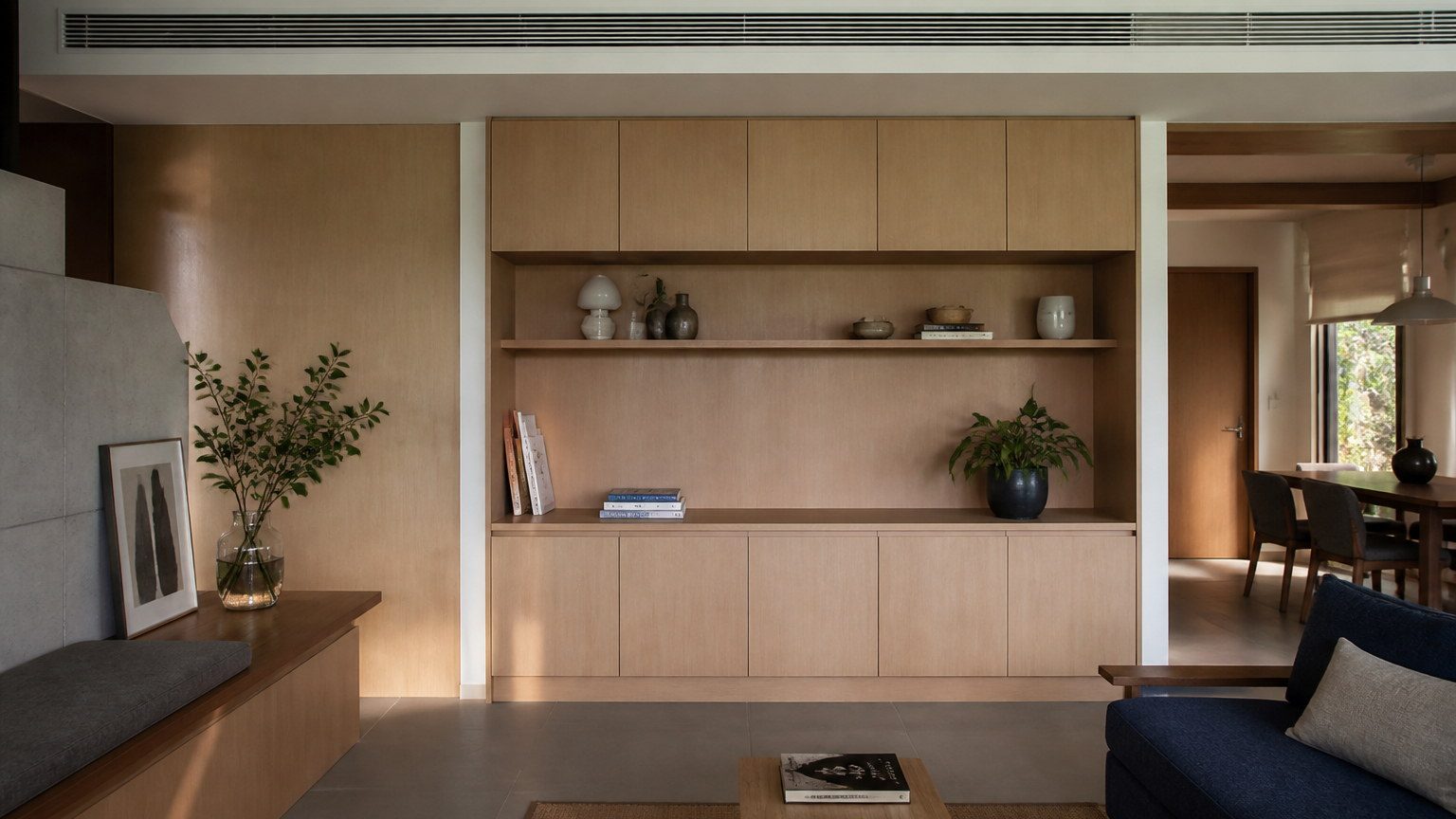
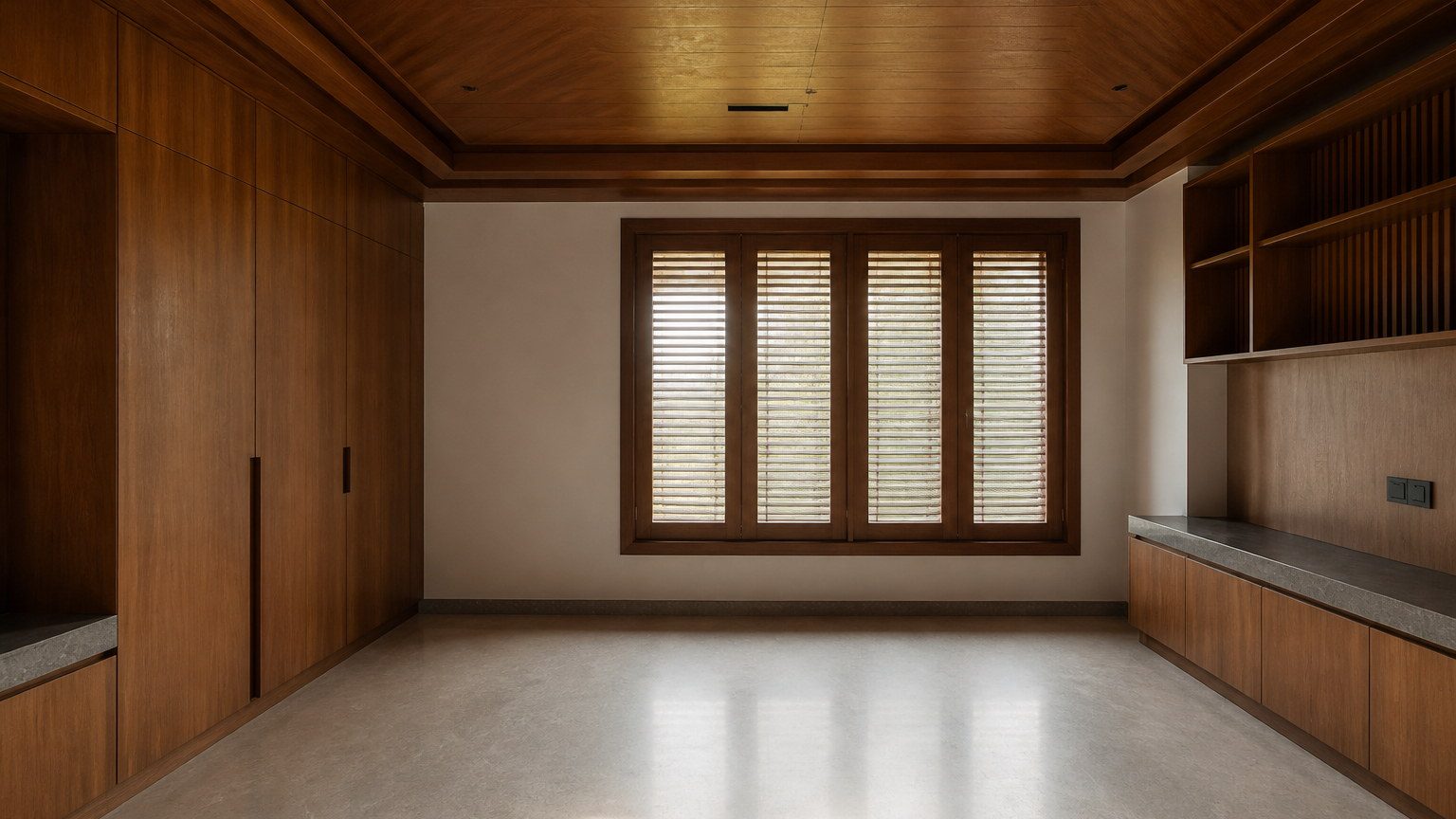
Interiors are often discussed as surfaces: the stone you see, the paint you choose, the fabric on a chair. A large part of the room is none of those things. It is carcass work — plywood, MDF, blockboard, veneered board — sealed into wardrobes, kitchens, panelling and furniture.
Those products can emit formaldehyde and other volatile compounds long after the site is cleaned. The effect is not dramatic in a photograph. It is slow, indoor, and easy to ignore until someone lives with it.
Specification is an indoor-air decision, whether or not it is named as one.
What the labels are trying to say
Standards such as E0, E1 and CARB Phase 2 exist because emission is measurable. They are not a complete ethics of materials, and they are not a substitute for knowing what a mill will actually deliver. They are a way of refusing the vaguest boards on the market.
In Indian practice the gap is often between a global label and what arrives on site. A drawing that says “low-emission” without a standard, a mill, and an edge-sealing method is not a specification. It is a hope.
Sealing is part of the product
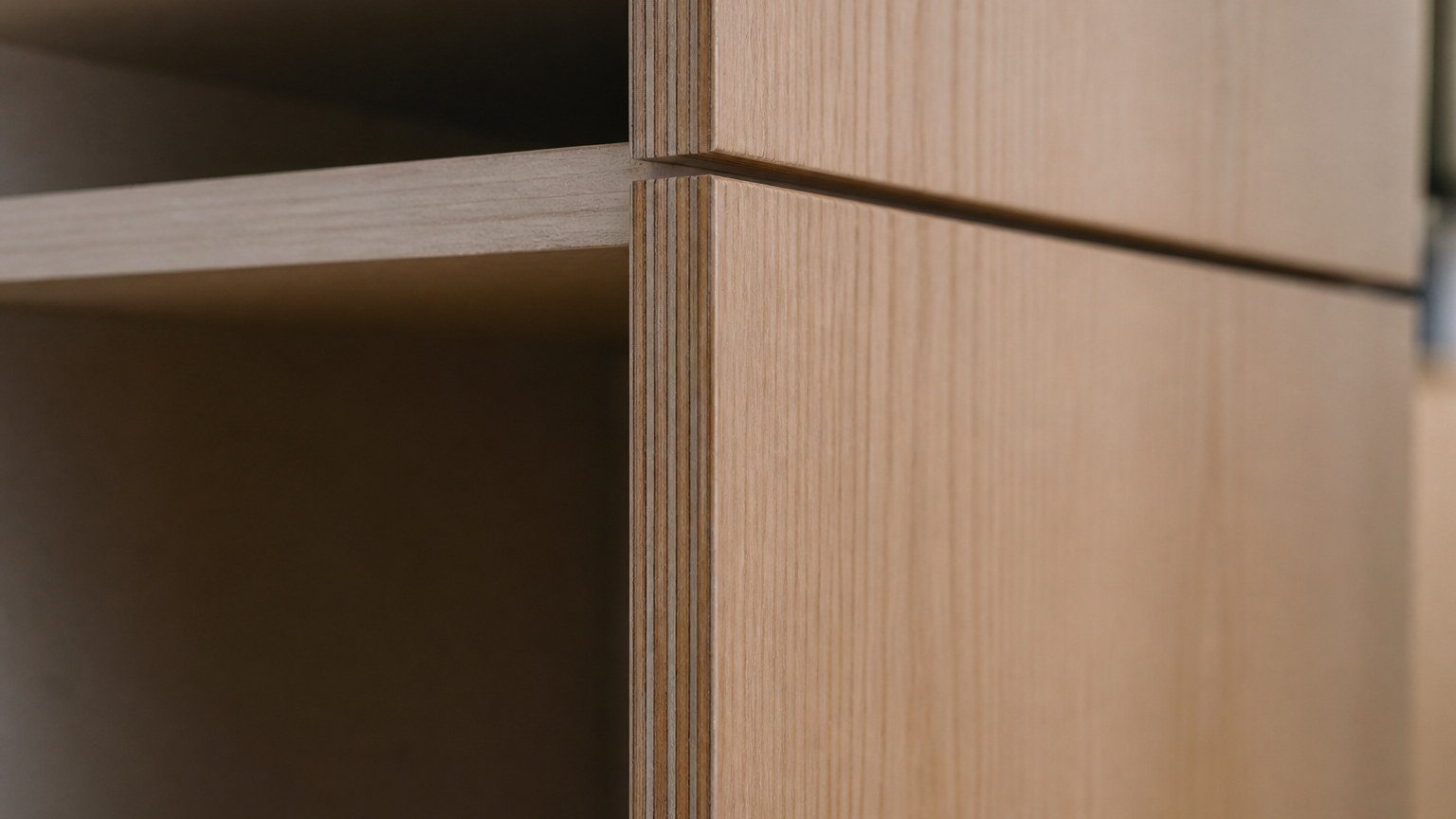
A board is not only its core. Unsealed edges, raw carcass interiors and poorly cured adhesives keep emitting into a closed bedroom or a tightly air-conditioned office. Edge-banding, laminates, finishes and curing time are not decorations on top of the material. They are how the material is completed.
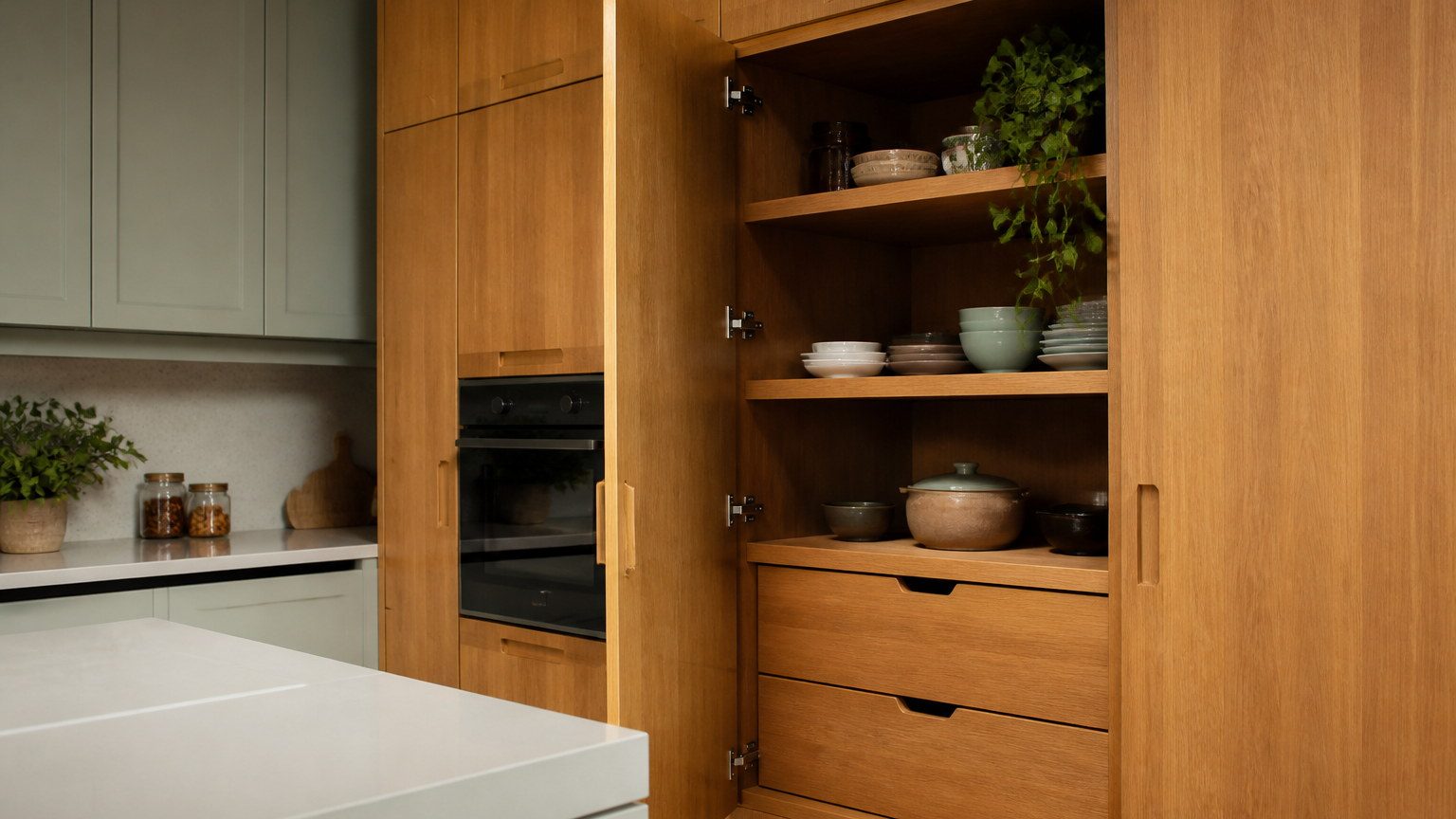
Occupant wellness is therefore not a later add-on of plants and purifiers. It begins in the store cupboard that nobody photographs.
What a design-build specifier can actually do
Name the standard. Name the mill where possible. Insist on sealed edges. Allow finishes to cure. Do not fill a bedroom with open carcasses and call the air a mystery.
None of this requires a lecture on lifestyle. It requires the same seriousness already given to stone thickness or waterproofing.
Closing thought
The silent pollutant is silent because it does not look like a design feature. That is precisely why it belongs in the specification, not in a footnote.
If it is in the wall, it is in the air.