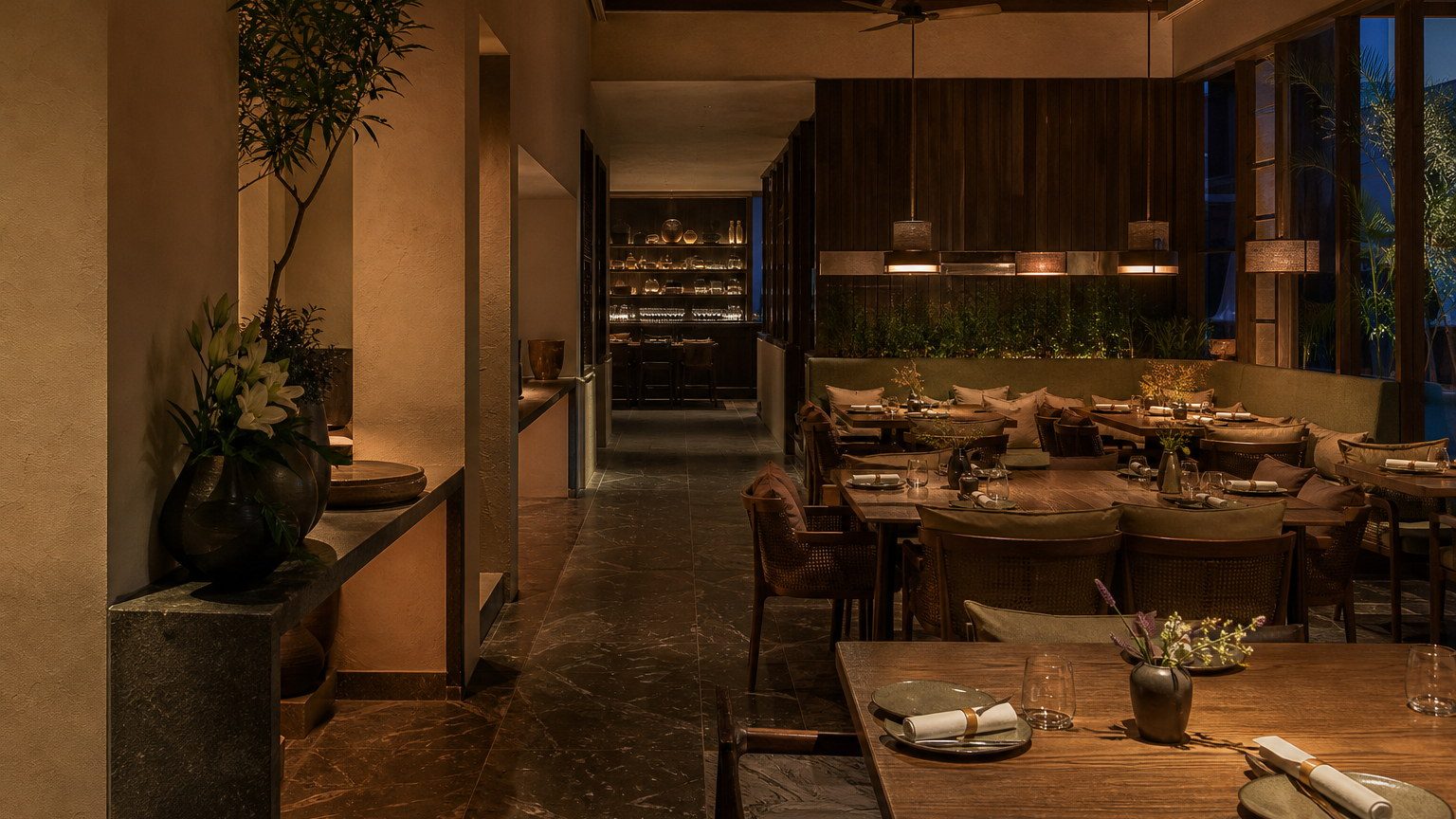
Taste begins before the first plate arrives. The room has already started the meal.
A restaurant is judged in the mouth, but it is experienced with the whole body.
How a person arrives, where they wait, how they are seated, what they see while they eat, and how easily staff can move around them — these are design questions. They are also service questions. Treating them as decoration is how rooms become busy without becoming hospitable.
The better hospitality interiors do not announce a theme. They organise a sequence.
Atmosphere is what remains when the menu is taken away.
Sequence is the first material
The evening starts at the door. A threshold that dumps guests into the full noise of the room asks too much, too soon. A small pause — a change of light, a quieter floor, a place to be received — lets the room introduce itself.
From there, the plan has to serve two movements at once: the guest’s and the kitchen’s. If those paths collide, no amount of finish will make the room feel considered.
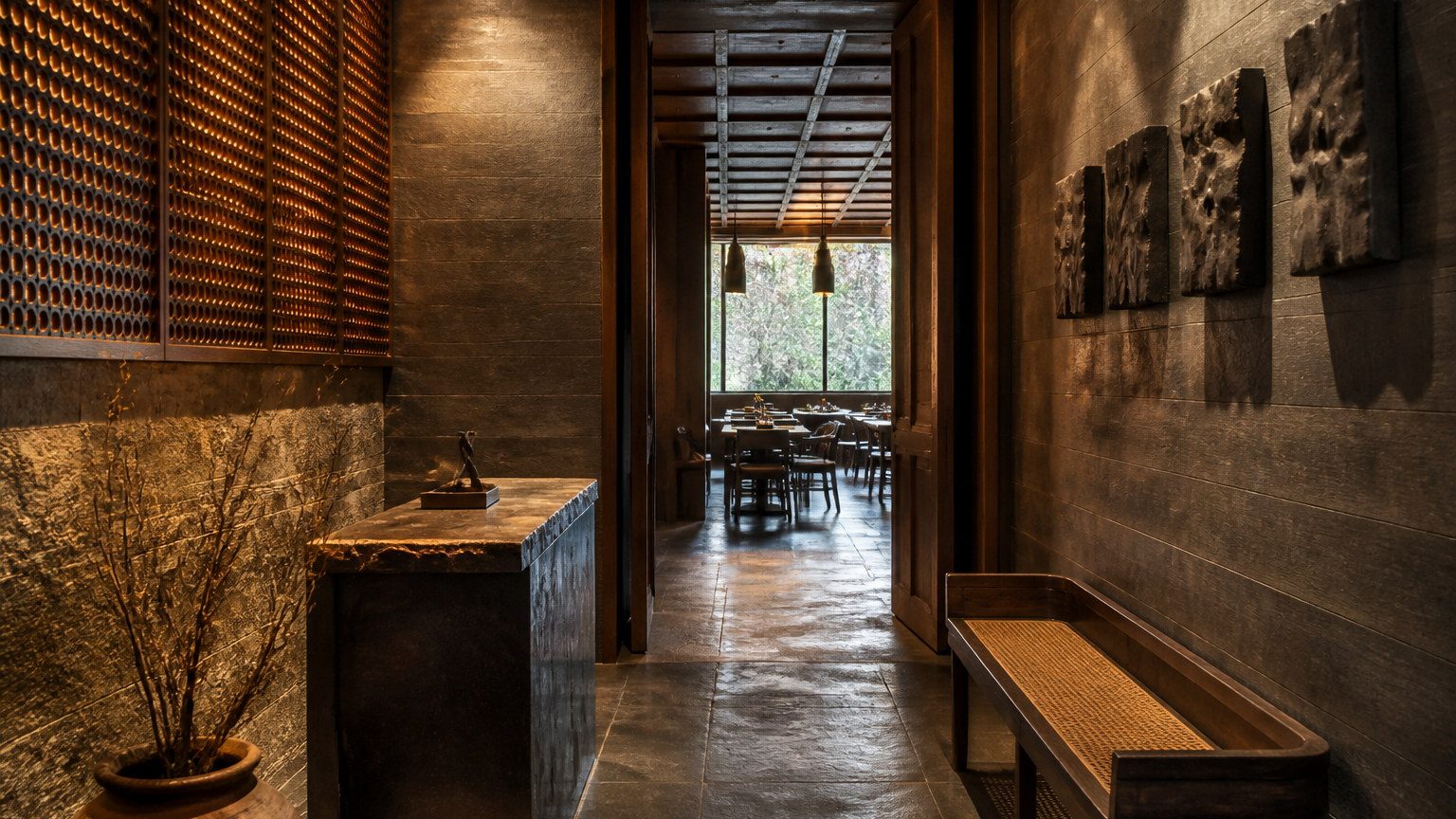
Light, sound and the length of a meal
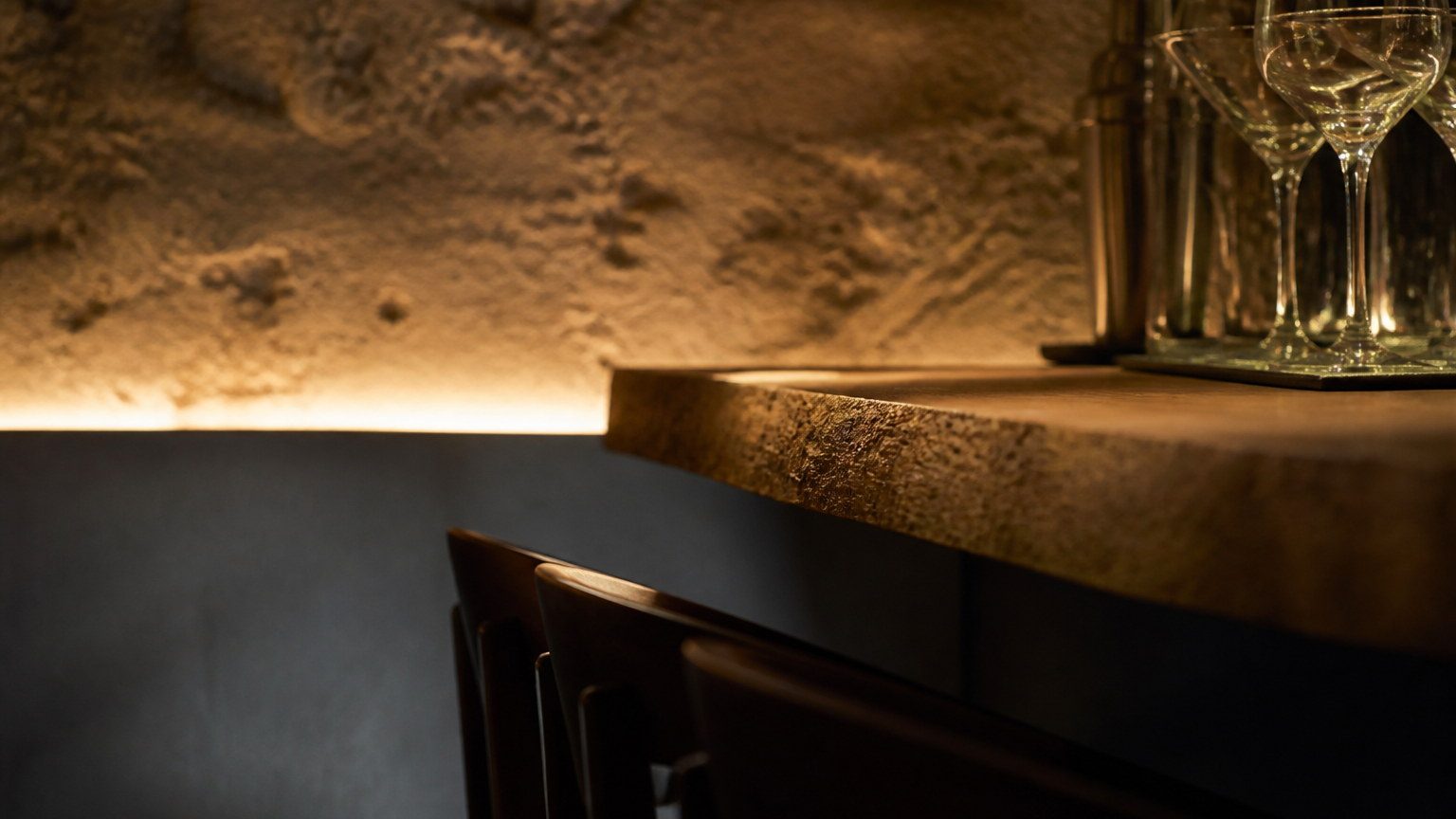
Hospitality light has to work for faces, food and the hour. Too much brightness flattens the table. Too little makes service a performance of finding the glass. The useful work is in layers: a wash that holds the room, a closer light that holds the table, and enough darkness that the evening can deepen.
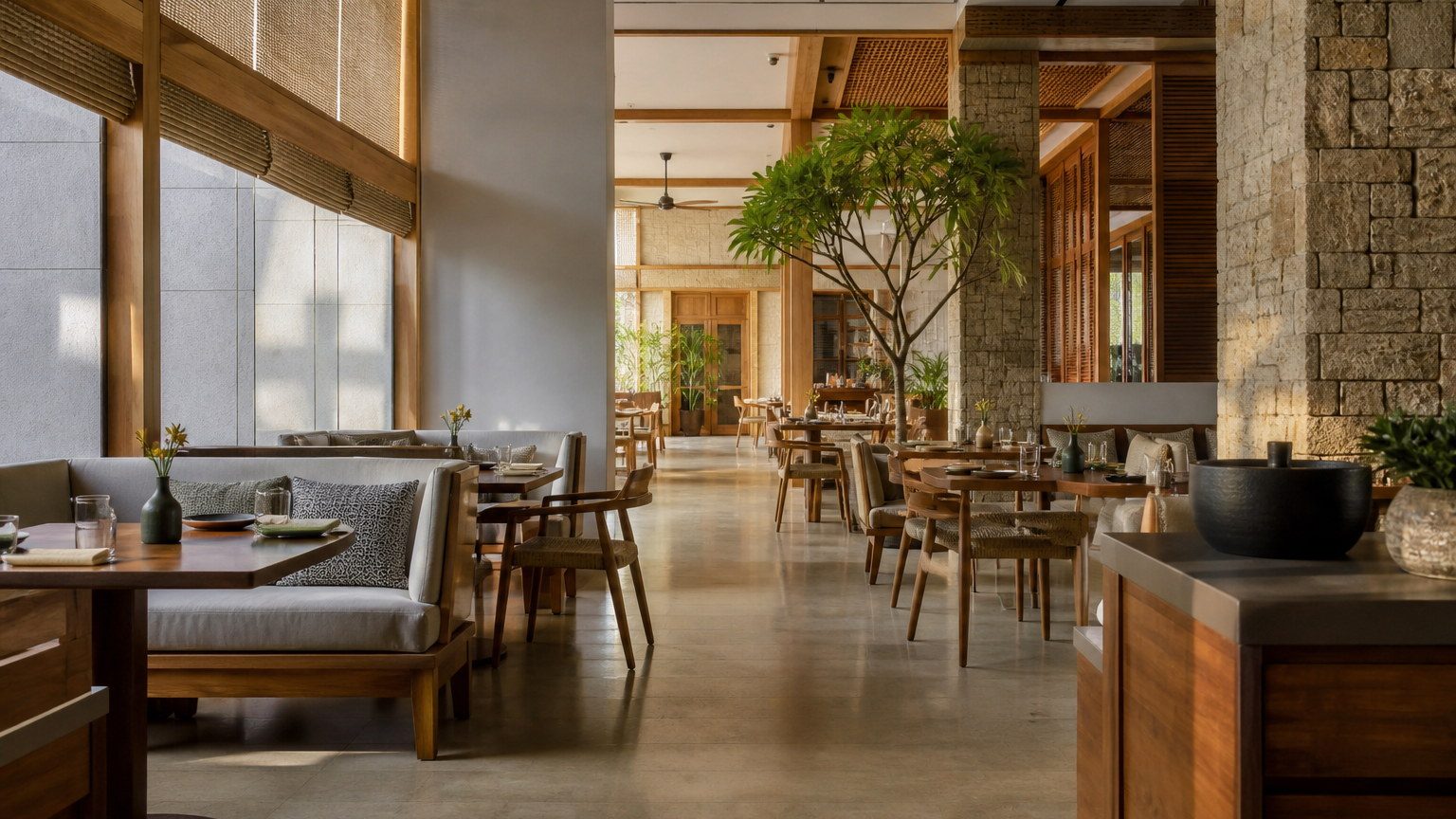
Sound is equally decisive. Hard rooms photograph well and tire people quickly. Softness does not have to mean a themed interior. It can be a ceiling, a banquette, a curtain, a floor that does not ring.
Materials that can survive the work
A hospitality interior is used harder than a home and more publicly than an office. Edges take trays. Floors take water. Tables take heat. Specifying as if the room were a show flat is how finishes fail in the first season.
Stone, timber, metal and linen can all belong, if they are chosen for the way they will be cleaned and repaired — not only for the way they photograph on opening night.
Closing thought
Designing taste is not a matter of styling a cuisine. It is a matter of making a room that can hold conversation, service and time without shouting over any of them.
When the sequence is right, the décor has less work to do.