Focus and connection do not have to occupy separate worlds. The strongest workplaces allow both to coexist.
The modern workplace asks people to do two things that can appear to pull in opposite directions: concentrate deeply and remain connected to the people around them.
Open plans promised connection, but often came with a cost — interruptions, visual distraction and the feeling of always being available. At the other extreme, highly enclosed offices can protect concentration while quietly weakening the sense of belonging.
The answer is not to choose one over the other.
Good workplace design creates a spectrum of conditions. It gives people places to concentrate, places to exchange ideas, and places in between where they can remain aware of the wider workplace without being constantly drawn into it.
The office becomes less a single room and more a carefully composed environment for different modes of work.
1. Focus Is a Spatial Condition
Focus is often treated as a matter of personal discipline. Headphones, closed doors and notification-free periods are asked to solve what is, at least partly, a spatial problem.
A well-designed workplace can reduce the amount of effort people spend managing their surroundings.
Visual calm matters. Acoustic control matters. So does the relationship between a workstation and the movement around it. When these conditions are considered together, concentration becomes easier rather than something employees have to continually defend.
This is one reason some offices feel mentally light while others become tiring long before the working day is over.
The objective is not silence everywhere. It is clarity about where different kinds of activity belong.
2. Designing Degrees of Privacy
Privacy in a workplace does not have to mean a closed room.
There is a useful middle ground between complete exposure and complete enclosure: partial screens, offset sightlines, planted edges, translucent surfaces, small retreats and rooms that can be entered without turning every conversation into an event.
These layers allow people to control their level of exposure.
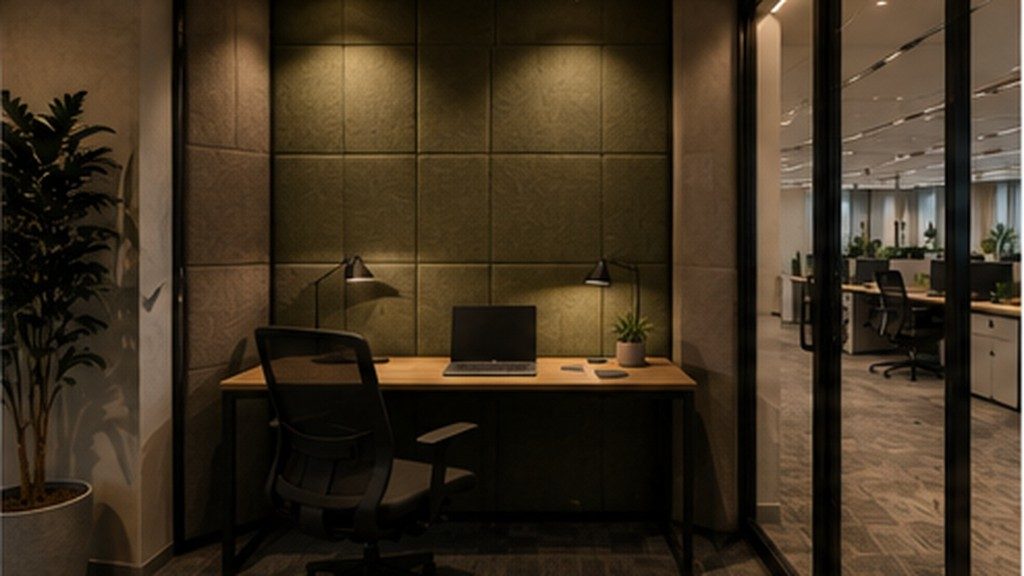
Someone working on a complex task may want visual shelter. Someone taking a short call may need acoustic separation. Someone thinking through a problem may simply want to sit slightly away from the main flow while remaining part of the office.
The important idea is choice.
3. The Focus Spectrum
Work is rarely performed in one mode throughout the day.
There are periods of deep concentration, moments of review, short conversations, informal problem-solving and collaborative sessions. Designing the workplace around only one of these behaviours inevitably makes the others harder.
A more resilient office creates a focus spectrum.
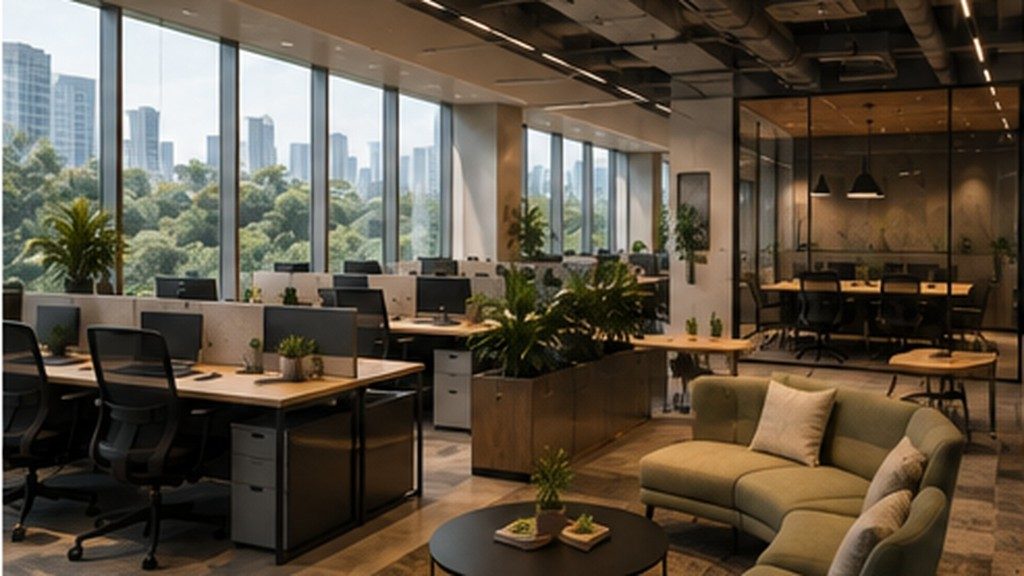
At one end are spaces designed for sustained attention. Further along are semi-private settings where people can work while remaining visually connected. Beyond them are shared tables, meeting areas and informal spaces where interaction is expected.
The transitions matter as much as the destinations.
A person should be able to move from one mode to another without feeling that they have left the workplace ecosystem entirely.
4. Connection Without Constant Proximity
Connection does not require everyone to sit together.
In fact, constant proximity can make interaction less meaningful. When people are always visible and always within reach, the workplace can begin to feel socially demanding.
A better approach is to create peripheral awareness.
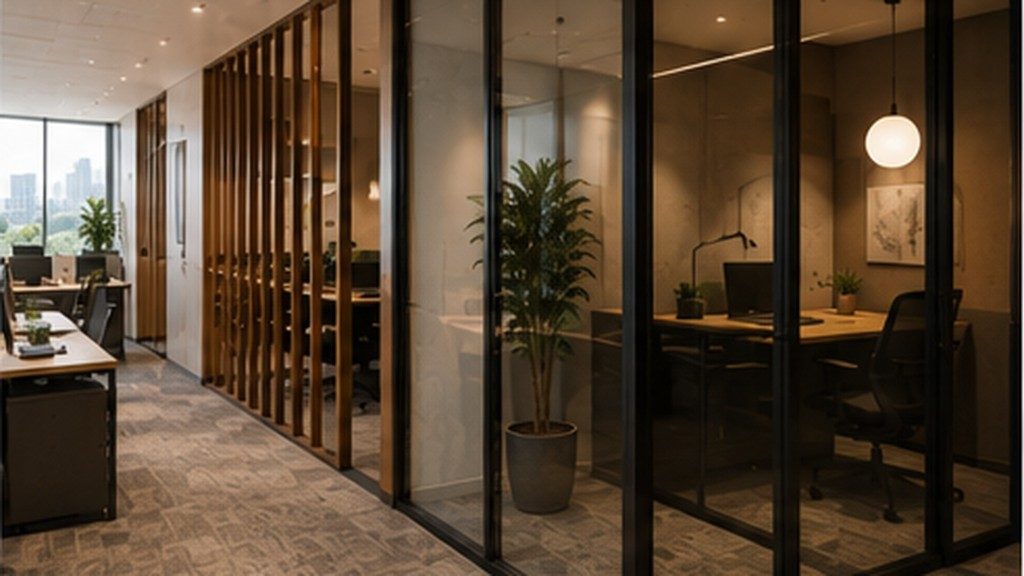
Filtered views, shared thresholds, glimpses into collaborative areas and carefully positioned common spaces can reassure people that they remain part of something larger. They can work independently without disappearing from the social life of the office.
Connection then becomes available rather than compulsory.
The distinction is subtle but important: the workplace should invite interaction, not continuously demand it.
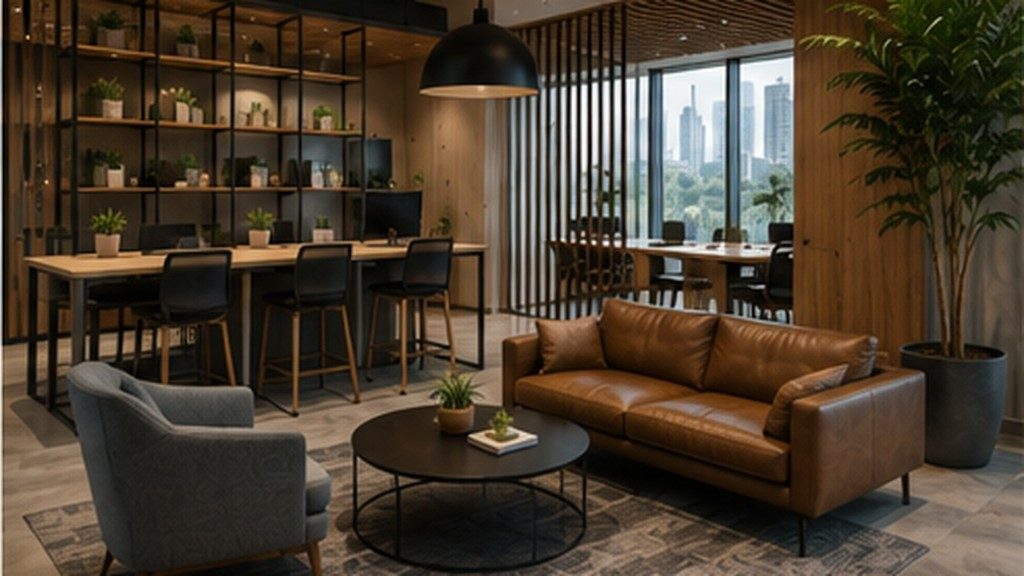
5. Movement Is Part of Focus
Circulation is one of the least visible influences on concentration.
A workstation positioned directly beside a major route is exposed to a constant stream of movement — people passing, conversations beginning, doors opening and closing, shadows moving across screens.
None of these interruptions may be significant on its own. Together, they create friction.
Thoughtful planning protects focus areas from unnecessary circulation. Paths can be routed around concentrated work zones. Thresholds can absorb transitions. Informal pauses can happen at the edges rather than directly beside desks.
The result is not a silent office. It is an office whose movement has been given somewhere to go.
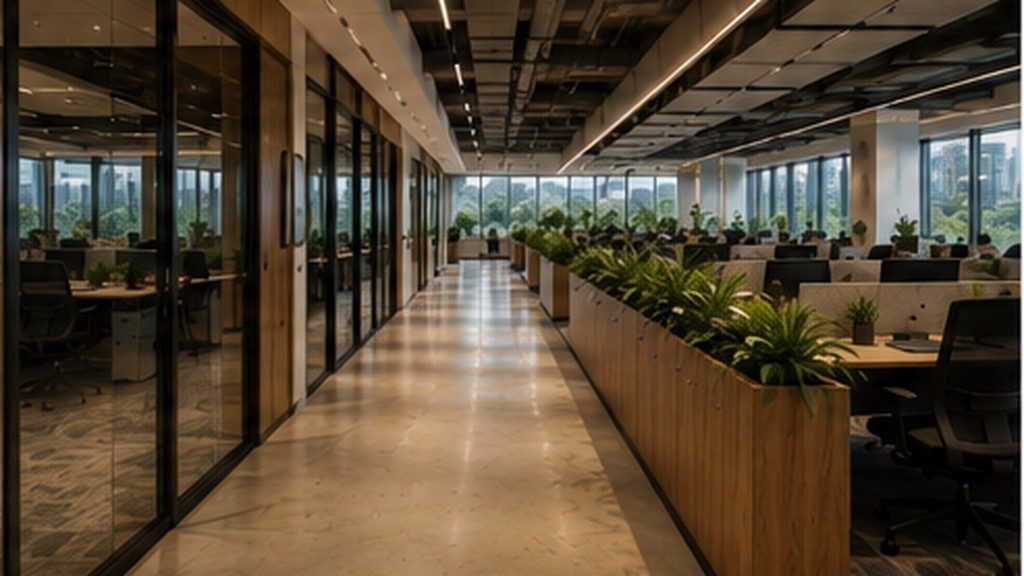
6. Acoustics and Material Comfort
Acoustic design is not simply about making an office quieter.
It is about deciding where sound should be absorbed, where conversation can happen, and how much activity a particular zone should carry.
Soft surfaces, acoustic panels, ceilings, textiles and carefully placed partitions can reduce the sharpness of workplace noise. Material choices also influence how calm or stimulating a space feels visually and physically.
The strongest acoustic solutions are often the least conspicuous. They are integrated into the architecture rather than added as an afterthought.
A workplace can therefore remain active while feeling composed.
7. Designing for Choice and Autonomy
Perhaps the most important principle is that people should have some control over where and how they work.
Not everyone concentrates in the same way. Not every task requires the same environment. Some people need a quiet retreat. Others think better around a little activity. Some conversations need privacy; others benefit from an open table.
A workplace that offers a range of settings acknowledges these differences without prescribing behaviour.
This is where design becomes an expression of trust.
Rather than telling people how they should work, the space gives them enough information and enough choice to decide for themselves.
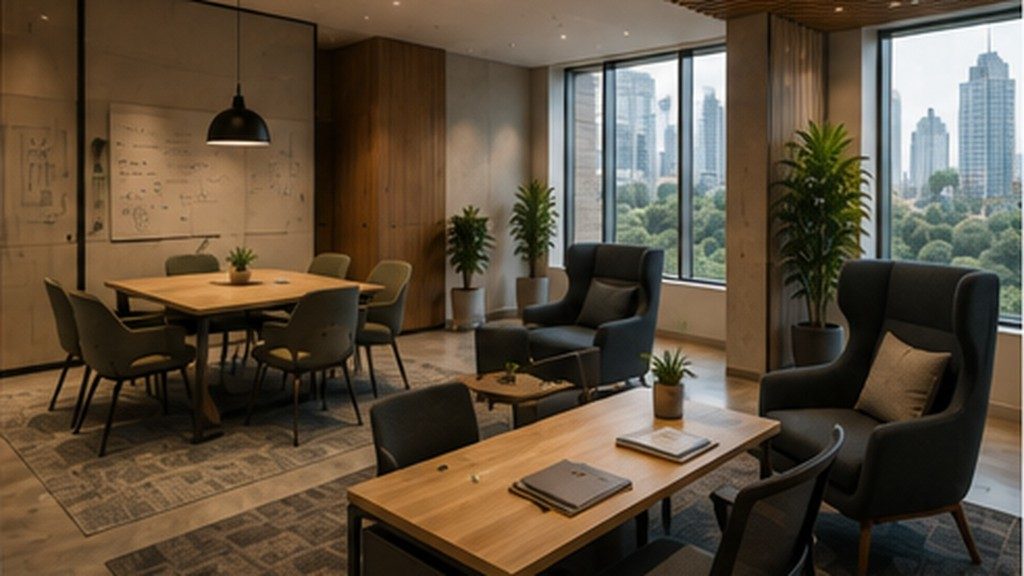
Focus Without Isolation Is About Trust
Ultimately, the offices that succeed are the ones that trust their users.
When design is overly prescriptive — forcing collaboration here and silence there — it creates tension. A more considered workplace offers options rather than instructions.
People can step away when they need concentration. They can find others when collaboration matters. They can move between modes without constantly negotiating the environment around them.
That freedom changes how the workplace feels.
People focus because the space supports them, not because they have been contained.
The Office as a Support System
The best workplaces do not announce themselves at every turn.
You notice them through small things: how easy it is to settle into a task, how naturally a conversation can happen without disturbing others, how a route through the office avoids unnecessary disruption, how a quieter corner is always available when it is needed.
The design remains in the background, supporting the rhythm of work.
When focus and connection are treated as complementary conditions rather than opposing ideas, the office becomes more adaptable, more humane and ultimately more useful.
It becomes less a statement about how people should work and more a support system for how they actually do.
Closing Thought
Good office design is not about choosing between openness and privacy.
It is about creating enough variation within the workplace for people to move between concentration, connection and recovery with ease.
The most considered office may therefore be the one that asks the least of its occupants — because the space has already done the work of making the right choices possible.