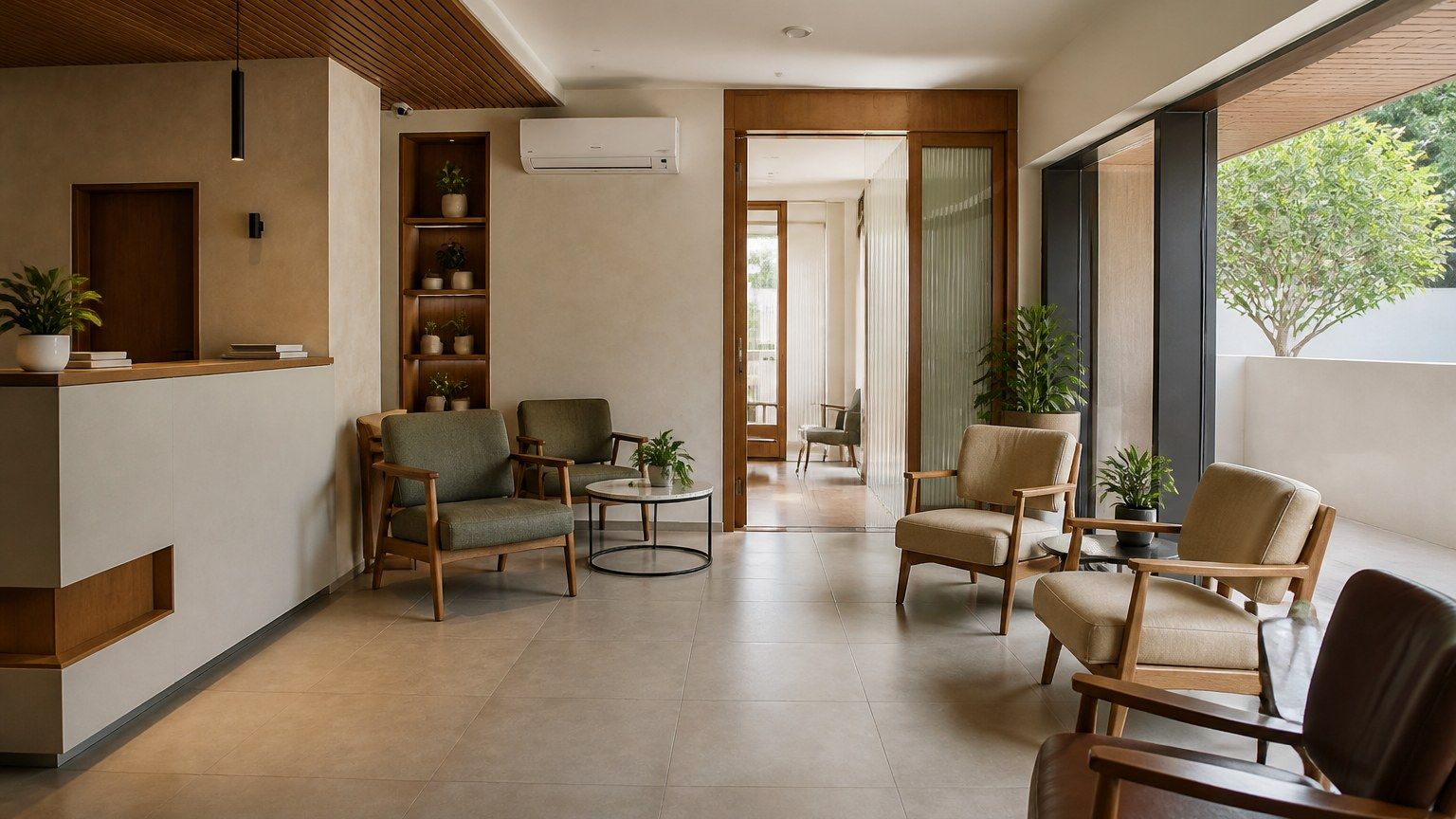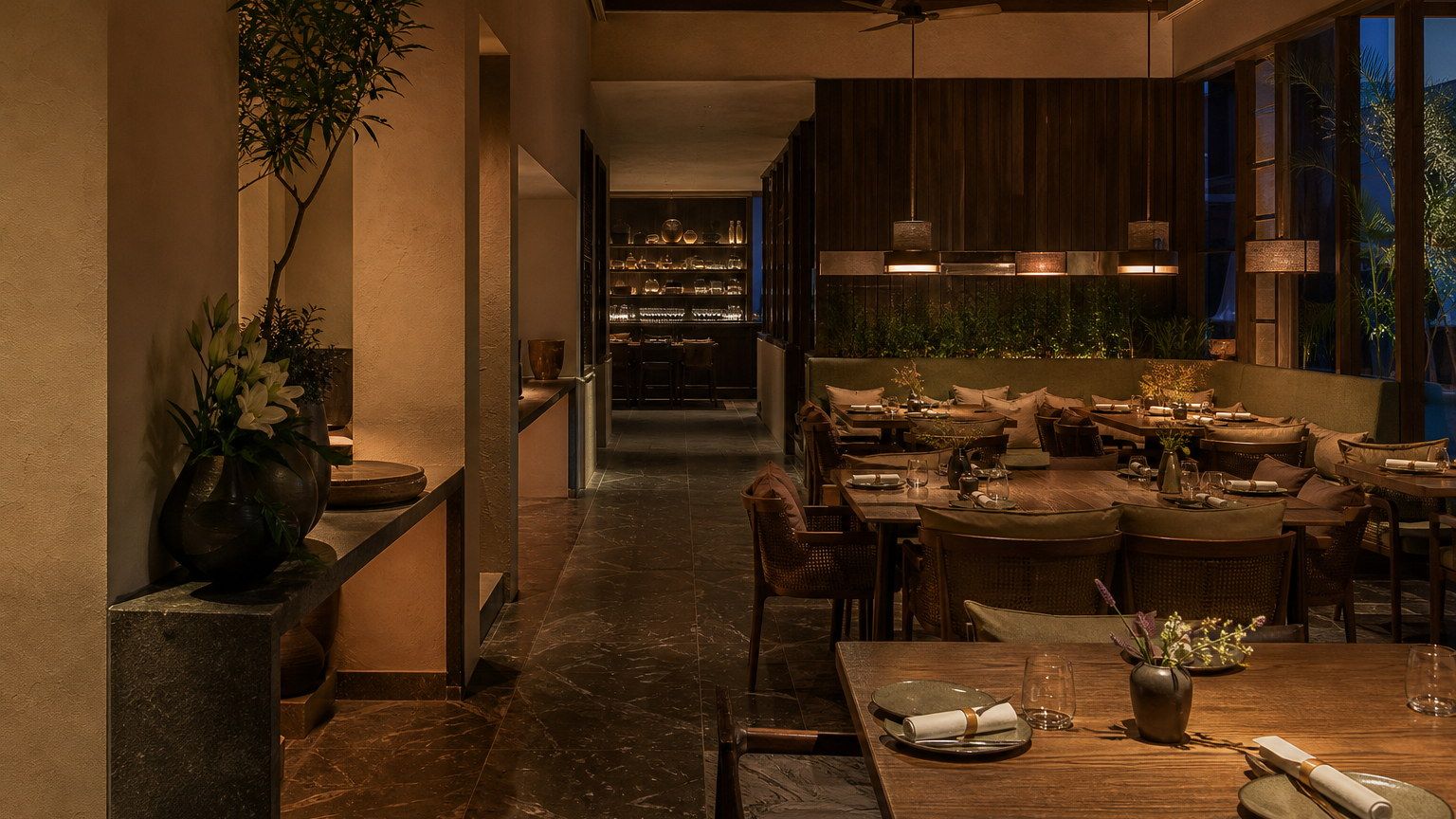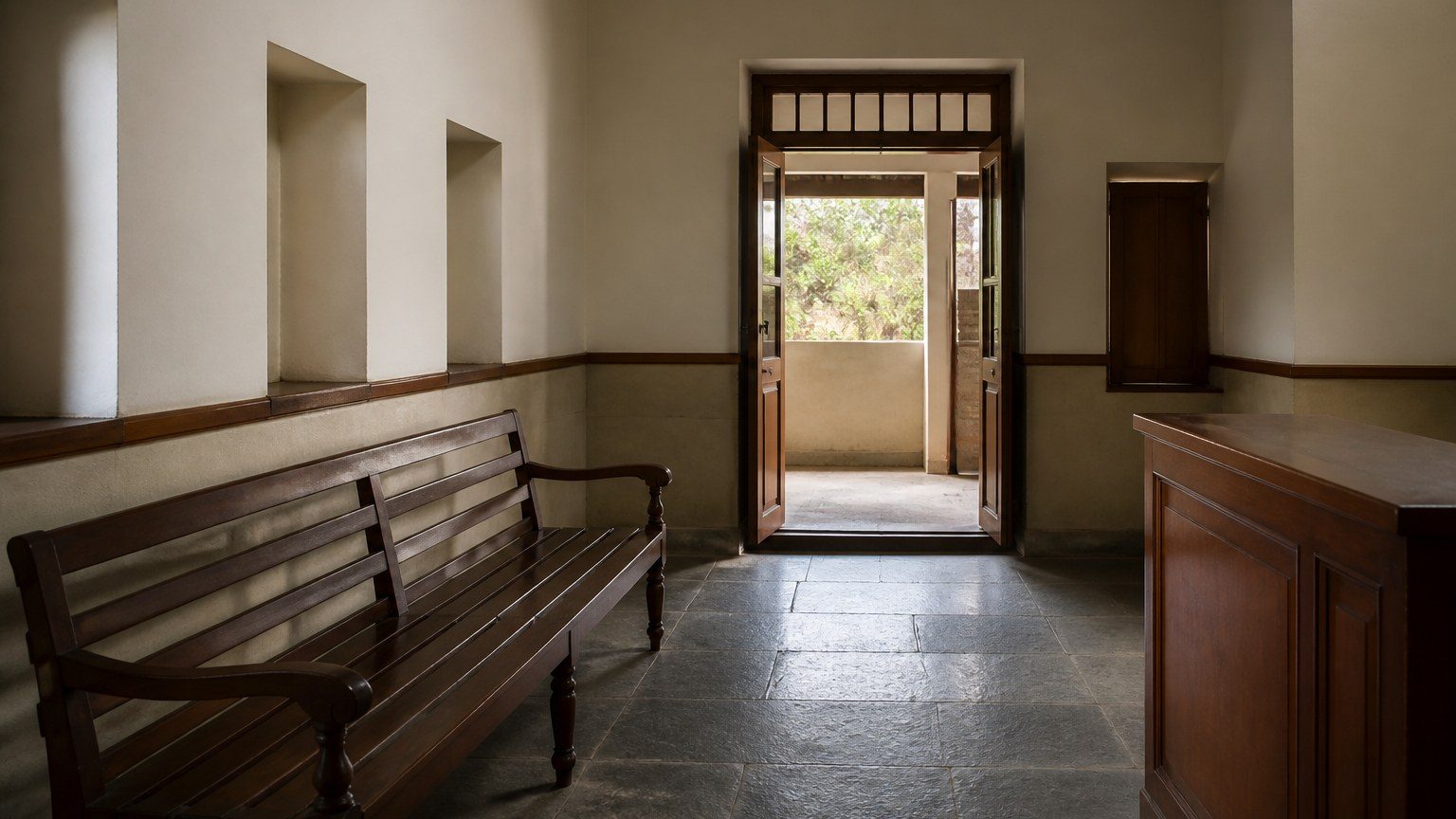
A waiting room that feels like a corridor with chairs has already started the appointment badly.
Healthcare interiors inherit a visual language of wipe-down surfaces, fluorescent ceilings and chairs in a line. Some of that language is necessary. Most of the hostility is not. People arrive anxious. The room can refuse to add glare, echo and a reception hatch that treats them as a queue number.
Calm is not a spa franchise. It is the absence of extra stress.
Waiting is clinical work
The wait is often longer than the consultation. A seat that is not under a downlight, acoustic softness, a view that is not a poster about procedures — these are not wellness branding. They are how a clinic respects the hour it is asking for. Materials still have to clean. They do not have to look as if they were chosen only to clean.
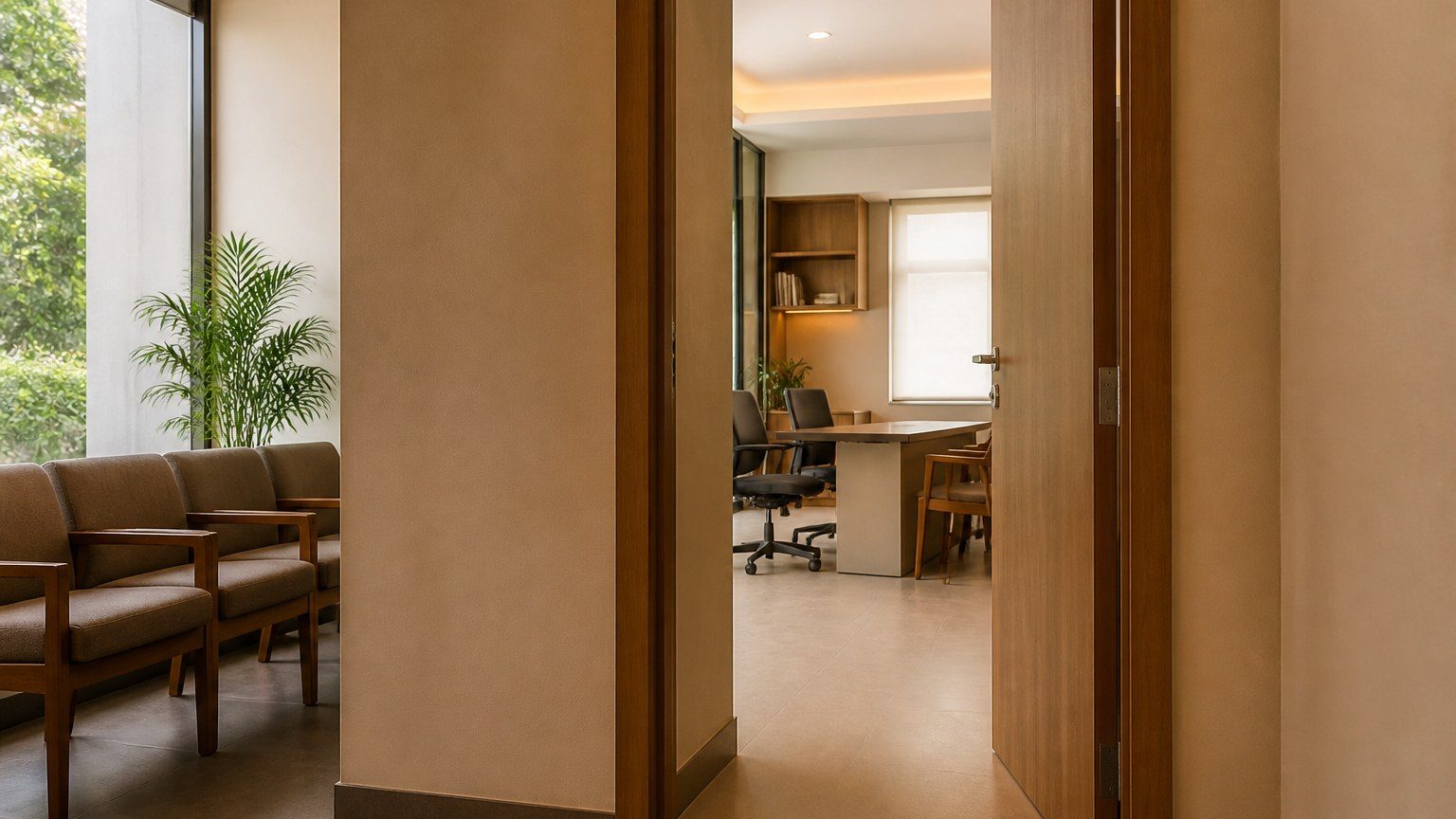
Closing thought
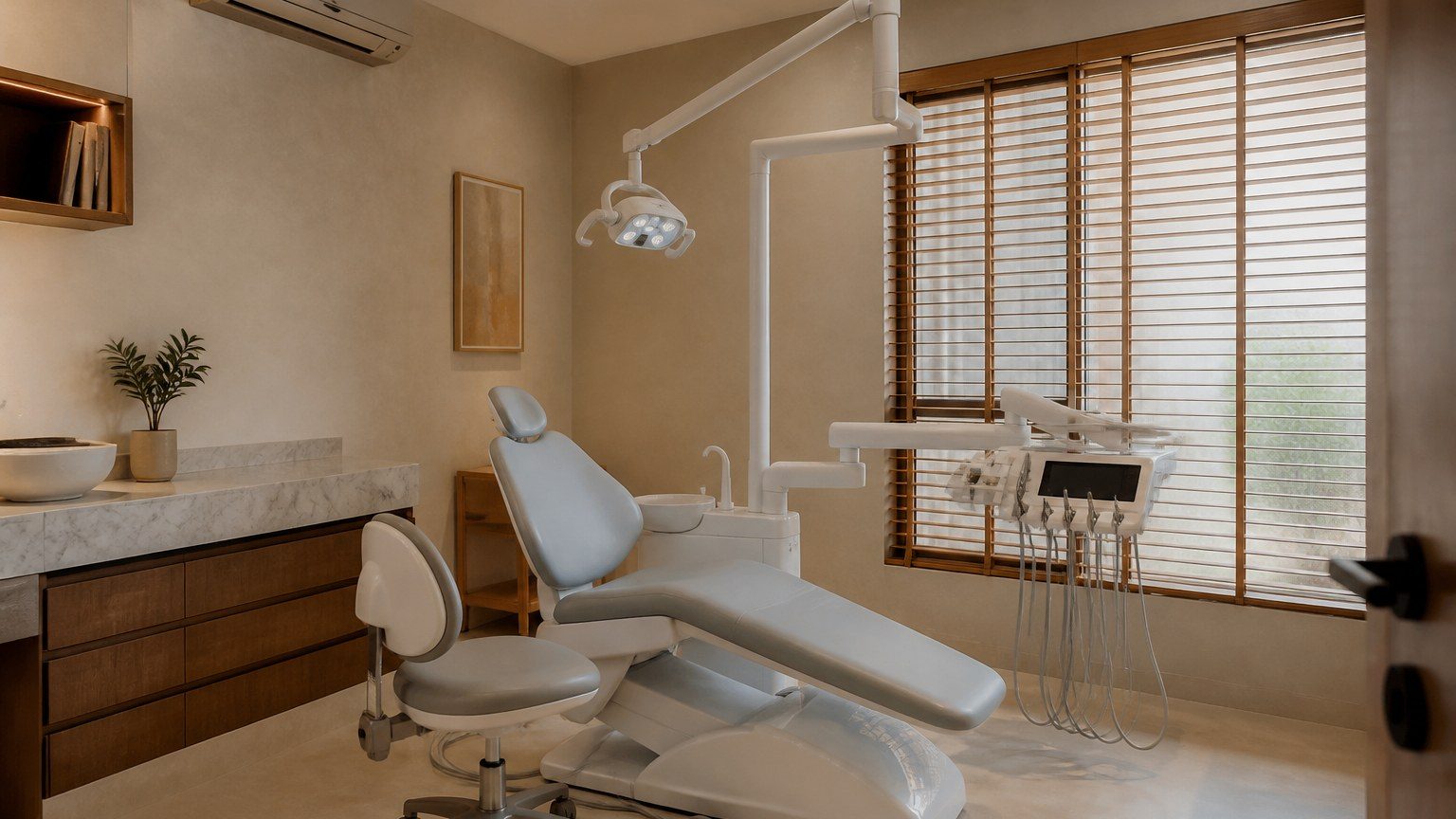
An anti-clinic is not a café with a medical licence. It is a clinical room that remembers people have a nervous system.
If the room increases dread, the fit-out has failed a clinical test.