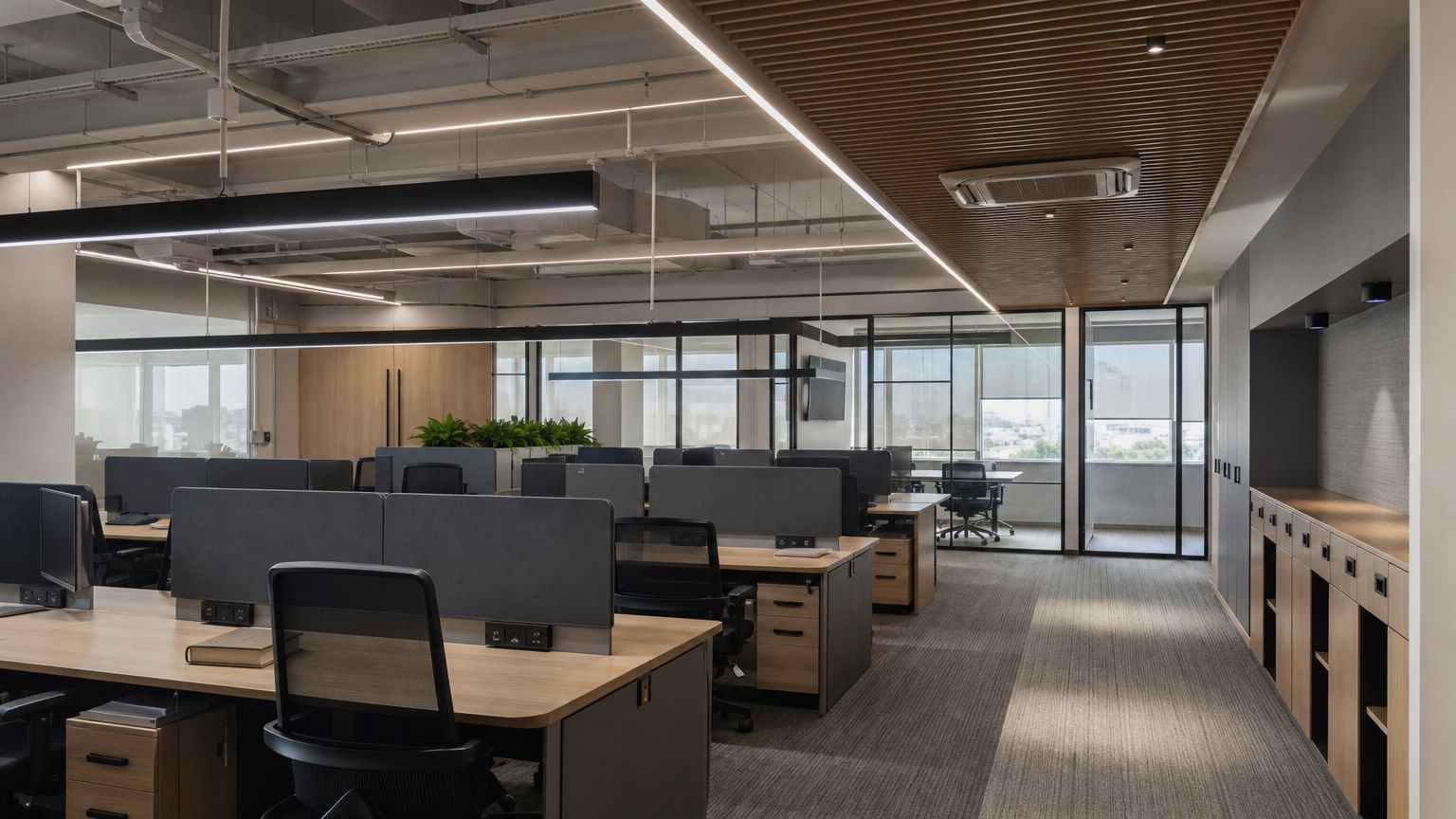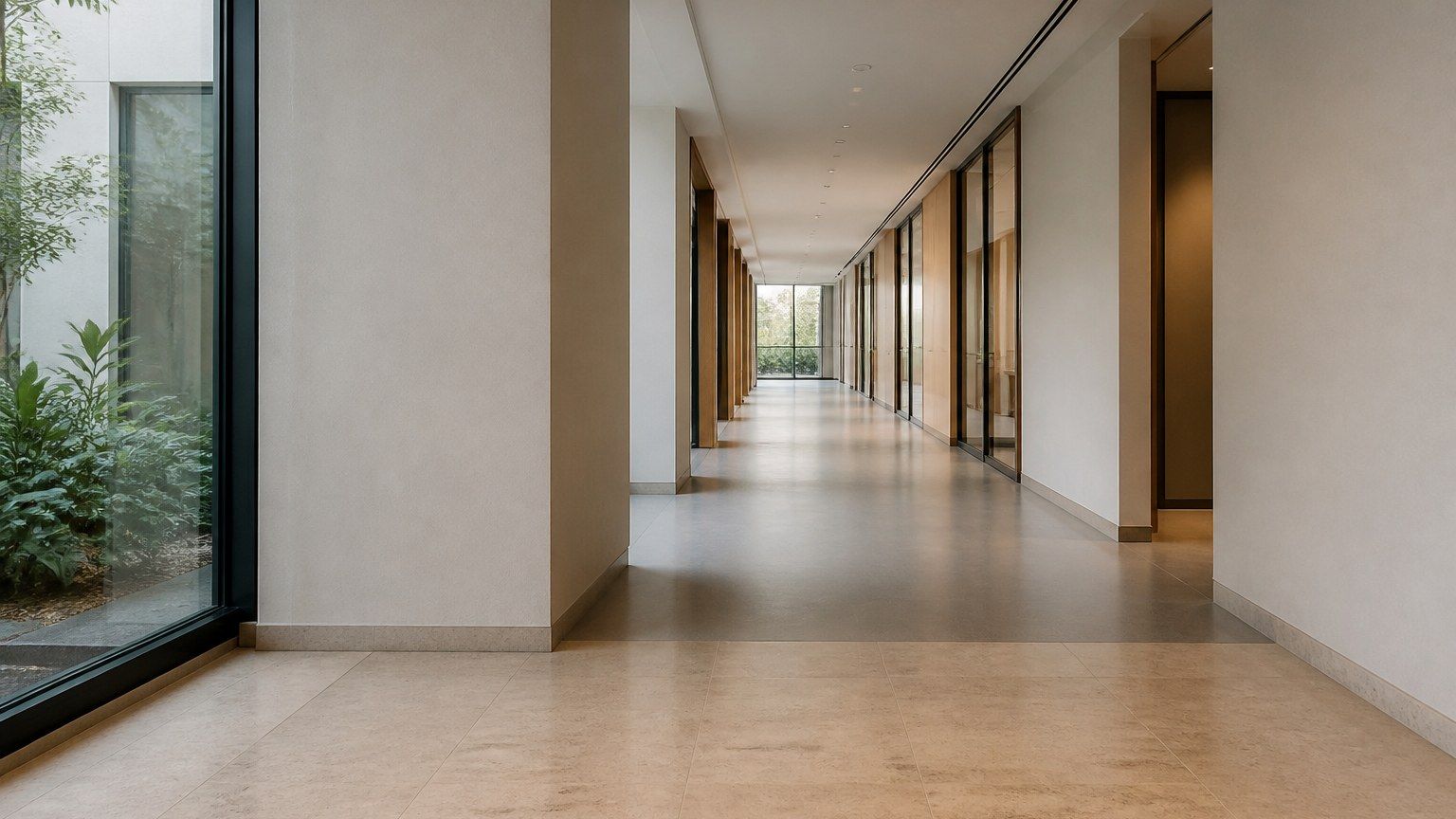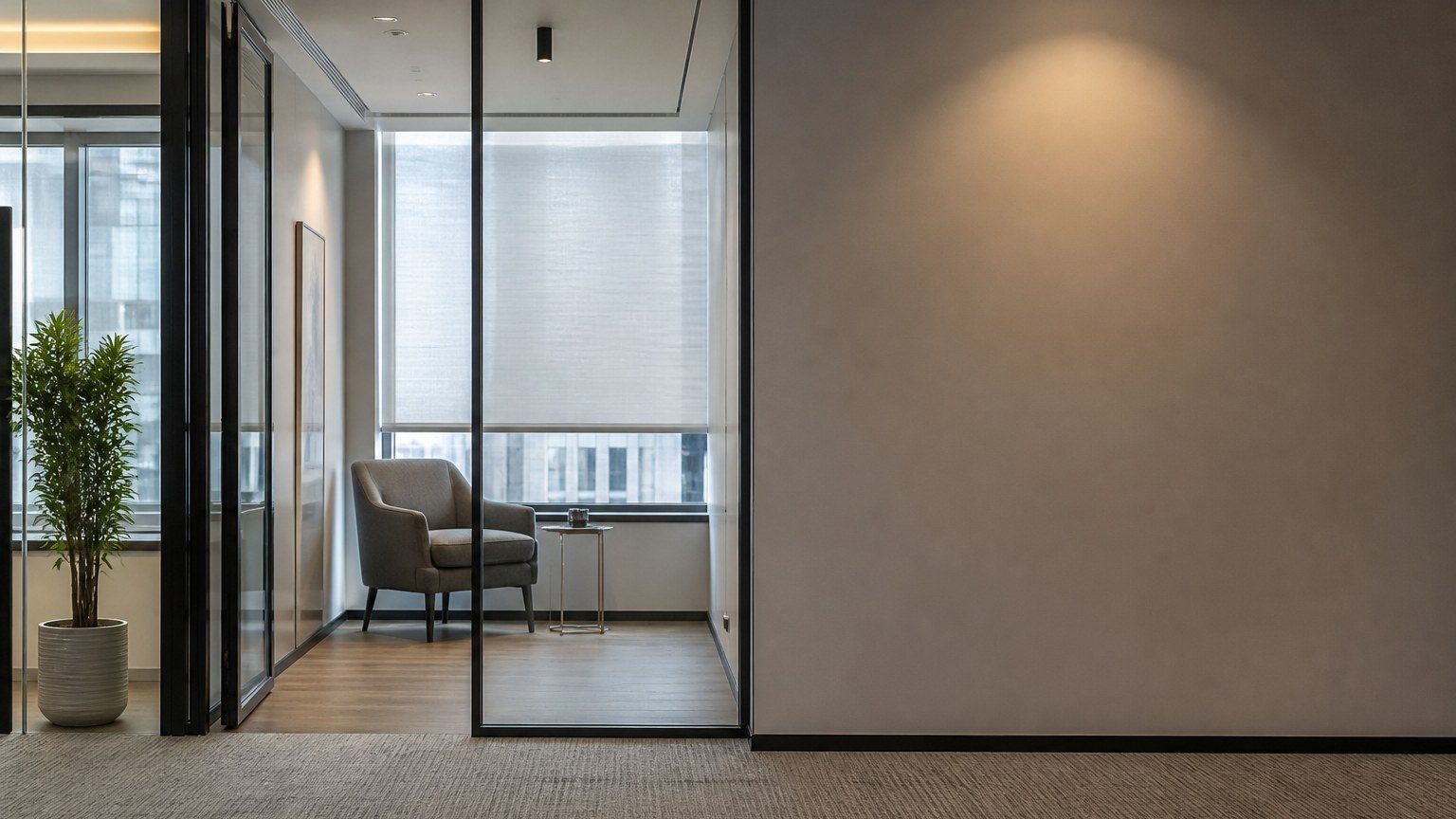
Glass is useful when it frames a view and stops when privacy or acoustics need a wall.
Corporate interiors default to glass because it photographs as transparency. On a working floor it often means you can see everyone, hear everyone, and sit in a greenhouse by afternoon. The variety of systems — framed, frameless, acoustic, filmed — is not the essay. The essay is whether the partition is doing a job that a wall or a screen should have done.
Openness is not the same as being watched.
Decide what should be seen
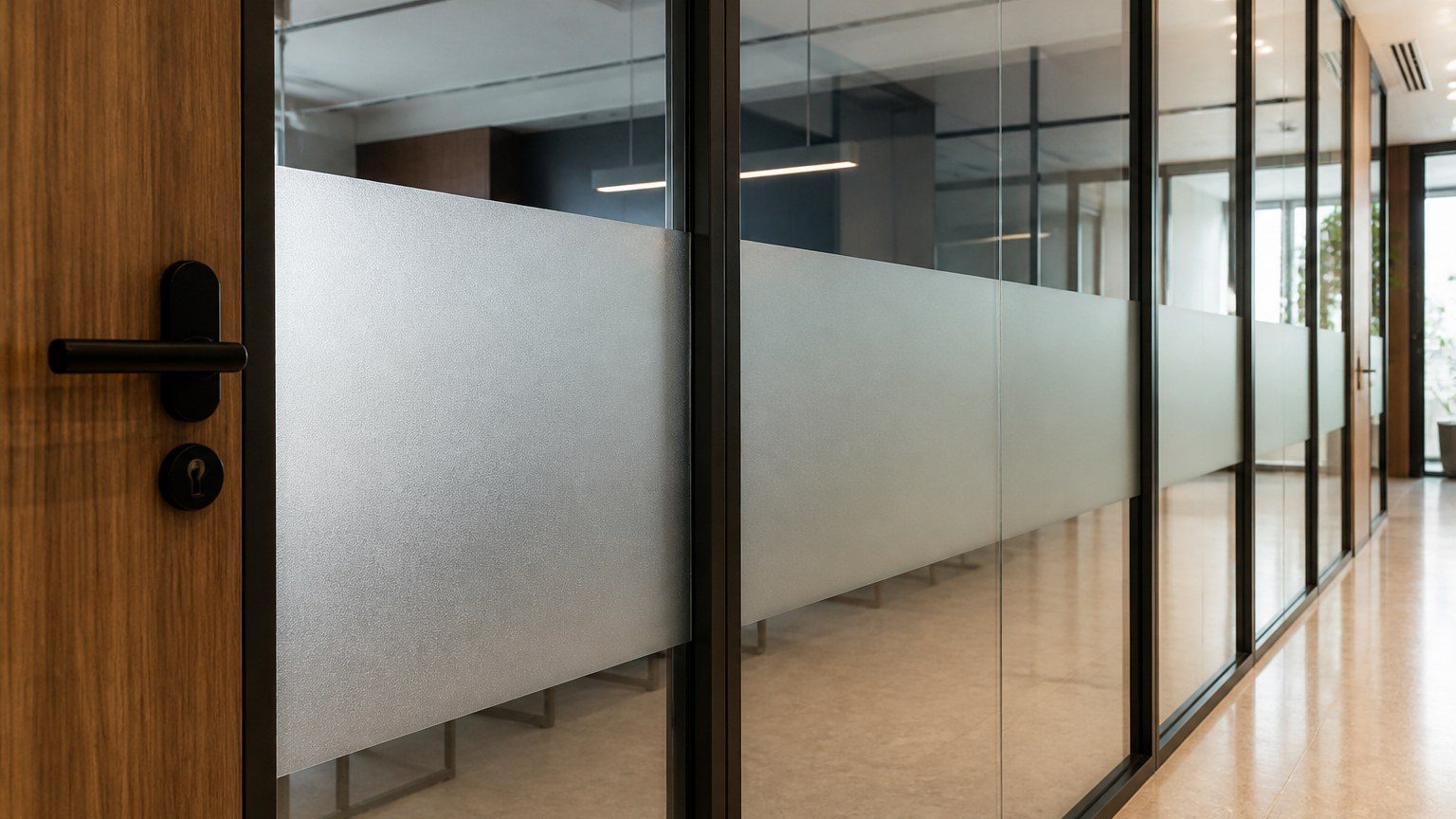
A meeting room that needs daylight can have glass toward a quiet interior, not toward a busy desk run. A film or a change of glass at sitting height can keep a sense of occupation without putting every face on display. Acoustic glass that is still a drum is a specification failure. If the brief is only “make it look modern,” glass will be asked to replace thinking.
Closing thought
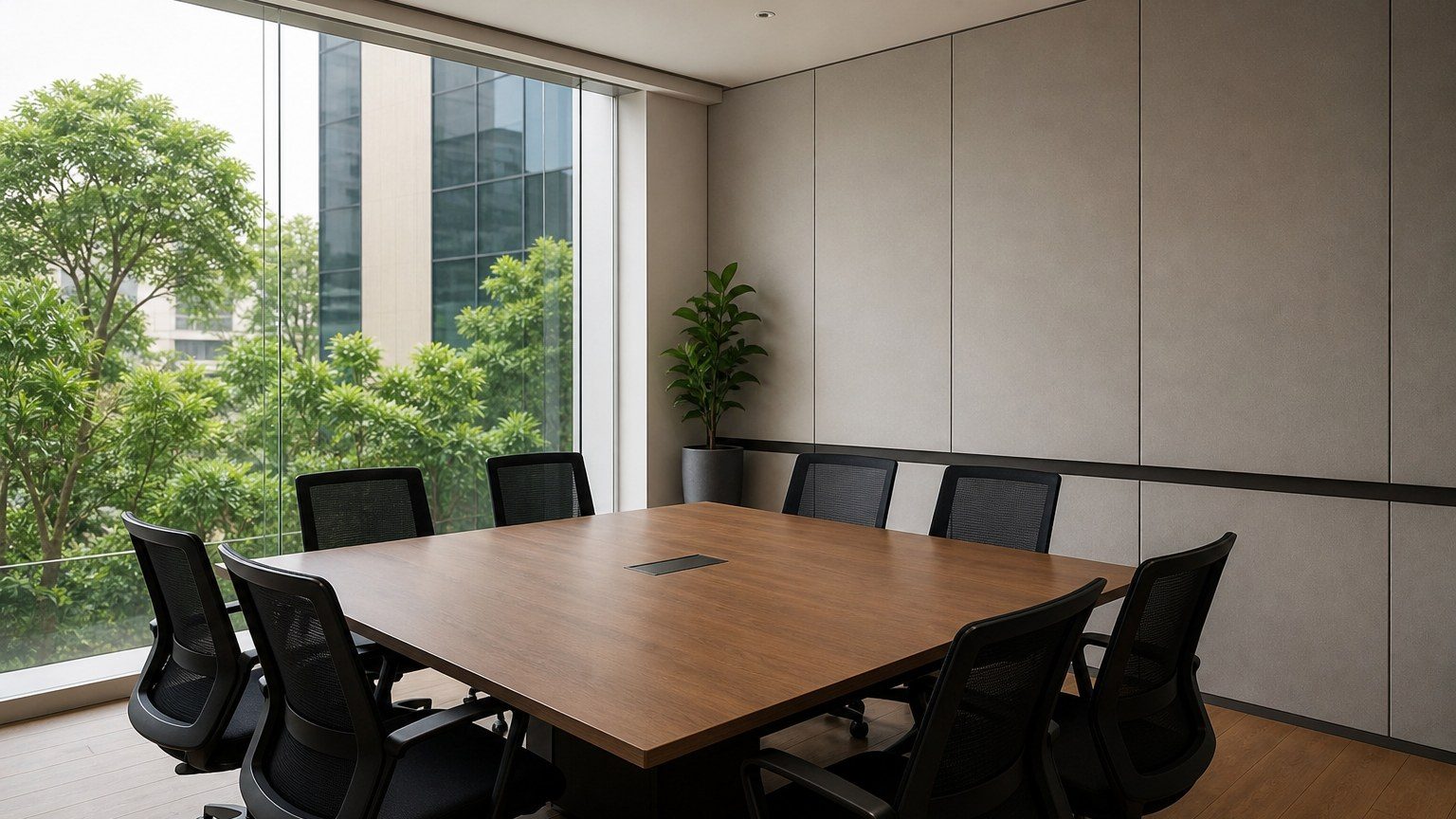
Use glass where a view or borrowed light is the point. Use a wall where a thought needs to finish.
A partition is a decision about who is exposed.