Comfort is not a lamp style. It is whether the eye can stay in the room.
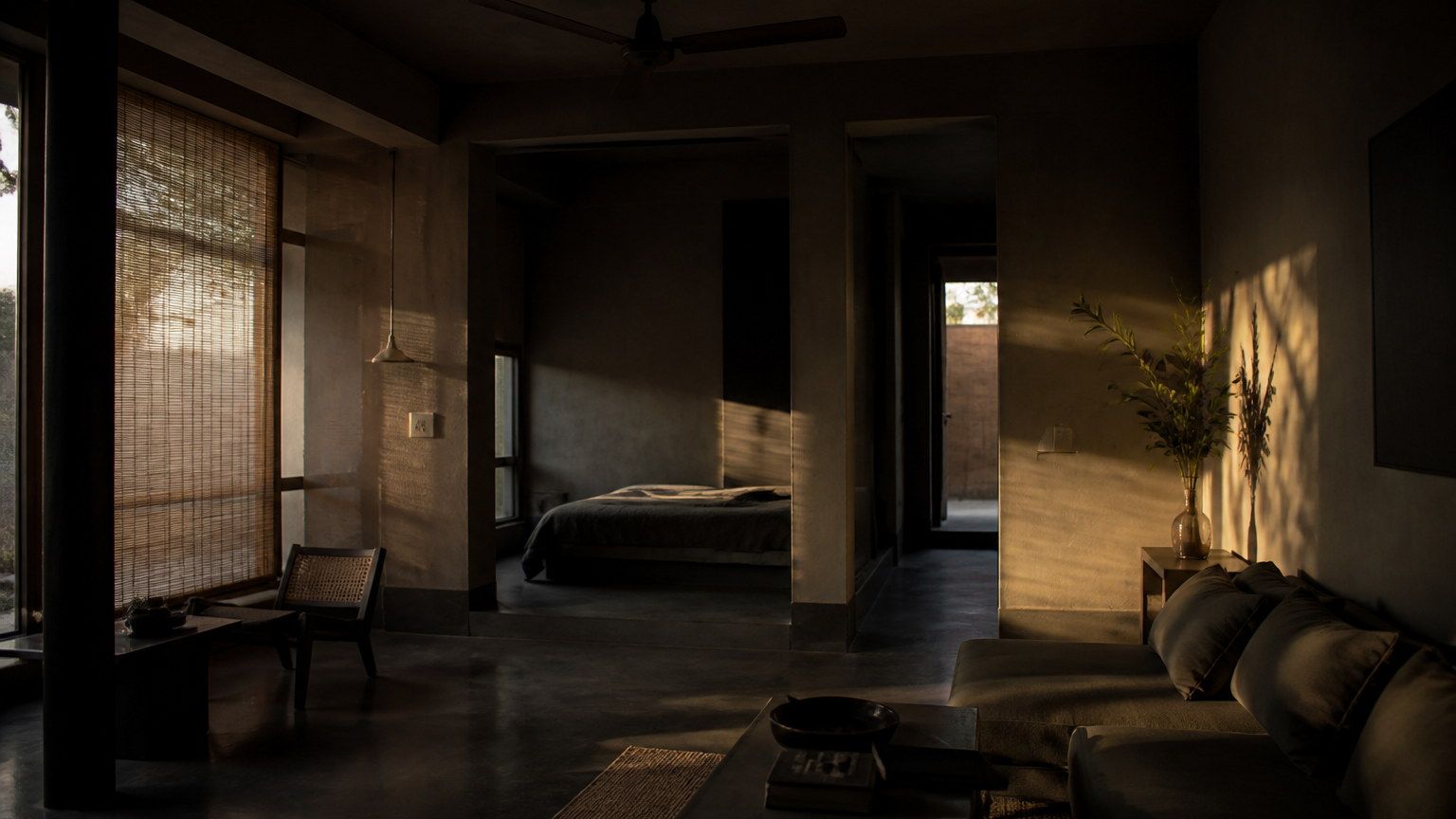
Poor lighting is rarely discussed as a construction defect. It should be. A room that glares, that makes faces tired, that turns a polished floor into a second window, is a room that was not finished — however expensive the fittings.
The hidden cost is not the invoice for the chandelier. It is the daily tax on comfort, the premature ageing of finishes under the wrong beam, and the renovation that is commissioned because “the house feels harsh” when the house is only badly lit.
A fixture is not a lighting design. A lighting design is a visual field.
Glare is a material problem
Stone, glass, lacquer and pale walls will return whatever is thrown at them. Specifying reflective finishes and then adding unshielded brightness is how a living room becomes a showroom after dark.
Layers, not a centrepiece
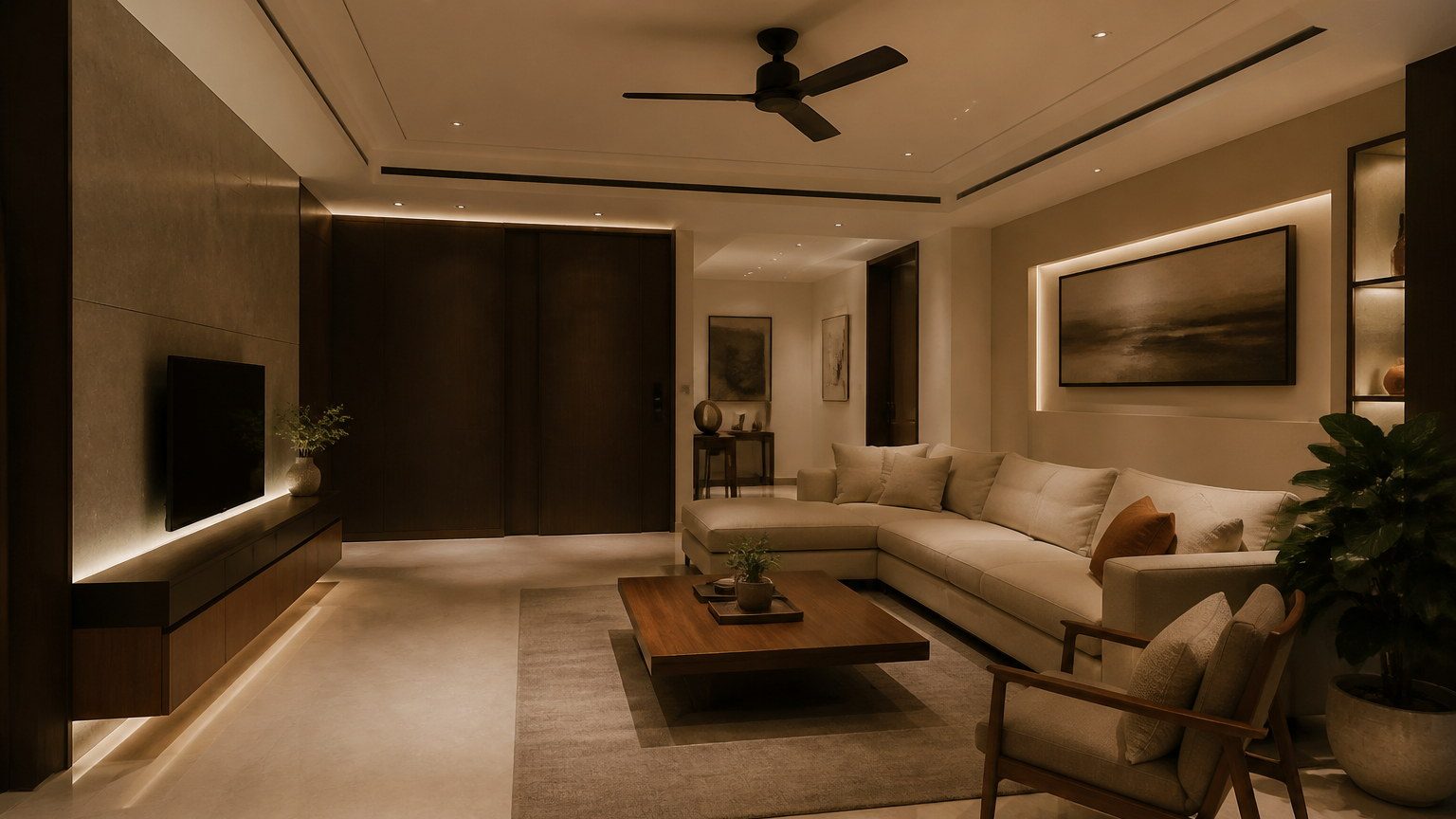
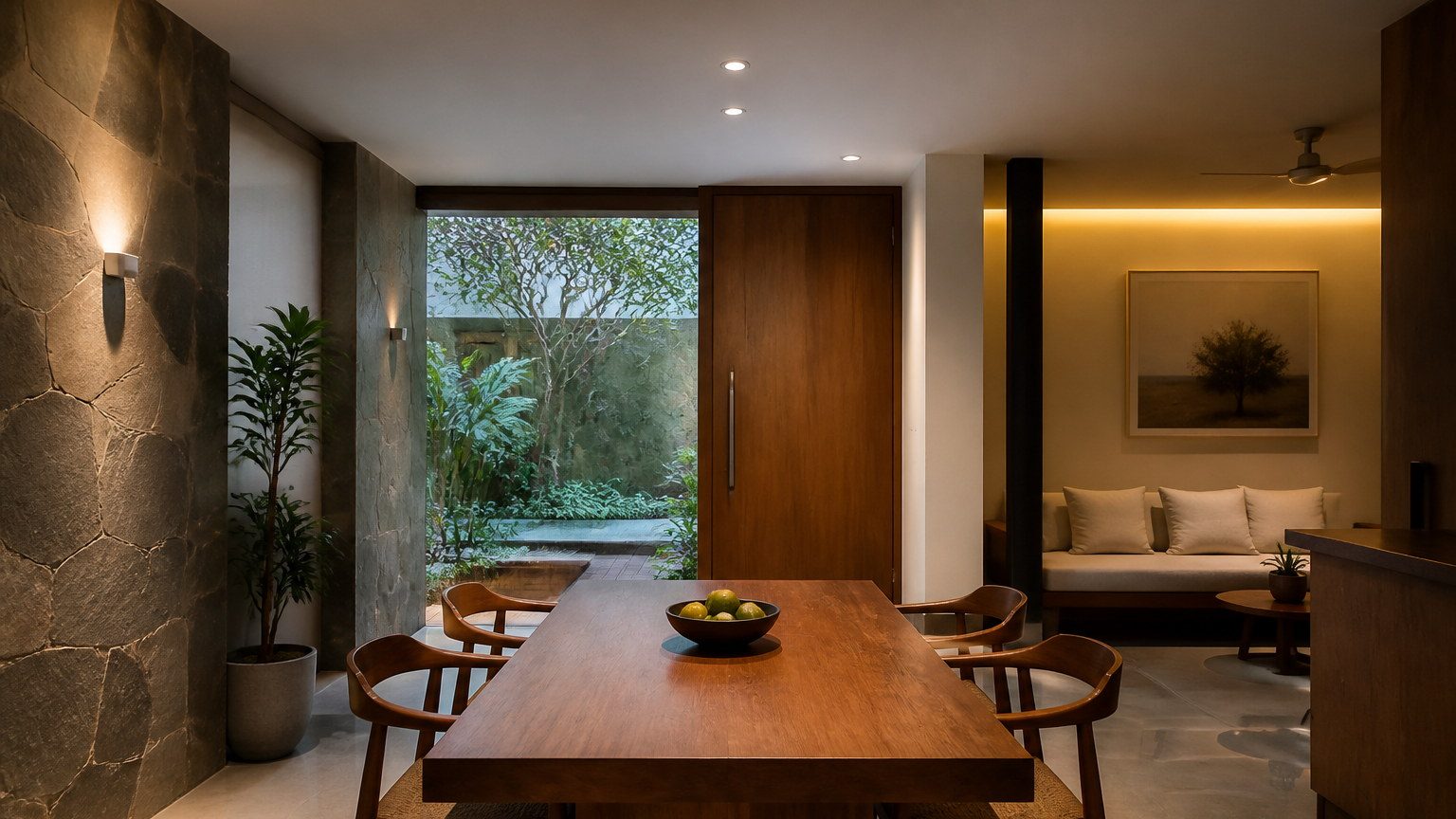
Rooms that work tend to have more than one kind of light: a wash, a task, a low lamp, a cove that holds a wall. The centrepiece fixture, asked to do all of that, usually does none of it well.
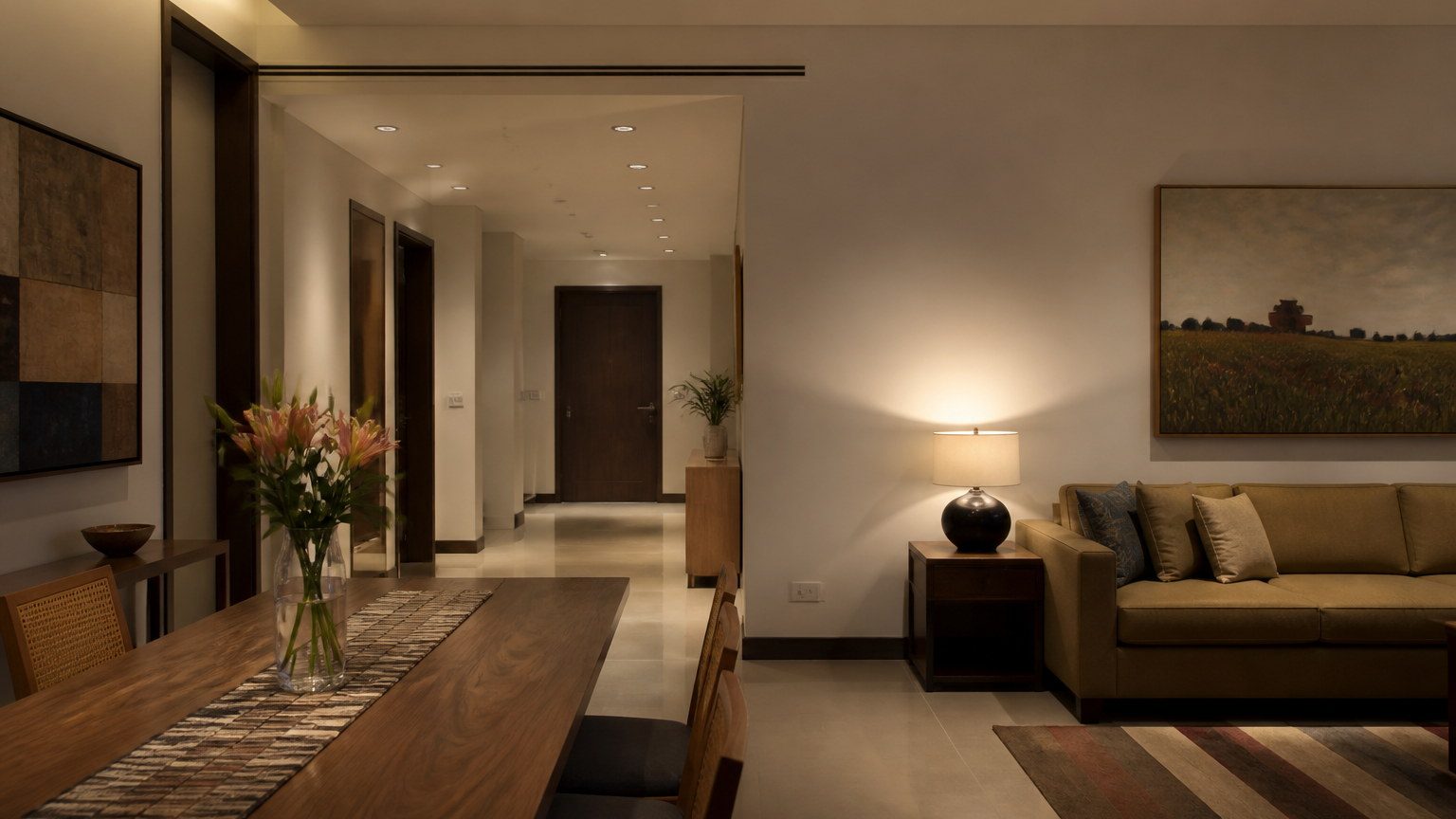
Joinery is a lighting location
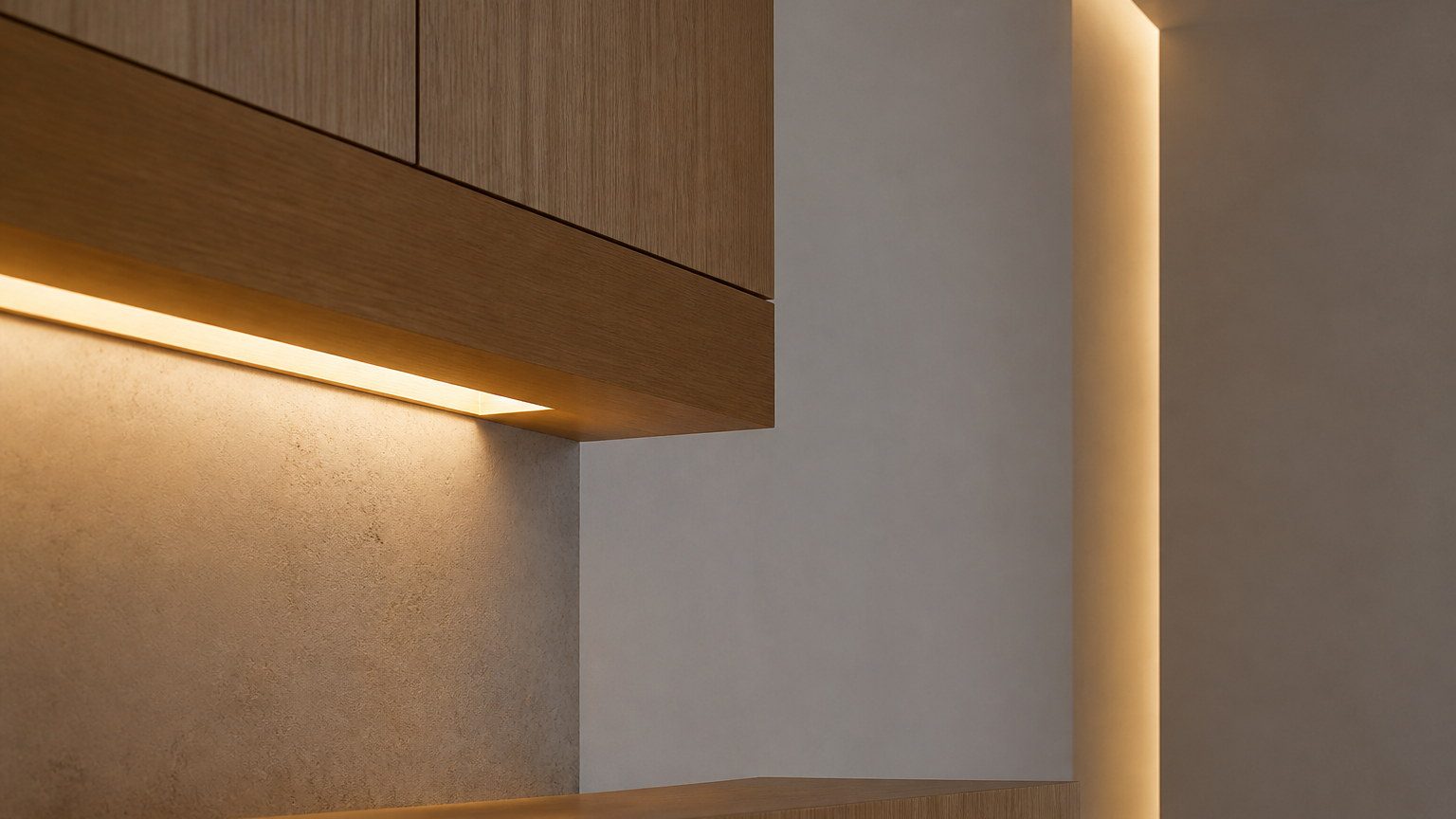
The better installations are often the least visible: a slot, a cove, a recess in millwork. That is not a fashion for hiding things. It is a way of lighting surfaces instead of eyeballs.
Closing thought
Lighting quality is not a shopping category. It is whether a finished interior can be inhabited at six in the evening without anyone reaching for a dimmer in self-defence.
The cost is paid every night the room is used.